Midwestern states like Ohio, Indiana, Illinois and Michigan are important markets for natural gas producers in the Marcellus/Utica, as are states in the Mid-South like Kentucky and Tennessee and states in the Deep South. But expanding gas sales in those markets will require a lot more pipeline capacity, and that’s exactly what’s in the works. In today’s RBN blog, we continue our look at the pipeline projects being planned to move more Appalachia-sourced gas within — and out of — the U.S.’s largest gas production region.
This is Part 5 of our blog series on gas market dynamics in the Northeast. In Part 1, we said the Appalachia market has been quietly evolving in ways that will not only shift flow patterns within the region but also affect flows to the Southeast, Midwest and Gulf Coast. Part 2 focused on gas demand within the Northeast, which is getting a big boost from the power-generation sector as coal retirements continue and data center development proliferates. In Part 3, we started a review of the pipeline projects planned to enable more gas to flow through and out of the Marcellus/Utica, focusing on projects in New England and New York. Part 4 continued that review with a look at projects within Pennsylvania; regionwide enhancements like TC Energy’s Appalachian Supply Project; and projects involving or tied to either the Mountain Valley Pipeline or Williams’s Transco system.
Today, we wrap up the pipeline projects part of our series with an analysis of (1) projects that will provide expanded capacity to eastern Ohio and beyond and (2) projects that are more distant but still related to the Marcellus/Utica.
Expanded capacity to Ohio and beyond
There already are several major pipelines that transport Appalachian gas west. These include the bidirectional, Tallgrass Energy-operated Rockies Express (REX), which can move up to 2.6 Bcf/d westward; Enbridge’s sprawling Texas Eastern Transmission Co. (TETCO), and TC Energy’s ANR Pipeline system. (The ANR system is being expanded to support new data centers and related power projects in the Upper Midwest — more on that later) and two big greenfield pipelines that started up in 2018: Energy Transfer and Ares Management’s 3.425-Bcf/d Rover Pipeline and Enbridge’s 1.4-Bcf/d NEXUS Pipeline.
As massive as these pipelines may be, rising gas demand means that still more westbound capacity into, through and out of Ohio will be needed over the next few years. Among the largest development efforts is Boardwalk Pipelines’ two-part Borealis Pipeline Project, which will enable an incremental 2 Bcf/d to be transported west across Ohio and an incremental 1.75 Bcf/d to move into southeastern Indiana and northern and western Kentucky. (Boardwalk is a subsidiary of Loews Corp.)
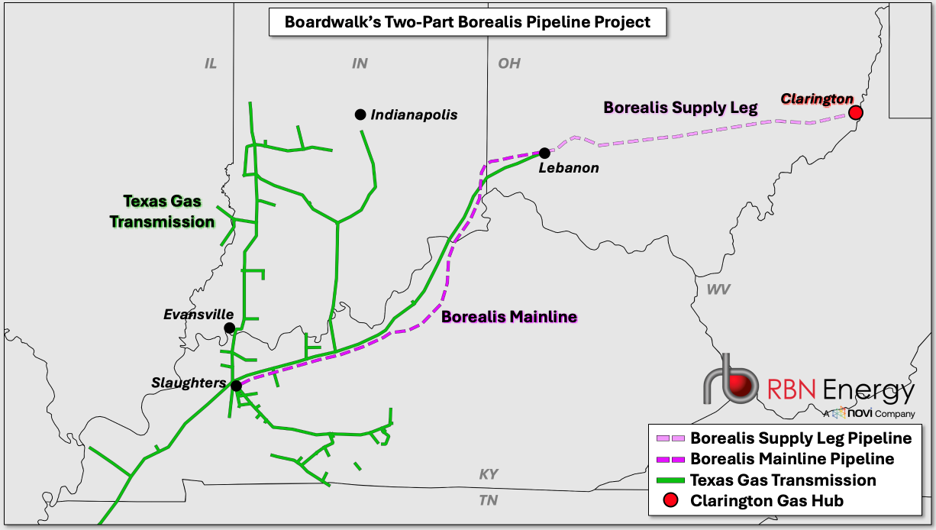
Figure 1. Boardwalk’s Two-Part Borealis Pipeline Project. Source: Novi Labs
About the song
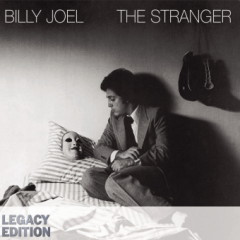
“Movin’ Out (Anthony’s Song)” was written by Billy Joel and appears as the first song on side one of his fifth studio album, The Stranger. The song is about working-class New Yorkers struggling to achieve success in their lives. Joel said “Anthony” was a fictitious character. Released as a single in September 1977, the song went to #17 on the Billboard Hot 100 Singles chart and has been certified 2X Platinum by the Recording Industry Association of America (RIAA). Twyla Tharp produced a musical, Movin’ Out, based on the song, which played for 1,307 performances on Broadway at the Richard Rodgers Theater from 2002 to 2005. Personnel on the record were: Billy Joel (lead, backing vocals), Steve Kahn, Hiram Bullock (electric guitars), Doug Steinmeyer (bass, small block 1960s Corvette), Richie Cannata (saxophones), and Liberty DeVito (drums).
The Stranger was recorded in 1977 at A&R Studios in New York City and produced by Phil Ramone. Released in September 1977, it went to #2 on the Billboard 200 Albums chart and has been certified 12X Platinum by the RIAA. Five singles were released from the LP.
Billy Joel is an American singer, songwriter and pianist. Nicknamed “the Piano Man” after his 1973 hit single of the same name, Joel has had a successful career as a solo artist since the early 1970s. Born in the Bronx, Joel started playing piano at 4. He began his professional career playing piano bars while still in high school. His first rock band, The Hassles, made two albums for United Artists Records in 1967. Joel left The Hassles in 1969 and formed the duo Attila, which released one LP in 1970. He released his first solo album, Cold Spring Harbor, in 1971. Joel has released 13 studio albums, seven live albums, 19 compilation albums and 62 singles and has sold more than 150 million records worldwide. He has won an American Music Award, five Brit Awards, six Grammy Awards and a Tony Award, and was inducted into the Rock and Roll Hall of Fame in 1999. Joel, dealing with medical issues, made his last concert appearance at the Mohegan Sun Arena in Uncasville, CT, in February 2025. His last release was the single “Turn the Lights Back On,” which dropped in February 2024.
"About the Song" -- written by Mickey McMahan , RBN Director of Musicology