After being in virtual limbo the past couple of years, the U.S. Northeast gas market is reawakening. New pipeline development is, well, no longer a pipe dream. Pipeline projects to expand connectivity between Appalachia and demand centers are moving forward for the first time in years, including into the previously off-limits New York/New Jersey and New England market areas. Regional flow dynamics are poised to shift as expansions debottleneck production and pathways out of the Appalachia producing region, deepening seasonal patterns. At the same time, structural changes, such as coal retirements and data centers, are driving baseload demand growth in parts of the region. Today’s RBN blog begins a series evaluating the impacts of these changing fundamentals on the Northeast gas market outlook.
While all eyes in the gas market have been on the dramatic changes happening along the Gulf Coast, the Northeast has been quietly evolving in ways that will not only shift flow patterns within the region but also affect flows to the Gulf Coast. (For more on the Gulf Coast, see RBN’s Arrow Model, a proprietary analytic model that tracks and forecasts shifting gas pipeline flows in Texas and Louisiana.) Before looking ahead to the inflection points on the horizon, it’s worth considering how the Northeast got here, which is the focus of today’s blog.
We start with some definitions. The Northeast gas market comprises 14 states (green-shaded areas in Figure 1): Connecticut, Delaware, Maine, Maryland, Massachusetts, New Hampshire, New Jersey, New York, Ohio, Pennsylvania, Rhode Island, Vermont, Virginia, and West Virginia. These states are further broken up into the demand-driven New England and Mid-Atlantic market areas, including the New York and New Jersey metros, and the Appalachia producing region, with the Marcellus/Utica shale plays situated primarily within Pennsylvania, Ohio and West Virginia. We further delineate production in Pennsylvania by northeastern counties (blue area in the inset), which yield more dry gas supply, and western and southern counties (yellow area), which yield more liquids-rich gas.

Figure 1. Northeast Gas Market Region. Source: RBN
Q1 2026 Earnings Calls: Sempra Remains Bullish on North American LNG
Sempra Infrastructure continues to make progress on its two LNG facilities. Parent company Sempra Energy remains optimistic on LNG despite the upcoming partial divestiture.
About the song
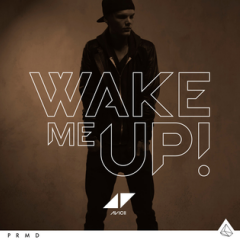
“Wake Me Up” was written by Tim Bergling (Avicii), Egbert Dawkins and Mike Einziger and appears as the first song on Avicii’s debut studio album, True. The summer anthem features vocals from American soul singer Aloe Blacc. The lyrics explore dealing with darkness and confusion while pursuing a journey of coming of age. The style of the song has been described as “folktronics,” combining electronic dance music (EDM) with soul and country music. Released as the first single from the album in June 2013, it went to #1 on the Billboard Hot Dance/Electronic Songs chart and #4 on the Billboard Hot 100 Singles chart. It has been certified 11X Platinum by the Recording Industry Association of America (RIAA) and is among the most-streamed songs on Spotify. Personnel on the record were: Avicii (production, programming, sampling, engineering), Aloe Blacc (vocals), Mike Einziger (guitar) and Peter Dyer (keyboards).
The album True is the debut album of Swedish EDM DJ and producer Avicii. Recorded between 2011 and 2013 at Interscope Studios in Los Angeles; Casa Chica in Malibu, CA; and The Doghouse Studio in Nashville, it was produced by Tim Bergling (Avicii), Arash Pourmouri and Nile Rodgers. Released in September 2013, it went to #1 on the Billboard Top Dance Albums chart and #5 on the Billboard 200 Albums chart. It has been certified Platinum by the RIAA. Five singles were released from the LP.
Avicii (Tim Bergling) was a Swedish DJ, songwriter, remixer and record producer. He got his start posting remixes on EDM forums at 16 and was signed by record label Dejfitts in 2007. He released three studio albums, six compilation albums, six EPs and 59 singles and has sold more than 11 million records worldwide. Avicii won an American Music Award, a Billboard Music Award, an MTV Video Music Award and two World Music Awards. After suffering through multiple health and addiction problems, Avicii died in Muscat, Oman, in April 2018 at 28.
"About the Song" -- written by Mickey McMahan , RBN Director of Musicology