While U.S. refineries are again running hot and heavy after the end of this year’s seasonal fall maintenance period, Mexico’s refineries have continued to struggle to operate at more than 30% of their capacity, a decline that is exacerbated by that country’s tumbling oil production. In recent years, Mexico’s dismal refinery utilization rate has been a boon for U.S. refiners on the Gulf Coast who can ship, pipe or truck gasoline to America’s southern neighbor in short order. Now, Mexico’s new president, Andrés Manuel López Obrador (AMLO), is pushing to solve Mexico’s refinery problems by building a new one. Today, we discuss Mexico’s growing dependence on U.S. gasoline, and whether building a new refinery south of the border will change things.
As we mentioned in our recent blog Going to Mexico, Mexican crude production has fallen sharply in the past 10 years. At 1.76 MMb/d in October 2018, total output is less than half what it was in 2005. [It’s worth noting here that the majority of that crude — nearly 61% of the 1.76 MMb/d total in October — is categorized as “heavy” or low in API gravity, according to Mexico’s state-run oil company, Petróleos Mexicanos (Pemex)]. Much like Pemex’s oil production rates, refining rates have collapsed, too. And to make matters even worse, Mexico’s refineries are relatively simple — that is, not complex — and configured to process lighter, sweeter crudes, the exact quality that’s getting harder and harder to come by in Mexico. AMLO has a plan to revive oil output alongside refinery rates — he presented a national oil production plan in Campeche last week, in which he pledged to boost production to 2.4 MMb/d in the next six years.

To truly understand Cushing — what it does and how it works — you need to know the hub’s assets and how they fit together. RBN’s Cushing Crude Oil Playbook provides the first one-stop, comprehensive guide to the hub’s assets.
Mexico’s falling crude production has exacerbated already dire operating conditions at Mexico’s six refineries, which have a combined capacity of 1.6 MMb/d. Unlike the U.S. refining sector, which is made up of multiple competing entities — most of which are publicly traded companies — Mexico’s half-a-dozen refineries have been owned and operated by government-owned Pemex for decades. Without competition among the facilities, Pemex has struggled to perform the semi-annual refinery maintenance programs that are typical among refiners in the U.S. As of October, Pemex’s refineries as a group were operating at just over 30% of their total capacity — compared with U.S. utilization rates north of 90%. Figure 1 shows the nationwide refinery run rates for Mexico over the past 10 years. The recent dramatic declines started in early 2014, when runs dipped below 1 MMb/d, or 62.5% of capacity. Since then, the drop-off has continued — as of October, not a single Mexican refinery was operating at more than half its capacity, according to Mexico’s Secretaría de Energia (SENER). At the current rate of 485 Mb/d, the country-wide system is operating at the lowest rates in about 30 years.
About the song
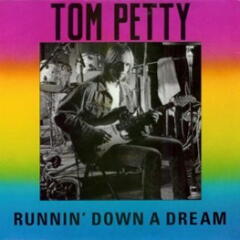
“Runnin’ Down a Dream” was written by Tom Petty, Mike Campbell and Jeff Lynne. It appears on Tom Petty’s first solo album, Full Moon Fever. It was released as a single in July 1989 and went to #1 on the Billboard Album Rock Tracks chart and #23 on the Billboard Hot 100. “Runnin’ Down a Dream” was also used in the video game “Grand Theft Auto: San Andreas” and has been used as the theme song for NASCAR on NBC.
Full Moon Fever was recorded at M.C. Studios (Mike Campbell’s garage studio), Sound City Studios, Rumbo Studios, Sunset Sound Studios, Devonshire Studios and Conway Studios in Los Angeles. It was produced by Tom Petty, Mike Campbell and Jeff Lynne, and was released on April 24, 1989. Tom Petty said Full Moon Fever was the most enjoyable record of his career. It reached #3 on the U.S. Billboard 200 Albums chart and went on to go platinum five times. The personnel on the record were: Tom Petty (lead and backing vocals, guitars, keyboards, and tambourine), Mike Campbell (lead guitar, bass, mandolin, slide guitar, Dobro, and keyboards), Jeff Lynne (bass, guitar, piano, synth, keyboards and backing vocals), and Phil Jones (drum and percussion). George Harrison, Jim Keltner, Benmont Tench, Howie Epstein, and Roy Orbison made guest appearances on the album.
Tom Petty was an American singer-songwriter, multi-instrumentalist and record producer. He was best known as the lead singer of Tom Petty & the Heartbreakers, the band that formed in 1976 from the ashes of his Gainesville, FL, band, Mudcrutch. He was also a co-founder of the Traveling Wilburys. During his career, he released three solo albums, 13 with the Heartbreakers, two with Mudcrutch, and two with the Traveling Wilburys. In 1996, Tom Petty received the UCLA Gershwin Award for Lifetime Musical Achievement and an ASCAP Golden Note Award. Tom Petty & the Heartbreakers received a star on the Hollywood Walk of Fame in 1999 and were inducted into the Rock and Roll Hall of Fame in 2001. They also received three Grammy Awards, three MTV Video Music Awards, and a Billboard Magazine Century Award. Tom Petty died at the age of 66 in Santa Monica, CA, in October 2017. He has sold over 30 million records worldwide.