Thanks to the shale revolution, U.S. refiners have spent the better part of the last two years achieving milestones in export volumes and run rates. The U.S. exported record volumes of gasoline and diesel last year. Much of that newfound international market share came at the expense of ailing refining complexes in Latin America, particularly in Mexico. That worked out great for U.S. refiners on the Gulf Coast, who could load up a tanker of fuel and have it delivered within a matter of days. Now the market on both sides of the border is shifting; the political landscape has changed in Mexico and gasoline demand growth in the U.S. is threatened by higher oil prices. Today, we lay out factors impacting exports and demand in the U.S. gasoline market.
There’s no question about the strength of the U.S.’ refining industry. As we outlined in Part 1 of this blog series, oil market price dislocations in Western Canada and Midland, TX, have helped incentivize refiners that have access to the cheaper crudes to run full-out. In recent weeks, U.S. refiners’ gross oil inputs ran near about 18 MMb/d of oil – a record high. (These run rates are dipping as fall maintenance season kicks in).

Crude Oil TradeView provides up-to-date data and insights into the behavior of differentials for 33 crude assessments across North America. Each week, it also walks you through the reasoning of why differentials widen, narrow, flip (premium vs. discount), or blow out.
In this series, we’re focusing on the two main money-makers for refiners: gasoline and diesel. Regular readers of our blog will know that the diesel market is anticipating a seismic shift as we approach the year 2020. Once we start the new decade, all ocean-going vessels will be required to slash their emissions of sulfur dioxide, either by “scrubbing” the exhaust gasses from their engines or by switching to marine fuel with much lower sulfur content than the bottom-of-the-barrel bunker fuel that’s used today. (Check out Won’t Be Long to explore how refiners are prepping for the IMO 2020 rule, named for the International Maritime Organization.) This rule will spur ship bunkering demand for middle distillates, pulling barrels away from other distillate markets, potentially with ominous consequences for Ultra Low Sulfur Diesel (ULSD) used in motor vehicles and other markets. The tightening of diesel supply can be expected to have a bullish effect on prices and dampen diesel demand. We’ll elaborate more on the diesel story in an upcoming blog. The outlook for gasoline, the primary motor-fuel used in the U.S., is just as complex but for different reasons.
U.S. gasoline demand growth took a turn in the years following the Great Recession of 2008-09. The blue line in Figure 1 (right hand axis) shows that U.S. gasoline consumption hit a then-record 9.29 MMb/d in 2007, but fell 6.6% to 8.68 MMb/d by 2012. On top of the economic troubles in the U.S., oil prices and, consequently, gasoline prices tripled between January 2009 and March 2011 – where they then stabilized for the next three years. There were strong notions that drivers would respond to all this by purchasing more fuel-efficient vehicles or hybrids, which led many analysts to assert that demand had seen its peak. For a time, they were right - fuel efficiency grew in popularity. But then things started to change again. Purchases of full-sized gas guzzlers took off alongside the economy, and gasoline demand grew incrementally. After oil prices dropped in late 2014 reducing gas prices at the pump, demand surged higher yet. The U.S. hit a record 9.32 MMb/d in gas demand last year, but growth this year has been tempered due to higher pump prices around the country spurred primarily by rebounding oil prices.
About the song
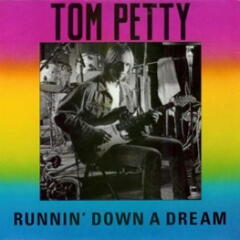
“Runnin’ Down a Dream” was written by Tom Petty, Mike Campbell and Jeff Lynne. It appears on Tom Petty’s first solo album, Full Moon Fever. It was released as a single in July 1989 and went to #1 on the Billboard Album Rock Tracks chart and #23 on the Billboard Hot 100. “Runnin’ Down a Dream” was also used in the video game “Grand Theft Auto: San Andreas” and has been used as the theme song for NASCAR on NBC.
Full Moon Fever was recorded at M.C. Studios (Mike Campbell’s garage studio), Sound City Studios, Rumbo Studios, Sunset Sound Studios, Devonshire Studios and Conway Studios in Los Angeles. It was produced by Tom Petty, Mike Campbell and Jeff Lynne, and was released on April 24, 1989. Tom Petty said Full Moon Fever was the most enjoyable record of his career. It reached #3 on the U.S. Billboard 200 Albums chart and went on to go platinum five times. The personnel on the record were: Tom Petty (lead and backing vocals, guitars, keyboards, and tambourine), Mike Campbell (lead guitar, bass, mandolin, slide guitar, Dobro, and keyboards), Jeff Lynne (bass, guitar, piano, synth, keyboards and backing vocals), and Phil Jones (drum and percussion). George Harrison, Jim Keltner, Benmont Tench, Howie Epstein, and Roy Orbison made guest appearances on the album.
Tom Petty was an American singer-songwriter, multi-instrumentalist and record producer. He was best known as the lead singer of Tom Petty & the Heartbreakers, the band that formed in 1976 from the ashes of his Gainesville, FL, band, Mudcrutch. He was also a co-founder of the Traveling Wilburys. During his career, he released three solo albums, 13 with the Heartbreakers, two with Mudcrutch, and two with the Traveling Wilburys. In 1996, Tom Petty received the UCLA Gershwin Award for Lifetime Musical Achievement and an ASCAP Golden Note Award. Tom Petty & the Heartbreakers received a star on the Hollywood Walk of Fame in 1999 and were inducted into the Rock and Roll Hall of Fame in 2001. They also received three Grammy Awards, three MTV Video Music Awards, and a Billboard Magazine Century Award. Tom Petty died at the age of 66 in Santa Monica, CA, in October 2017. He has sold over 30 million records worldwide.