The Permian is the country’s largest NGL-producing region, a trend that figures to continue over the next several years. By 2035, the basin is forecast to account for 53% of U.S. NGL production, up from about 44% today. Handling that growth will require a complex network of pipelines, fractionators, and other infrastructure, plus a handful of players adding capacity to ease congestion and provide more routes to market. In today’s RBN blog, we’ll look at the future of NGL infrastructure in the Permian and where all that additional production will ultimately end up.
This is the fourth blog in our series on the outlook for major U.S. producing basins, starting with the largest: the Permian. In our first blog, we discussed the major Permian gas pipeline projects scheduled to come online in 2026 and 2027, how much new capacity they will provide, and what the shift means for Waha prices, Gulf Coast balances and the U.S. natural gas market. In Part 2, we discussed the basin’s long-term gas pipeline projects and the challenges that could arise as that new infrastructure comes online. In our third piece, we discussed the Permian’s biggest natural gas producers and how they might respond to the new gas pipelines planned for the basin.
The replay of our Fall 2026 School of Energy (September 9 & 10, Houston) is now available online!
Learn from RBN experts, participate in hands-on Excel modeling, connect with industry peers, and gain a stronger understanding of today's interconnected energy markets.
All of that sets the stage for today's blog on NGLs, but let’s add a little background. In the Permian, associated gas and NGLs have long been byproducts of crude oil production. So as oil output rises, the basin’s infrastructure needs to keep up with the gas and NGLs that come along for the ride. Significantly for our topic today, that means a lot of new gas processing plants need to be built, moved or expanded in the areas seeing high gas production growth.
Gas processing plants separate NGLs from the gas stream. New additions to the fleet tend to be 275- or 300-MMcf/d cryogenic facilities that can extract a very high percentage of the liquids entrained in the gas stream. From the tailgate of the processing plant, pipelines take the NGLs as a mixed stream called “Y-grade” to fractionation centers where the mixed product is separated into “purity” form — ethane, propane, butanes and other NGL products — before heading to downstream markets, like petrochemical plants and export terminals (purity is a bit of a misnomer since some impurities still exist in the fracked NGLs). Today, we’ll begin by looking at processing and pipeline capacity and we’ll follow up with downstream fractionation and export facilities.
From the Permian, recovered NGL production is currently about 3.6 MMb/d and is forecast to reach 4.8 MMb/d by 2030 and 5.4 MMb/d by 2035 (light-green bars in Figure 1 below). These recovered volumes account for the economics of ethane recovery, including ethane rejection, which is when ethane is left in the natural gas stream because recovery is uneconomic. They also reflect contractual agreements, such as minimum volume commitments (MVCs), that can incentivize recovery even when rejection would otherwise be economic.
About the song
“Movin’ On” was written by Mick Ralphs and was originally recorded and released as a single by Hackensack on Island Records in November 1972, where it failed to make the charts. The single was produced by Muff Winwood, the older brother of Steve Winwood, who were in the Spencer Davis Group together in the 1960s. The song talks about the chaotic, nomadic lifestyles of touring rock musicians, something that Mick Ralphs was well acquainted with as the lead guitarist for Mott the Hoople before forming Bad Company. It was recorded by Bad Company in November 1973 and released as the second single from their debut studio album, Bad Company, in January 1975. It went to #19 on the Billboard Hot 100 Singles chart. Personnel on the record were: Paul Rodgers (vocals), Mick Ralphs (guitar), Boz Burrell (bass), and Simon Kirke (drums).
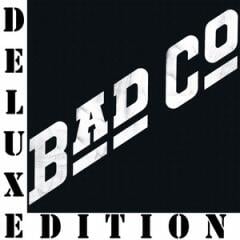
Bad Company is the debut studio album by the British supergroup of the same name, formed in London in 1973. Recorded at Headley Grange in East Hampshire, England, on Ronnie Lane's mobile studio during November 1973, it was produced by Bad Company. Led Zeppelin also used Headley Grange to record. Both bands were managed by Peter Grant and recorded on the Swan Song record label. The album was released in May 1974 and went to #1 on the Billboard 200 Albums chart. It has been certified 5X Platinum by the Recording Industry Association of America. Two singles were released from the LP.
Bad Company was an English rock band formed in London in 1973 by vocalist Paul Rodgers (Free), drummer Simon Kirke (Free), guitarist Mick Ralphs (Mott the Hoople), and bassist Boz Burrell (King Crimson). They were managed by Led Zeppelin's manager, Peter Grant. They released 12 studio albums, five live albums, and 29 singles. They have sold over 40 million records worldwide. They were inducted into the Rock and Roll Hall of Fame in 2025. The original band stayed together from 1973 until 1982. Various forms of the band with different players continued to play under the Bad Company moniker until 2023. Bassist Boz Burrell died in Marbella, Spain, in September 2006 at 60. Guitarist Mick Ralphs died in London in June 2025 at 81. Vocalist Paul Rodgers and drummer Simon Kirke continue to pursue various musical endeavors.
"About the Song" -- written by Mickey McMahan , RBN Director of Musicology