There’s an interesting aspect to the buildout of new Permian gas processing capacity, NGL pipelines, fractionators and NGL export terminals, namely that virtually all of the projects are being undertaken by midstream companies that handle NGLs along their entire value chain, from wellhead to water. That’s a rarity in the crude oil world and just about impossible in natural gas — no classic midstreamer owns LNG export terminals! In today’s RBN blog, we continue our look at the latest NGL-related infrastructure developments in the region with a review of current projects by Energy Transfer, ONEOK, MPLX and Phillips 66. We’ll also take a big-picture look at gas processing capacity in the basin and where most of the growth is occurring.
As we said in Part 1, the rapid buildout of Permian gas processing plants and other NGL-related infrastructure in Texas and southeastern New Mexico is continuing, even as crude oil-focused production in the Permian has remained flat. We explained that, generally speaking, newer wells in the basin are gassier and saturated with ever-higher levels of NGLs. Those trends have spurred the development of more and more processing plants as well as additional takeaway capacity (for both NGLs and natural gas), more fractionators in Mont Belvieu (and elsewhere), and more LPG and ethane export capacity along Texas’s Gulf Coast.
We started our review of the infrastructure projects now under development with a look at what Targa Resources and Enterprise Products Partners have been up to. Today, we follow up with a review of projects planned by four other midstreamers that are involved in every aspect of NGL processing and transportation.
We’ll start with Energy Transfer, which is in the midst of expanding almost every link along its NGL value chain. Out in West Texas, the midstreamer has been commissioning its 275-MMcf/d Mustang Draw I gas processing plant in the Midland Basin and expects it to be fully operational in June. Energy Transfer also is building Mustang Draw II, another 275-MMcf/d plant, and will bring it online in Q4 2026. (That will give Energy Transfer a total of about 5.8 Bcf/d of processing capacity in the Permian.) In mid-2026 the company will complete a 90-Mb/d expansion of its Lone Star Express NGL pipeline and in mid-2027 it will finish a pipeline looping project upstream of Lone Star Express that will enable Energy Transfer to source an incremental 150 Mb/d of NGLs from the Northern Delaware.
Ethane Petchem Cracker Margin – Back to Earth After Iran War Spike
U.S. Gulf Coast ethane cracker margins have come back to earth after several weeks of extraordinary profitability.
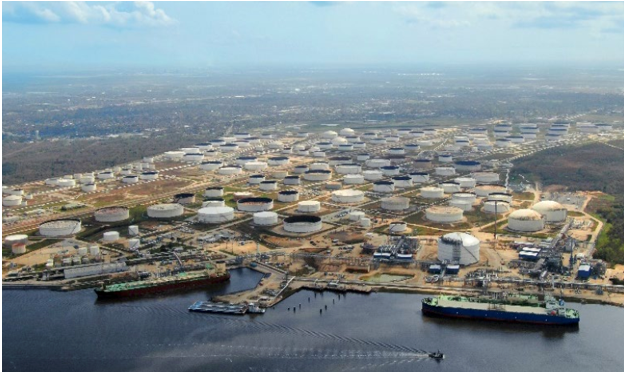
Over in Mont Belvieu, the company’s Frac IX — a new, 165-Mb/d fractionator — will start up in Q4 2026, and, in a project announced in May, Energy Transfer will bring online a new, 3-MMbbl salt cavern for ethane storage in H2 2027. The company also is in the final stages of expanding its Sabina 2 NGL pipeline from Mont Belvieu to its Nederland Terminal to 70 Mb/d (from 25 Mb/d and then 40 Mb/d) and is adding refrigerated storage at Nederland (see photo above) that will double its propane storage capacity and increase its butane storage capacity by one-third.
Next up is ONEOK, which in Q1 2026 completed the relocation of a 150-MMcf/d gas processing plant from the Barnett Shale to the Midland (the plant’s name is Shadowfax) and in Q3 2026 expects to finish 110 MMcf/d in processing plant expansions in the Delaware. In mid-2027, the midstream company is slated to start up the new, 300-MMcf/d Big Horn processing plant, also in the Delaware. During ONEOK’s April 29 earnings call, EVP and Chief Commercial Officer Sheridan Swords said it is likely that opportunities to develop additional Permian processing capacity will occur in 2027. And, as we discussed in At Last, a 50-50 joint venture of ONEOK and MPLX is building a 400-Mb/d LPG export terminal in Texas City (blue star with red outline in Figure 1 below). The terminal will come online in early 2028.
An 80-20 JV of ONEOK and MPLX — with ONEOK holding the larger share and serving as operator — also is planning a new, 24-inch-diameter, bidirectional NGL purity-products pipeline between ONEOK’s Mont Belvieu storage and the new export terminal. The MBTC Pipeline (for Mont Belvieu Texas City; dashed blue arrow in Figure 1) is expected to cost $350 million and will be built along the corridor of an existing ONEOK pipeline between the two locations.
Speaking of MPLX, the company’s 200-MMcf/d Secretariat I processing plant in the Delaware started up in April and its 300-MMcf/d Secretariat II is scheduled to do the same in H2 2028. When it does, MPLX’s Permian processing capacity will total about 1.7 Bcf/d. MPLX, a master limited partnership (MLP) formed by Marathon Petroleum in 2012, also is expanding the capacity of its BANGL Pipeline (magenta line in Figure 1) to 300 Mb/d from the current 250 Mb/d; that project is expected to wrap up in Q4 2026. (BANGL consists of an undivided interest in what used to be known as the EPIC NGL Pipeline as well as other assets.) And the company is building the Texas City Extension (dashed red arrow), an extension of BANGL from the Sweeny Hub in Old Ocean, TX, to Texas City that will transport mixed NGLs (aka Y-grade) and be completed in H1 2028. In addition, MPLX is building two 150-Mb/d fractionators (black triangles to right) near Marathon Petroleum’s Galveston Bay refinery in Texas City, with the first to come online in 2028 and the second to follow in 2029. (And, as we noted just above, MPLX is a 50-50 partner with ONEOK in the Texas City LPG export terminal; MPLX will operate the facility.)
There’s one more wellhead-to-water midstreamer to discuss: Phillips 66 (P66). Best known for its fleet of refineries, P66 over the past several years has also become a major midstream player through acquisitions and organic growth. Among other things, the company owns about 1.7 Bcf/d of Permian gas processing plants, the Sand Hills and Coastal Bend (formerly EPIC) NGL pipelines, more than 1,000 Mb/d of fractionation capacity (including 675 Mb/d at Sweeny Hub), and the Freeport LPG Export Terminal. P66’s ongoing NGL-related projects in Texas include two 300-MMcf/d processing plants (Iron Mesa, due online in Q1 2027, and Zeus, slated for a 2028 startup); an expansion of the Coastal Bend Pipeline to 350 Mb/d from the current 225 Mb/d (scheduled for completion in Q4 2026); and a 100-Mb/d fractionator in Robstown, TX, (near Corpus Christi) that will come online in 2028. P66 already owns and operates two fractionators at Robstown with a combined capacity of 170 Mb/d.
The Big Picture
There are two final, big-picture points we would like to make before we wrap up Part 2. First, as we noted in the introduction to today’s blog, the development of new NGL-related infrastructure in the Permian is dominated by the six wellhead-to-water midstream companies we’ve been discussing in this two-part blog series (Targa, Enterprise, Energy Transfer, ONEOK, MPLX and P66). According to our weekly NATGAS Permian report, these companies account for all but 650 MMcf/d of the nearly 4.8 Bcf/d of new processing capacity (86%) now under construction in West Texas and southeastern New Mexico. (The same holds true for NGL pipeline capacity, fractionators and export terminals.)
Figure 2. Incremental Gas Processing Capacity in the Permian Since 2022. Source: NATGAS Permian
The second point is actually a two-parter: (1) over the 2022-28 period, the Permian will have added an astonishing 17.3 Bcf/d of gas processing capacity (see Figure 2 above) and (2) while most of the capacity that came online in 2022-24 was in the Midland Basin (orange bar segments), an increasing share of the capacity added since then (and to be added later this year and in 2027-28) is in the Delaware — with most of that in the West Texas part (dark-blue bar segments) and lesser amounts in the southeastern New Mexico part (light-blue bar segments). This development trend reflects the facts that many producers view the Delaware as having some of the best remaining crude-saturated rock and that it is generally easier to develop new gas processing infrastructure in Texas than New Mexico, even if that involves transporting rich, NGL-packed New Mexico gas south into West Texas for processing.
One final note: Just about all the midstream companies we’ve been discussing said during their recent earnings calls that interest in additional gas processing capacity in the Permian remains strong. So it’s likely not only that we’ll see more processing-plant announcements but also that there will be more plans for NGL pipelines, fractionators and NGL export capacity.
About the song
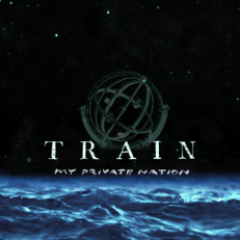
“Calling All Angels” was written by Pat Monahan, Jimmy Stafford and Scott Underwood, and appears as the first song on Train’s third studio album, My Private Nation. The song was inspired by a conversation with Monahan and his therapist, who put forth the idea that we are all made up of angels and traitors, and the lyrics follow that struggle between good and evil. Released as the first single from the album in April 2003, it went to #1 on the Billboard Adult Alternative Airplay chart and #11 on the Billboard Hot 100 Singles chart. It has been certified 2X Platinum by the Recording Industry Association of America (RIAA). The song is played at every home game of Major League Baseball’s Los Angeles Angels. Personnel on the record were: Pat Monahan (lead vocals, percussion), Jimmy Stafford (lead guitar, backing vocals), Scott Underwood (drums, percussion, keyboards), Charlie Colin (bass, backing vocals), and Rob Hotchkiss (rhythm guitar, piano).
My Private Nation was recorded in 2003 at Southern Tracks Recording in Atlanta and produced by Brendon O’Brien. Released in June 2003, it went to #6 on the Billboard 200 Albums chart and has been certified Platinum by the RIAA. Three singles were released from the LP.
Train is an American pop-rock band formed in San Francisco in 1993 by Pat Monahan, Rob Hotchkiss, Jimmy Stafford, Scott Underwood and Charlie Colin. The band has released 11 studio albums, three live albums, one compilation album, four EPs and 34 singles and have sold more than 10 million records worldwide. They have won one ASCAP Award, two Billboard Music Awards and three Grammy Awards. Sixteen members have passed through the band since its formation, with founding member Monahan the sole original member still in the group. They will begin a U.S. tour with Barenaked Ladies in July and continue through August.
"About the Song" -- written by Mickey McMahan , RBN Director of Musicology