The Permian Basin is poised to gain several new natural gas pipelines over the next year or two, finally easing its long-standing takeaway constraints. But the changes won’t stop there. A new wave of proposed projects could further reshape the basin beyond 2027 and into the 2030s. In today’s RBN blog, we look at the major, longer-horizon plans, what they could mean for the Permian, and the new challenges that could arise as this infrastructure comes online.
This is the second blog in our series on the outlook for major U.S. producing basins, starting with the largest: the Permian. A major topic at our upcoming School of Energy: Fundamentals, the Permian is the nation’s largest oil-producing basin and a key driver of U.S. gas growth. Its oil-focused wells also generate substantial and growing volumes of associated gas. But moving that gas out of West Texas and southeastern New Mexico has become one of the market’s biggest challenges and a constraint on further oil production. In our first blog, we covered the major pipeline projects expected to enter service this year and next, which will add about 5.3 Bcf/d of egress capacity from the Waha area. In the blogs ahead, we will examine the Permian’s major producers and the challenges still to come, including the implications of rising NGL production.

Join industry leaders in Calgary on October 29 for market insights, technical presentations, Duvernay inventory analysis, an expert panel, and networking focused on the next chapter of Canadian energy.
Today, we explore how the Permian’s gas takeaway picture could evolve beyond 2027 and into the early 2030s. Plans can change, of course, but our outlook is based on proposed projects and their current level of development.
The growing number of LNG export facilities planned along the Texas Gulf Coast is a major reason more natural gas pipeline capacity is needed. New and expanding LNG projects at Corpus Christi and Port Arthur will increase demand for gas in markets that Permian pipelines increasingly serve, including the Agua Dulce and Katy hubs and the broader Houston-area corridor. That means the takeaway challenge is no longer simply moving gas out of West Texas. It also involves ensuring sufficient downstream infrastructure to carry those volumes from Gulf Coast market hubs to LNG export facilities (more on that below).
As a refresher, Kinder Morgan’s Gulf Coast Express expansion (0.57 Bcf/d; aqua-blue line in Figure 1 below) is already flowing more gas to the Agua Dulce Hub in South Texas. This lifts the pipeline’s total capacity to 2.6 Bcf/d and has helped the Waha Hub recover from negative prices, though it has not fully resolved Permian takeaway constraints. Energy Transfer’s Hugh Brinson Pipeline (blue line) is starting to ramp up flows to Northeast Texas. It will eventually have a capacity of 2.2 Bcf/d. The Blackcomb Pipeline (dashed red line) is set to enter service later this year, providing an extra 2.5 Bcf/d of takeaway to Agua Dulce, and the planned 2.4-Bcf/d Traverse Pipeline (not shown) would provide onward access from Agua Dulce to Katy/Houston in 2027.
About the song
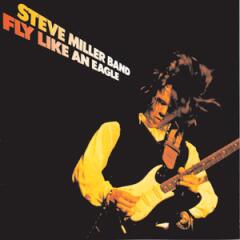
“Fly Like an Eagle” was written by Steve Miller and appears as the second song on side one of the Steve Miller Band’s ninth studio album of the same name. With its chorus of “time keeps on slippin’ away,” the song addresses how fast time moves, even during turbulent times. Released as a single in August 1976, it went to #2 on the Billboard Hot 100 Singles chart and has been certified Platinum by the Recording Industry Association of America. Personnel on the record were: Steve Miller (lead vocals, guitar, ARP Odyssey), Lonnie Turner (bass), Gary Mallaber (drums) and Joachin Young (Hammond B3 organ).
The album, Fly Like an Eagle, was recorded at CBS Studios in San Francisco during 1975-76. Produced by Steve Miller, it was released in May 1976 and went to #3 on the Billboard 200 Albums chart. It has been certified 4X Platinum by the RIAA. Four singles were released from the LP. As a side note, popular 1970s Tulsa cover band Paradise, which included Novi Labs’ Rusty Braziel on bass and Mickey McMahan on lead guitar, covered “Rock’n Me,” the hit single off this album, and combined it with Free’s “Alright Now.” Since Miller’s song borrowed heavily from the Free tune, it made a good combination that would fill up a dance floor.
The Steve Miller Band is an American rock band formed in San Francisco in 1966. After appearing at the Monterey Pop Festival and backing Chuck Berry for his Live at the Fillmore Auditorium album, the band signed with Capitol Records in November 1967. They released their debut album, Children of the Future, in 1968. They have released 18 studio albums, six live albums and 30 singles. They have sold over 30 million records worldwide. Steve Miller was inducted into the Rock and Roll Hall of Fame in 2016. He has an ASCAP Golden Note Award and a star on the Hollywood Walk of Fame. Thirty-five members have passed through the Steve Miller Band since its inception. Miller still plays an occasional show and last appeared in July at Lincoln Center in New York City.
"About the Song" -- written by Mickey McMahan , RBN Director of Musicology