Not so long ago, most folks in the energy industry hardly gave carbon dioxide (CO2) a thought. Sure, some CO2 was used for enhanced oil recovery (EOR) and in some production areas the natural gas coming out of the ground had to be treated to remove high levels of CO2. But otherwise, CO2 wasn’t on the industry’s radar. Now though, CO2 is a front-and-center concern not just for the energy industry but for society at large as the global economy tries to decarbonize. And while renewable energy like wind and solar will be part of that decades-long effort, so will the push to capture CO2 and permanently store it deep underground. Put simply, it’s time for producers, midstreamers, and refiners alike to gain a deeper understanding of carbon capture and sequestration, how it will affect them, and — ideally — how they can profit from it. In today’s RBN blog, we discuss highlights from our new Drill Down Report.

Carbon dioxide may not be the most potent of the greenhouse gases (GHGs), but it is by far the most prevalent, and efforts to reduce or eliminate those emissions are at the forefront of global climate goals and the ongoing energy transition. The idea of capturing CO2 from industrial and power-generation sources, cooling and compressing it into a supercritical state, then pumping it deep underground might have once seemed like a crazy idea, but not anymore. When CO2 is captured and stored, and that’s all, the process is called carbon capture and sequestration (CCS) and utilizes a Class VI injection well (right side of Figure 1) for long-term storage in saline formations. If the CO2 is used for some other process before it’s stored via a Class II well, it is called carbon capture, use, and sequestration (CCUS) — the most common example being EOR (left side of Figure 1).
About the song
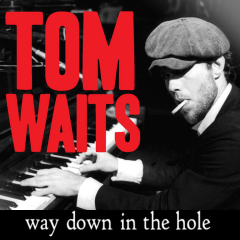
“Way Down in the Hole” was written by Tom Waits and appears as the second song on side two of Waits' 10th studio album, Franks Wild Years. The song was used as the theme song for the HBO crime drama series, The Wire. The series ran for five seasons from 2002-08. In addition to Waits’ version, a different recording of “Way Down in the Hole” was used for each season, including versions by The Blind Boys of Alabama, The Neville Brothers, DoMaJe, and Steve Earle. Personnel on the Waits record were: Tom Waits (vocals, pump organ), Marc Ribot (guitar), Greg Cohen (bass), Michael Blair (drums, percussion), Ralph Carney (sax), and Angela Brown, Leslie Holland, and Lynne Jordan (backing vocals).
Franks Wild Years was recorded during 1987 at Universal Recording in Chicago, and The Sound Factory and Sunset Sound in Hollywood. The album contains songs written for a play of the same name. Several songs from the album have appeared in television shows, movies, and stage productions. Produced by Waits, the album was released in August 1987 and went to #115 on the Billboard Top 200 Albums chart.
Tom Waits is an American songwriter, singer, musician, and actor. He began his professional career performing on the San Diego folk circuit as a teen in the late 1960s. He moved to Los Angeles in 1972, where he worked as a songwriter before securing his first record deal with Asylum Records. He has released 17 studio albums, three live albums, seven compilation albums, two soundtrack albums, and 24 singles. His songs have been covered by many artists from different genres. Waits has appeared in over two dozen motion pictures. He was inducted into the Rock and Roll Hall of Fame in 2011. His last tour was in 2008 and his last LP, Bad as Me, was released the same year. He has a featured role in the movie Licorice Pizza, which was released in the U.S. in November 2021 and received an Oscar nomination for Best Picture.