Carbon dioxide is not the most potent of the greenhouse gases, but it is by far the most prevalent, which makes it a primary focus of efforts to protect the planet. And while a lot of attention is being paid to ways to reduce CO2 emissions and to capture those that are produced, it’s important to remember one key fact: There’s strong demand for CO2 for a variety of commercial uses, from enhanced oil recovery and fertilizers to industrial processes and beverage production. In other words, CO2 has real value to certain parts of the global economy and capturing CO2 for sale to these customers must be factored into the decarbonization equation. In today’s RBN blog, we take a closer look at the industrial CO2 value chain.
The push to ratchet down global greenhouse gases (GHGs) has come to shove, and anyone who works in the energy industry or invests in it now needs to be familiar with CO2, its market dynamics, and the relationship between it and hydrocarbon markets. That new reality prompted us to take a deep dive into CO2 and, in Part 1 of this series, we focused on the midstream and downstream components that have been instrumental in the development of the U.S. CO2 market. We discussed how CO2 is typically transported (as a supercritical fluid) and looked at the U.S. pipeline networks that exist to help move it from place to place. There are more than 5,000 miles of operational CO2 pipe in the U.S. owned by 29 companies, with the leaders being Kinder Morgan, Denbury Inc., and Occidental Petroleum.
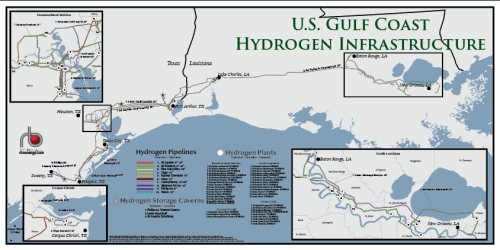
RBN’s U.S. Gulf Coast Hydrogen Infrastructure Map lays out the pipelines and merchant hydrogen plants that make up the gulf coast market, providing an unprecedented snapshot of the region’s hydrogen infrastructure network.
We also looked at two major downstream dispositions of CO2 that have garnered the most attention from those focused on decarbonization. The first is carbon capture and sequestration (CCS). Sequestration is the permanent storage of CO2 in the ground — way down in subsurface geologic formations — with the aim of keeping that profuse GHG permanently out of the atmosphere. There are a couple of close relatives of CCS that are worth knowing about too. One is carbon capture, use, and sequestration (CCUS), which involves simultaneously using and sequestering CO2 — exactly what happens with enhanced oil recovery (EOR), which we’ll touch on shortly. And then there’s the oft-overlooked carbon capture and use (or utilization), also known as CCU, under which CO2 captured from industrial processes is used to make or process something, which we’ll discuss as well.
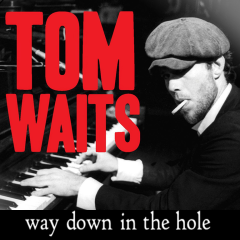
About the song
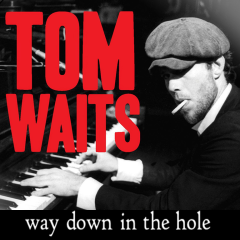
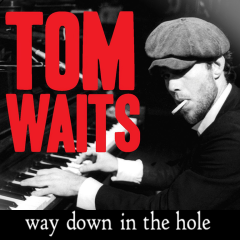
“Way Down in the Hole” was written by Tom Waits and appears as the second song on side two of Waits' 10th studio album, Franks Wild Years. The song was used as the theme song for the HBO crime drama series, The Wire. The series ran for five seasons from 2002-08. In addition to Waits’ version, a different recording of “Way Down in the Hole” was used for each season, including versions by The Blind Boys of Alabama, The Neville Brothers, DoMaJe, and Steve Earle. Personnel on the Waits record were: Tom Waits (vocals, pump organ), Marc Ribot (guitar), Greg Cohen (bass), Michael Blair (drums, percussion), Ralph Carney (sax), and Angela Brown, Leslie Holland, and Lynne Jordan (backing vocals).
Franks Wild Years was recorded during 1987 at Universal Recording in Chicago, and The Sound Factory and Sunset Sound in Hollywood. The album contains songs written for a play of the same name. Several songs from the album have appeared in television shows, movies, and stage productions. Produced by Waits, the album was released in August 1987 and went to #115 on the Billboard Top 200 Albums chart.
Tom Waits is an American songwriter, singer, musician, and actor. He began his professional career performing on the San Diego folk circuit as a teen in the late 1960s. He moved to Los Angeles in 1972, where he worked as a songwriter before securing his first record deal with Asylum Records. He has released 17 studio albums, three live albums, seven compilation albums, two soundtrack albums, and 24 singles. His songs have been covered by many artists from different genres. Waits has appeared in over two dozen motion pictures. He was inducted into the Rock and Roll Hall of Fame in 2011. His last tour was in 2008 and his last LP, Bad as Me, was released the same year. He has a featured role in the movie Licorice Pizza, which was released in the U.S. in November 2021 and received an Oscar nomination for Best Picture.