Carbon-capture projects have been slow to take root in the U.S., but that may be changing as a number of companies are now advancing plans to capture the carbon dioxide that results from ethanol production in the Midwest. Ethanol plants are an obvious choice, given that the CO2 resulting from ethanol fermentation is highly concentrated, which makes capturing it more efficient (and less expensive) compared to many other industrial processes. But while the relative ease and economy of capturing those emissions might seem like a no-brainer, convincing the public to go along with those plans has been more difficult. In today’s RBN blog, we look at what’s being planned.
We’ve written a lot about carbon capture in the RBN blogosphere recently, starting with the basics of carbon capture and sequestration (CCS); followed by a look at the extensive CO2 value chain; the federal 45Q tax credit and why variable costs can make some projects uneconomic; legislation that could expand the size and reach of those credits; and some underlying economic and technological reasons why project successes have been limited. Most recently, we discussed the Houston CCS Innovation Zone, the biggest project currently taking shape. (Carbon capture was also the subject of a recent Drill Down Report.)
Today, we turn our attention to ethanol production, a significant contributor to CO2 emissions but one with a lot of potential for carbon-capture opportunities. Most ethanol plants in the U.S. are dry mills. To start the ethanol-production process, they take finely ground corn and add water along with enzymes to prepare the starch for fermentation. The mixture, also known as mash, is cooked to further break down the starch. The mash is allowed to cool before a second enzyme is added, turning the liquid starch into sugars. The yeast is added and fermentation begins, yielding ethanol and CO2.
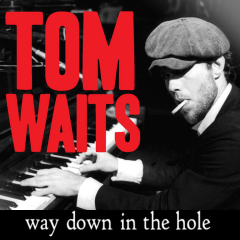
About the song
“Way Down in the Hole” was written by Tom Waits and appears as the second song on side two of Waits' 10th studio album, Franks Wild Years. The song was used as the theme song for the HBO crime drama series, The Wire. The series ran for five seasons from 2002-08. In addition to Waits’ version, a different recording of “Way Down in the Hole” was used for each season, including versions by The Blind Boys of Alabama, The Neville Brothers, DoMaJe, and Steve Earle. Personnel on the Waits record were: Tom Waits (vocals, pump organ), Marc Ribot (guitar), Greg Cohen (bass), Michael Blair (drums, percussion), Ralph Carney (sax), and Angela Brown, Leslie Holland, and Lynne Jordan (backing vocals).
Franks Wild Years was recorded during 1987 at Universal Recording in Chicago, and The Sound Factory and Sunset Sound in Hollywood. The album contains songs written for a play of the same name. Several songs from the album have appeared in television shows, movies, and stage productions. Produced by Waits, the album was released in August 1987 and went to #115 on the Billboard Top 200 Albums chart.
Tom Waits is an American songwriter, singer, musician, and actor. He began his professional career performing on the San Diego folk circuit as a teen in the late 1960s. He moved to Los Angeles in 1972, where he worked as a songwriter before securing his first record deal with Asylum Records. He has released 17 studio albums, three live albums, seven compilation albums, two soundtrack albums, and 24 singles. His songs have been covered by many artists from different genres. Waits has appeared in over two dozen motion pictures. He was inducted into the Rock and Roll Hall of Fame in 2011. His last tour was in 2008 and his last LP, Bad as Me, was released the same year. He has a featured role in the movie Licorice Pizza, which was released in the U.S. in November 2021 and received an Oscar nomination for Best Picture.