


The U.S.’s effort to prioritize low-carbon energy entails some bumps and bruises along the way, an indication that the energy industry’s trilemma of availability, reliability and affordability can conflict with today’s economic realities and environmental priorities, even in a state like California with abundant financial and clean-energy resources and a commitment to decarbonization. In today’s RBN blog, we look at the state’s lofty goals to phase out fossil fuels, why it has been forced to put its transition away from natural gas and nuclear power on hold, and some of the biggest challenges ahead for the Golden State.
As we said in Can’t Help Falling in Love, the first blog in this series, the challenges of trying to shift away from oil and gas are being felt now in Hawaii, where a commitment to expanding energy production from renewable sources and tamping down the use of fossil fuels — while also keeping prices under control and reducing pollution — is turning out to be no easy feat. Today we turn our attention to California, the state with the most ambitious plans for moving away from fossil fuels and to an economy predominantly powered by renewables and zero-carbon power. (We last looked at the state’s efforts to manage the energy transition away from natural gas a few years ago in California Dreamin’.)
The NATGAS Appalachia weekly report provides the data and insights to monitor the northeast natural gas market’s twists and turns and identify the risks and opportunities along the way, including tracking supply-demand trends, outbound capacity and their impact on takeaway pipeline utilization, and regional prices.
Let’s start with a 50,000-foot look at the state’s overall decarbonization goals before delving into some of the specific targets that have been put forward. The state’s strategy has three fundamental elements, according to Key Challenges for California’s Energy Future, published in June 2023 by the California Council on Science & Technology (CCST):
- Maximize efficiency and electrify energy use across sectors to the greatest extent possible.
- Provide affordable, accessible, and reliable carbon-free electricity for a highly electrified economy.
- Decarbonize activities that cannot be electrified by using clean fuels, efficiency, conservation, and better land-use planning and infrastructure.
About the song
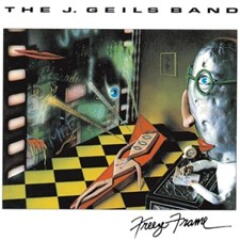
“Freeze Frame” was written by Seth Justman and Peter Wolf and appears as the first song on side one of The J. Geils Band's 10th studio album of the same name. Released as the second single from the album in January 1982, it went to #4 on the Billboard Hot 100 Singles chart. The single's B-side, “Flamethrower,” started picking up airplay in urban contemporary markets at the same time, particularly in the Detroit area. It reached #12 on the Billboard Hot Dance Play Singles chart. “Freeze Frame” was certified Gold by the Recording Industry Association of America (RIAA). Personnel on the record were: Peter Wolf (lead vocals), Seth Justman (keyboards, backing vocals), Stephen Bladd (drums), J. Geils (guitar), Magic Dick (harmonica, sax, trumpet), Danny Klein (bass), and Randy Brecker, Tom Malone, Lou Marini, George Young, Ronnie Cuber, and Alan Rubin (horns).
The album, Freeze Frame, was recorded in 1980-81 at Long View Farm in North Brookfield, MA, with Seth Justman producing. Released in October 1981, the LP went to #1 on the Billboard Top 200 Albums chart and has been certified Platinum by the RIAA. It would be the last album for lead vocalist/frontman Peter Wolf, who left the band in 1983. According to Wolf, “They wanted to continue in a pop-techno way, and it wasn't my thing.” Three singles were released from the album.
The J. Geils Band was an American rock band formed in 1967 in Worcester, MA, with Peter Wolf, J. Geils, Seth Justman, Magic Dick, Danny Klein, and Stephen Bladd. They released 11 studio albums, three live albums, nine compilation albums, and 30 singles. After Peter Wolf left the band in 1983, they carried on with keyboardist Seth Justman on lead vocals. The band released one album with that lineup in 1984 and disbanded in 1985. They did a few reunion shows and tours until 2015. J. Geils died in 2017. Magic Dick still records and tours in an acoustic duo with guitarist Shun Ng. Seth Justman is still occasionally involved in record production, and Peter Wolf still records and tours as a solo artist.







Comments
Thank you for an informative article, Jason. California's huge economy and population requires dispatchable, firm power. According to the California Energy Commission, California's 2022 electricity demand was 287,219 gigawatt-hours (GWh.) Despite spending tens of billions of dollars on intermittent solar and intermittent wind generators since 2010, solar provided only 48,950 GWh (17.0 %) and wind provided only 31,100 GWh (10.8 %) of California's total electricity.
Solar and wind are integrated into California's power grid mostly via the fleet of 80 natural gas fired peaker plants. (The Helms Pumped Storage Plant provides a significant amount of required ancillary services to stabilize voltage and frequency.) Per the U.S. EIA, the consumption of natural gas for California electricity generation has been increasing since 2019. http://www.eia.gov/dnav/ng/hist/n3045ca2a.htm
The modest percentages of total demand met by solar and wind call into question the grand plans to reduce emissions via increasing installations of solar and wind in California. There are engineering reasons why these grand plans are doomed to failure. However, the special interests focused on these grand plans apparently have generous lobbying budgets.
Here are excerpts from a pair of reports commissioned by the California Energy Commission which asked the eminent scientists and engineers at the California Commission on Science and Technology to determine the safest and most cost-effective way to achieve California's emissions goals by 2030. The third reference is a 3 1/2 page summary.
"California’s Energy Future: The View to 2050" Release Date: May 24, 2011 | Last Updated Date: February 19, 2015 https://tinyurl.com/CCST-Nuclear-1
... Nuclear power can provide constant, reliable emission-free energy with a much lower and more easily met requirement for load balancing. Roughly 30 new nuclear power plants could provide two-thirds of California’s electric power in 2050. However, nuclear waste storage remains a significant problem with existing reactor technology, not to mention public concern, especially in the wake of Japan’s recent earthquake and tsunami disaster....
"California’s Energy Future – Powering California with Nuclear Energy" Release Date: July 1, 2011 | Last Updated Date: February 19, 2015 https://tinyurl.com/CCST-Nuclear-2
... Jane C.S. Long, associate director at large for Lawrence Livermore National Laboratory and co-chair of the California’s Energy Future study. Population growth and energy demand will eventually force a decision on California’s energy strategy, especially with the requirement for drastic reduction in emissions. “By 2050, California’s population is expected to rise to 55 million people. That increase, accompanied by economic growth, will likely require a doubling in electricity production, but with virtually no emissions, to meet state goals,” says Jane Long. “That is why nuclear power could prove one important option for meeting those strict and necessary standards.”...
"CCST Report on Nuclear Power in California’s 2050 Energy Mix," Burton Richter, Ph.D. (Nobel Laureate), July 15, 2011,
https://ccst.us/wp-content/uploads/071511richter.pdf
Excelently researched piece. A few comments
if you apply to connect a soar/battery project to the grid today an optimistic operation date in 2030. The inside joke is that actually meeting that date is impossible. The usual reasons. Supply chain transformer shortage, lineman shortage etc.
California has been stuck at 30% Renewables since 2017. To get near 50% will cost at least $30B in grid upgrades and take 10 years to build. 90% will require $100B.
the land use is grossly under estimated. To meet the 120,000 MW future demand they want, solar and batteries would require 9600 square miles and cost over $2T. Put that in the ratebase.