


Every state has its unique set of advantages and challenges, but very few face the number of contrasts that makes New York and its ambitious decarbonization goals so interesting. The Empire State ranks fourth in population (behind California, Texas and Florida) and is home to the biggest city in the country, yet most of the state would be considered rural. It has the nation's third-largest economy, but because its key industries — including financial and business services — are not energy-intensive, and many in the New York City area use mass transit, its per-capita energy use is lower than all but two states (Hawaii and Rhode Island). And while the state gets about 30% of its power from renewable sources (most of it large-scale hydropower), solar and wind generation are still very limited there. In today’s RBN blog, we look at how the state’s plans to ramp up renewable generation — which have long been plagued by problems with incentives, permitting and project cancellations — are running headlong into the difficulties of adding so many resources in a short period of time.
This is the fourth blog in our series on the ongoing efforts to decarbonize U.S. energy networks. While developments are playing out very differently from state to state, based on any number of factors, one thing has become clear over the past couple of years as climate-related initiatives have gained momentum: Economic and logistical realities that may have been initially overlooked are being brought to the fore. Americans expect the energy industry to deliver fuel and power where they need it, when they need it, and for a price that everyday people can afford — what’s referred to as the trilemma of availability, reliability and affordability. But those goals not only clash with each other at times, they can also conflict with environmental priorities and economic realities.
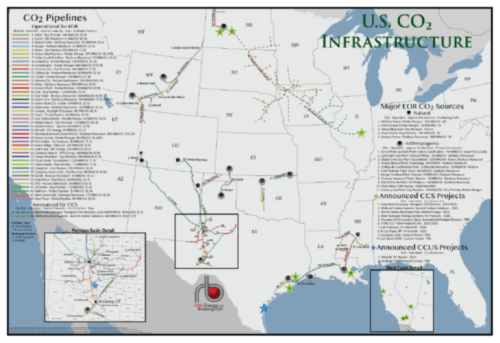
RBN Energy’s US CO₂ Infrastructure map brings together legacy Enhanced Oil Recovery (EOR) assets, as well as announced large-scale Carbon Capture and Sequestration (CCS) and Carbon Capture, Utilization and Sequestration (CCUS) projects, all in our signature concise, accurate, and intelligible style.
In our first blog, Can’t Help Falling in Love, we looked at the many ways that Hawaii exemplifies both the ambitions and pitfalls of today’s energy landscape. The state has a longstanding commitment to expanding energy production from renewable sources while also tamping down the use of fossil fuels (especially coal for power generation) — but doing all that while also keeping prices under control and reducing pollution is turning out to be no easy feat. Next, in Freeze Frame, we highlighted how difficult it can be to significantly scale up renewable energy production while moving away from fossil fuels at the same time, even in a state like California with abundant financial and clean-energy resources and a commitment to decarbonization. After that, in Which Way Does That Old Pony Run?, we moved on to Texas, where critiques of top-down mandates for a transition to a more renewables-centric energy mix are right out in the open even as renewable energy is booming.
Today, we turn our attention to New York. Like many states, it has increasingly leaned on natural gas (orange layer in Figure 1) for power generation in recent years (now at about 50%) as it has sought to lower consumer electricity costs and reduce greenhouse gas (GHG) emissions. At the same time, the state’s reliance on coal-fired power (black layer in Figure 1) has dropped from 18% in 2000 down to zero today. (The last coal-fired plant, near Lake Ontario, closed in 2020.) We should also note that the use of petroleum liquids (dark-blue layer near top of Figure 1) has dropped dramatically over the past two decades, down from 11% in 2000 to near zero today. (Many natural gas plants in the state are dual-fuel facilities that can be powered by diesel in a pinch.) Largely as a result of these changes made to its fuel mix — with an assist from New York City’s reliance on mass transit — New York had the lowest per-capita energy-related carbon dioxide (CO2) emissions of any state in 2021.
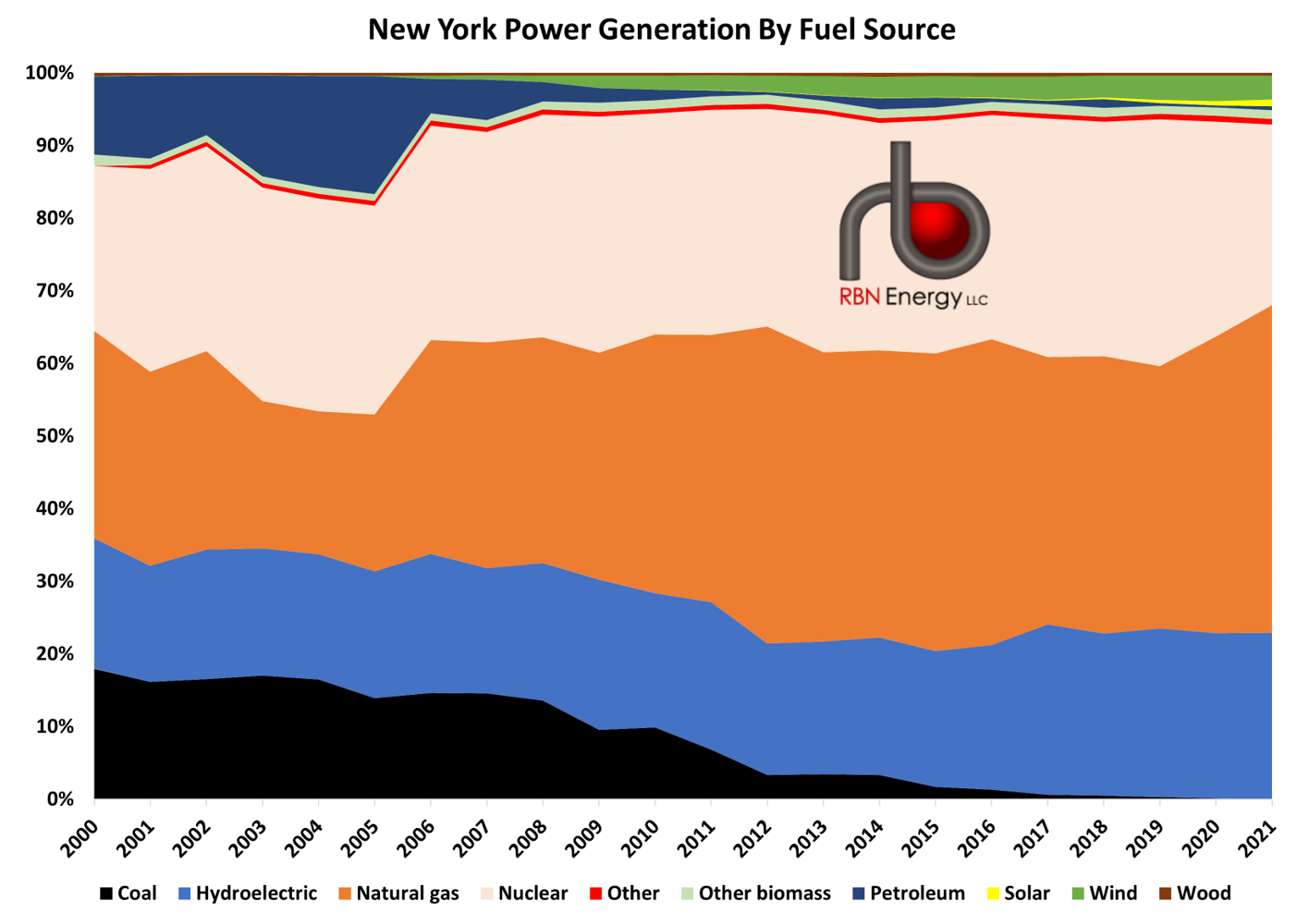
Figure 1. New York Power Generation by Fuel Source. Source: EIA
About the song
“New York State of Mind” was written by Billy Joel and appears as the fourth song on side one of Billy Joel’s fourth studio album, Turnstiles. Never released as a single, the song has remained a fan favorite that Joel regularly performs at his live shows. The song has been covered by many artists, including Barbra Streisand, Carmen McCrae, Shirley Bassey, and Leslie West. Personnel on the record were: Billy Joel (piano, vocals), Liberty DeVito (drums), Doug Stegmeyer (bass), Richie Cannata (sax), and Ken Ascher (orchestral arrangements).
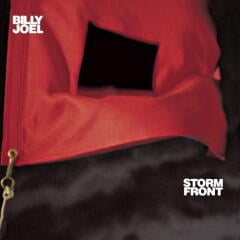
Turnstiles was Joel’s celebration of his return to New York City after spending three years in Los Angeles. The album was originally recorded in Colorado at Caribou Ranch with members of Elton John’s band and produced by James Guercio. Not pleased with the results, Joel took over as producer and re-recorded the whole album at Ultrasonic Studios in Hempstead, NY, and Columbia Recording Studios in New York City between June 1975 and January 1976. He used his touring band to re-record the songs, marking the first time he used his own band to record an entire album. Released in May 1976, the album went to #122 on the Billboard 200 Albums chart. It has since been certified Platinum by the Recording Industry Association of America. Two singles were released from the LP.
Bronx-born, Long Island-raised Billy Joel is an American singer, songwriter, and pianist. He has sold over 160 million records worldwide, making him the fourth best-selling solo artist in the U.S. As a solo artist, he has released 13 studio albums, seven live albums, 18 compilation albums, and 61 singles. He has won one American Music Award, five Brit Awards, five Grammy Awards, one Primetime Emmy Award, and one Tony Award. He is a member of the Rock and Roll Hall of Fame, has received Kennedy Center Honors, the Gershwin Prize for Popular Song, and has a star on the Hollywood Walk of Fame. He continues to record and tour.





Comments
I am surprised you didn't go with I've Seen the Lights Go Out on Broadway, from the same album.
In reply to Title of New York State of Mind by Mark Whitney
First off, thanks for reading the blog.
We have a lot of fun picking the song to accompany each blog and that would have been an excellent choice.