


Even before the recent spike in crude oil and gasoline prices, the subject of a contentious House committee hearing Wednesday with executives from six large oil and natural gas companies, electric vehicles (EVs) were having a bit of a moment. From legacy brands such as BMW and General Motors to the EV startup Polestar, several automakers used their spots during February’s Super Bowl — the most-watched event on the TV calendar, where the cost for a 30-second ad went for a whopping $6.5 million — to highlight their latest EV offerings. Now, with gasoline prices about 50% higher than they were a year ago (and about 20% higher than they were on Super Bowl Sunday), EVs are getting a whole new level of attention from everyday drivers, not just Tesla fanboys, car afficionados, or the environmentally conscious. In today’s RBN blog, we look at whether the recent run-up in gasoline prices will help turn EVs into a more economical option.
We’ve written a lot about EVs and their place in the energy transition in the past few months, from the challenges associated with sourcing the minerals and metals needed to make that technology work (see Tell It Like It Is) to the long-term impact on the power grid (see Electric Avenue) that would accompany a large-scale shift away from the internal combustion engine (ICE).
On a larger scale, we’ve also talked about how the illusion of a smooth energy transition has been swept away (see Sledgehammer), with the drive toward decarbonization running headlong into the reality of energy markets — a primary topic at RBN’s upcoming School of Energy/Spring 2022. The energy transition is happening — there’s no debating that — and we must prepare for the world to which we’re headed, but we still live in one that runs on hydrocarbons and will for some time to come. That’s brought with it some messy energy markets, made even more turbulent by Russia’s invasion of Ukraine, which has sent prices of all sorts of energy commodities (see It’s Been a Long Time Comin’ and Comfortably Numb) soaring upward.
EVs sit front and center in the effort to decarbonize passenger transportation and the Biden administration has set a goal that half of all new U.S. vehicles sold in 2030 be zero-emission, a category that includes battery-electric vehicles (BEVs, which are powered exclusively by a battery), plug-in electric hybrids (which also have an ICE), or fuel-cell electric vehicles (powered by hydrogen). EVs accounted for 3.1% of new vehicle sales in the U.S. in 2021, a percentage that dipped during 2020’s COVID-driven recession (and its lower gasoline prices) but is now rising in the U.S. and elsewhere, with global EV sales estimated to grow from 6.75 million vehicles in 2021 to 20 million vehicles by 2030 and 35 million vehicles by 2040. How fast could that transition really happen? That will, of course, be dependent on a ramp-up in production in EVs, the material supply chains to support that production, and the power generation infrastructure buildout required to fuel all those new vehicles. Even more fundamental will be whether average people are able to afford EVs and that, to a large degree, will depend on the costs to purchase, maintain and refuel.
About the song
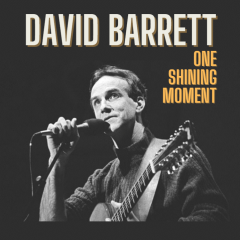
“One Shining Moment” was written by David Barrett. It’s widely associated with the NCAA Men’s Basketball Tournament. Since 1987, the song has been played during television coverage as the winners of the championship game cut down the nets to a montage of highlights of the tournament. Ann Arbor, MI-based singer-songwriter Barrett was inspired to write the song after watching basketball legend Larry Bird play in 1986. CBS Sports picked up Barrett’s version and used it from 1987 to 1993. They used a version by Teddy Pendergrass from 1994-99, then used the Barrett version again between 2000 and 2002. Beginning in 2003, CBS has mostly used Luther Vandross’ version until the present, with Jennifer Hudson’s cover of the song used in 2010 and Ne-Yo’s interpretation used in 2016. Vandross’ version is believed to be the last recording he made before his death in 2005.
In addition to composing “One Shining Moment,” David Barrett has won two Emmys for scoring PBS specials about C.S. Lewis and Woody Hayes. He has also composed music for the PGA Championship, the Calgary Olympics, the Seoul Olympics, and commercials for Kraft, Hallmark, McDonalds and others.
Luther Vandross was an American singer, songwriter, and record producer. He released 13 studio albums, one live album, 17 compilation albums and 59 singles.
Teddy Pendergrass was an American singer who got his professional start as the lead singer of Harold Melvin and the Blue Notes. After leaving the group in 1976, he had a successful solo career. As a solo artist, he released fourteen studio albums, two live albums, 13 compilation albums and 39 singles before his death in 2010. Ne-Yo and Jennifer Hudson continue to record and perform live as solo artists.




Comments
Does this analysis need to take into consideration the cost of electricy per kwh? I hear some parts of California are approaching $0.30 per kwh vs my $0.11 per kwh rate in Houston.
In reply to Does this analysis need to by Larry Gregory
Thanks for taking the time to read my piece.
State-level kwh prices were taken into consideration for the calculations. We used about 24 cents/KWh for California and about 12 cents per KWh for Texas. For the national comparisons, we used about 14 cents/KWh.
Those are average residential rates from the EIA for January 2022.