Electric vehicles (EVs) in the U.S. may be at a turning point, with high gasoline prices prompting would-be car buyers to give them a second look — or a first look, in many cases. EV adoption has been slow to pick up speed in the U.S. for a variety of reasons, including the lack of a nationwide charging network and concerns about “range anxiety.” But a major factor has always been that gasoline-fueled cars have been cheaper to purchase and operate than EVs. The recent run-up in gasoline prices, amplified by Russia’s invasion of Ukraine, has changed the math in those comparisons, at least in the short-term. Is the pace of EV adoption about to accelerate, or will trends in gasoline and electric power prices put the transition into cruise control, or even neutral? In today’s RBN blog, we look at how forecasts for power and gasoline prices might shape the conversations around EVs through 2030.
Over the past few months, we’ve written a lot about EVs and their place in the ongoing energy transition. We’ve looked at the challenges associated with sourcing the minerals and metals needed to make that technology work (see Tell It Like It Is, Part 1 and Part 2), along with the long-term impact on the power grid (see Electric Avenue) that would accompany a large-scale shift away from the internal combustion engine (ICE). And we’ve examined the clash between the energy markets of today and the ongoing energy transition in Monkey Wrench and Sledgehammer.

RBN Energy’s US CO₂ Infrastructure map brings together legacy Enhanced Oil Recovery (EOR) assets, as well as announced large-scale Carbon Capture and Sequestration (CCS) and Carbon Capture, Utilization and Sequestration (CCUS) projects, all in our signature concise, accurate, and intelligible style.
More recently, in Part 1 of this series, we discussed the sudden burst of attention that EVs have received, a trend highlighted by their presence in this year’s Super Bowl broadcast. From legacy brands such as BMW and General Motors to the EV startup Polestar, several automakers used their spots during February’s game to highlight their latest EV offerings. The momentum didn’t stop there. Americans bought nearly twice as many EVs in the first quarter of 2022 than in the year-ago period, according to Kelley Blue Book, and now account for more than 5% of total new-car sales. The buying trend isn’t limited to the U.S. either. Global EV sales topped 850,000 in March, according to EV-Volumes, up more than 60% from a year earlier. Volkswagen, the world’s second-largest EV manufacturer after Tesla, said earlier this month that it had sold out its EV models in the U.S. and Europe, and orders in those markets would not be delivered until 2023 due to high demand and supply chain issues. And although EV sales have been rising, overall U.S. sales of new vehicles were expected to drop by about 14% in the first quarter.
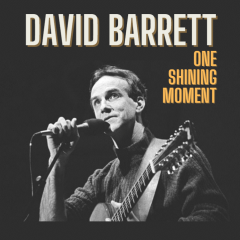
About the song
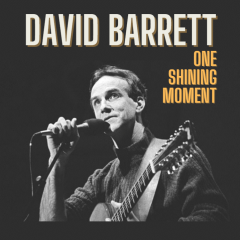
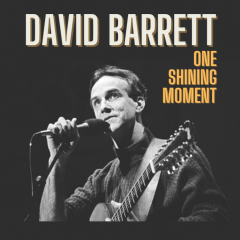
“One Shining Moment” was written by David Barrett. It’s widely associated with the NCAA Men’s Basketball Tournament. Since 1987, the song has been played during television coverage as the winners of the championship game cut down the nets to a montage of highlights of the tournament. Ann Arbor, MI-based singer-songwriter Barrett was inspired to write the song after watching basketball legend Larry Bird play in 1986. CBS Sports picked up Barrett’s version and used it from 1987 to 1993. They used a version by Teddy Pendergrass from 1994-99, then used the Barrett version again between 2000 and 2002. Beginning in 2003, CBS has mostly used Luther Vandross’ version until the present, with Jennifer Hudson’s cover of the song used in 2010 and Ne-Yo’s interpretation used in 2016. Vandross’ version is believed to be the last recording he made before his death in 2005.
In addition to composing “One Shining Moment,” David Barrett has won two Emmys for scoring PBS specials about C.S. Lewis and Woody Hayes. He has also composed music for the PGA Championship, the Calgary Olympics, the Seoul Olympics, and commercials for Kraft, Hallmark, McDonalds and others.
Luther Vandross was an American singer, songwriter, and record producer. He released 13 studio albums, one live album, 17 compilation albums and 59 singles.
Teddy Pendergrass was an American singer who got his professional start as the lead singer of Harold Melvin and the Blue Notes. After leaving the group in 1976, he had a successful solo career. As a solo artist, he released fourteen studio albums, two live albums, 13 compilation albums and 39 singles before his death in 2010. Ne-Yo and Jennifer Hudson continue to record and perform live as solo artists.