By all appearances, the momentum behind electric vehicles (EVs) has done nothing but increase over the last year, boosted by higher gasoline prices and federal legislation intended to speed the pace of EV adoption. But the transportation sector's transition to electric power and away from the internal-combustion engine (ICE) won't be easy, and may take a lot longer than many expect or hope, due in part to the significant challenges in finding the hard-to-come-by metals and other materials needed for EV production. In today’s RBN blog, we look at the continuing focus on EVs, China’s current dominance in the global market, and how the newly passed Inflation Reduction Act (IRA) is boosting plans to make EV batteries in the U.S.
In Part 1 of this series, we discussed the sudden burst of attention that EVs received at the start of the year, a trend highlighted by their significant presence in February’s Super Bowl broadcast. From legacy brands such as BMW and GM to the EV startup Polestar, several automakers used their spots during the big game to highlight their latest all-electric offerings. In Part 2, we looked at how high gasoline prices have prompted would-be car buyers to give EVs a second look — or a first look, in many cases. Gasoline prices have steadily fallen in recent months, but the national average remains about 60 cents/gal higher than a year ago.
There is little doubt that the appetite for EVs is growing. U.S. sales were up 66% year-on-year in the second quarter of 2022 to nearly 200,000 EVs, even as overall new car registrations dropped by 20%, according to Kelley Blue Book data, with many potential buyers stung by higher prices and tight inventories. The most popular EVs were Tesla’s Model Y and Model 3, with sales of more than 50,000 each, followed by the Ford Mustang Mach-E at about 11,000. (It’s worth noting that hybrid-EVs such as the Toyota Prius accounted for about 250,000 more sales, although that category was down 10% from the year-ago quarter and has been trending lower globally as well. The most popular hybrid was Toyota’s RAV4 Prime, with nearly 53,000 sold.) Tesla said Sunday that it delivered about 344,000 EVs in the third quarter, up 35% from the year-ago quarter, although a little below analysts’ expectations. (Tesla reports data for deliveries instead of sales and does not typically break down those figures by region.) And GM said Monday that it was boosting production of its two Chevy Bolt models from about 44,000 in 2022 to 70,000 in 2023 after it sold 14,709 units in Q3, it’s best quarter for EVs ever.
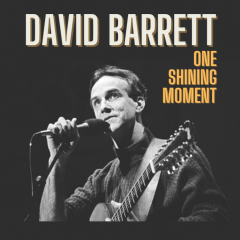
About the song
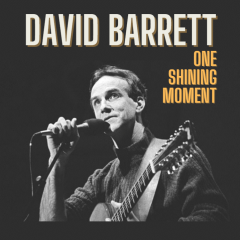
“One Shining Moment” was written by David Barrett. It’s widely associated with the NCAA Men’s Basketball Tournament. Since 1987, the song has been played during television coverage as the winners of the championship game cut down the nets to a montage of highlights of the tournament. Ann Arbor, MI-based singer-songwriter Barrett was inspired to write the song after watching basketball legend Larry Bird play in 1986. CBS Sports picked up Barrett’s version and used it from 1987 to 1993. They used a version by Teddy Pendergrass from 1994-99, then used the Barrett version again between 2000 and 2002. Beginning in 2003, CBS has mostly used Luther Vandross’ version until the present, with Jennifer Hudson’s cover of the song used in 2010 and Ne-Yo’s interpretation used in 2016. Vandross’ version is believed to be the last recording he made before his death in 2005.
In addition to composing “One Shining Moment,” David Barrett has won two Emmys for scoring PBS specials about C.S. Lewis and Woody Hayes. He has also composed music for the PGA Championship, the Calgary Olympics, the Seoul Olympics, and commercials for Kraft, Hallmark, McDonalds and others.
Luther Vandross was an American singer, songwriter, and record producer. He released 13 studio albums, one live album, 17 compilation albums and 59 singles.
Teddy Pendergrass was an American singer who got his professional start as the lead singer of Harold Melvin and the Blue Notes. After leaving the group in 1976, he had a successful solo career. As a solo artist, he released fourteen studio albums, two live albums, 13 compilation albums and 39 singles before his death in 2010. Ne-Yo and Jennifer Hudson continue to record and perform live as solo artists.