


The evolving situation in Venezuela is rife with uncertainty, including concerns about short-term political stability, how much oil production could actually rebound, and whether there’s an appetite to spend the tens of billions of dollars needed for a long-term turnaround. But as the outlook for Venezuelan crude oil improves, it’s important to note that significant market issues are at play as well, including the potential for renewed competition with Canadian heavy crudes along the U.S. Gulf Coast. In today’s RBN blog, we look at the differences in Venezuelan and Canadian heavy crudes, including production methods, costs and quality, and how a revival in Venezuelan production could impact the flows and prices of Canadian (and other competing) heavy barrels.

The Future of Fuels bi-annual report by RBN's Refined Fuels Analytics provides an in-depth analysis of the U.S. and global refinery industries, focusing on crude oil and fuel market dynamics, supply and demand, alternative fuels, refinery capacities, and price forecasts to help stakeholders navigate the evolving energy landscape.
As we noted in Take Me Money and Run Venezuela, the country was once a critical supplier of heavy sour crude to Gulf Coast refineries, providing more than 1.3 MMb/d in the late 1990s and early 2000s before Venezuelan production entered a long period of decline soon after Hugo Chavez came into power. Today, the country produces less than 1 MMb/d of crude oil, barely one-quarter of the level it reached in the late 1990s, around 3.5 MMb/d. Venezuelan crude is generally heavy, with API gravities ranging from 8.5 degrees to 25 degrees for varieties like Boscan, Merey, BCF 13 and 17, and Leona, although it also produces some lighter grades, with an API of 30-35 degrees. (API gravity is a measure of how heavy or light a petroleum liquid is compared to water — the lower the API, the denser the crude oil.) Venezuela’s benchmark heavy crude, Merey, comes from the Orinoco Belt (dark-blue-shaded area in Figure 1 below) and has an API of about 16 degrees. Sulfur content for the country’s heavy and light crudes ranges from 1.5% to 2.7%, which categorize them as sour crudes.
About the song
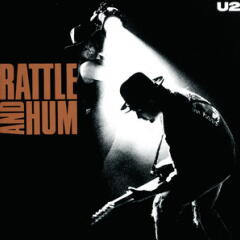
“When Love Comes to Town” has music by U2 and lyrics by Bono. It appears as the 12th song on U2’s hybrid studio and live album, Rattle and Hum, their sixth album release. The song, featuring B.B. King on lead guitar and shared lead vocals, was recorded at Sun Studio at 706 Union Ave. in Memphis. Sun was the studio where early recordings of Elvis Presley, Jerry Lee Lewis, Roy Orbison, Howlin’ Wolf and B.B. King were recorded. In the video for the song, you can see Elvis’s original guitar player, Scotty Moore, at Sun Studio with U2 and B.B. King. Released as the album’s third single in March 1989, it went to #2 on the Billboard Mainstream Rock Singles chart and #68 on the Billboard Hot 100 Singles chart. Personnel on the record were: Bono (lead vocals, acoustic guitar), The Edge (electric guitar), Adam Clayton (bass), Larry Mullen Jr. (drums), B.B. King (lead vocals, lead guitar), and Rebecca Evans Russell, Phylis Duncan, and Helen Duncan (backing vocals). The song was produced by Jimmy Iovine and engineered by original Sun artist and producer “Cowboy” Jack Clement.
Rattle and Hum is a live and studio album that is a companion to the rockumentary film of the same name, directed by Phil Joanou. The album included collaborations with Bob Dylan, B.B. King and the Harlem New Voices of Freedom gospel choir. It was recorded at Sun Studio in Memphis, Point Depot, STS and Danesmoate in Dublin, and A&M and Ocean Way in Hollywood in 1987-88. Produced by Jimmy Iovine, the album was released in October 1988 and went to #1 on the Billboard 200 Albums chart. It has been certified 5X Platinum by the Recording Industry Association of America. Four singles were released from the LP.
U2 is an Irish rock band formed in Dublin in 1976. They have released 15 studio albums, two live albums, three compilation albums, nine EPs and 84 singles and have sold more than 150 million records worldwide. The band has won eight Brit Awards, two Golden Globe Awards, 22 Grammy Awards, four Ivor Novello Awards, and Kennedy Center Honors, and are members of the Rock and Roll Hall of Fame and the UK Music Hall of Fame. They continue to record and tour.
B.B. King (Riley B. King) was an American blues guitarist, singer and songwriter. He helped introduce string bending and vibrato to the electric blues guitar. He started his professional career in 1943, playing guitar with a gospel group on radio station WGRM in Greenwood, MS. King released 43 studio albums, 16 live albums and 138 singles and has sold more than 40 million records worldwide. He won 15 Grammy Awards, a Grammy Lifetime Achievement Award, a National Medal of Arts, a Presidential Medal of Freedom and Kennedy Center Honors, and is a member of the Rock and Roll Hall of Fame and the Blues Hall of Fame. King died in Las Vegas in May 2015 at 89.
"About the Song" -- written by Mickey McMahan , RBN Director of Musicology





Comments
The other thing that happened back in the 2000s was the shale oil revolution. While the Gulf Coast back then was investing in cokers and multi national oil companies investing in Alberta oil sands. Then came the fracking revolution. Today the slate is much lighter in PADD III, there are constant re-exports meaning the Gulf is balanced on heavy with basically that relatively small amount of Canadian and some Mexican heavy. Meanwhile Exxon doubled the size of their Beaumont Texas refinery by adding light crude capability. And those cokers run slack all the time. And nobody is putting big money into the oil sands. Big investments in Venezuela crude are highly unlikely.