The arrival of a special, 460-Mbbl shipment of U.S.-sourced naphtha in Venezuela a few days ago underscored a critically important fact, namely that continuing and eventually expanding production of Venezuelan heavy sour crude will require steady inflows of imported diluent. The U.S. and then Russia have been the primary diluent suppliers to Venezuela over the past couple of years, supplanting Iran, which had been the largest source of diluent in 2020-23. With the U.S. now “running” the troubled Latin American country, the U.S.’s role in diluent supply is likely to expand, and Russia’s may well subside. In today’s RBN blog, we’ll discuss Venezuela’s desperate need for diluent and how it’s likely to be met.
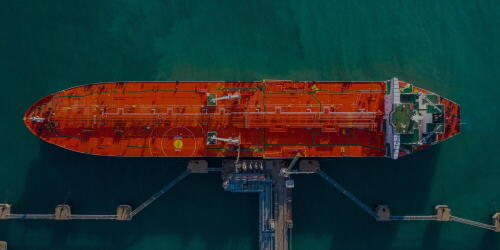
The Crude Voyager is a weekly analysis of U.S. Gulf Coast loading activity that explains the ebbs and flows of crude loadings, destinations, and geopolitical issues impacting U.S. exports. It outlines the major paths for laden tankers hauling U.S. crude all over the world and reflects the change in tanker departures to the main regions that consume U.S. crude.
This is our fourth blog on Venezuela in as many weeks — not exactly how we expected to start 2026! In Take Me Money and Run Venezuela, we said the country was once a critical supplier of heavy sour crude to Gulf Coast refineries, providing more than 1 MMb/d in the late 1990s and early 2000s before Venezuelan production entered a long period of decline soon after Hugo Chávez came into power. Today, the country produces less than 1 MMb/d of crude oil — barely one-quarter of the level it reached in the late 1990s — and Venezuela’s exports to the U.S. averaged 140 Mb/d in the first 10 months of 2025. In Orinoco Flow, we said that most of Venezuela’s crude oil reserves are located within the 21,000-square-mile Orinoco Belt (dark-blue-shaded area in Figure 1 below), that the crude there is extra-heavy (an API of as low as 8 to 14 degrees), and that Chevron is the only U.S. company currently producing oil in Venezuela. Its flagship Orinoco operation is Petropiar (formerly Hamaca; large yellow star), a 60/40 joint venture of state-owned PDVSA and Chevron that has historically produced 100-140 Mb/d of extra-heavy crude. Chevron also holds similar large-minority stakes in the Petroindependencia and Petrovictoria projects in the eastern Orinoco (smaller yellow stars) and in the Petroboscan project in western Venezuela (small yellow star to upper left). As a group, these other Chevron-affiliated projects have been producing another ~100 Mb/d.
About the song
“Watching the River Flow” was written by Bob Dylan and appears as the first song on side one of record one of Bob Dylan’s Greatest Hits Vol. II. Dylan was seeking a new sound for the song, so he reached out to his friend, Leon Russell, to produce the tune. Dylan spent a good deal of time with Russell, hanging out at Russell’s studio in Grand Lake, OK, and Shelter Records’ Church Studio in Tulsa; having him play on Dylan’s “George Jackson” single; and appearing with him in The Concert for Bangladesh, hosted by George Harrison at Madison Square Garden in New York City. Russell assembled an A-list of Tulsa musicians for the session. Recorded at Blue Rock Studio in New York City in March 1971, the song was released as a standalone single in June 1971. It went to #41 on the Billboard Hot 100 Singles chart. Personnel on the record were: Bob Dylan (vocals), Leon Russell (acoustic piano, production), Jesse Ed Davis (electric guitar, slide guitar), Carl Radle (bass), and Jim Keltner (drums).
Bob Dylan's Greatest Hits Vol. II was a two-disc album of songs recorded between 1962 and 1971, including five previously unreleased tracks. Producers on the album were: John Hammond, Tom Wilson, Bob Johnston and Leon Russell. Released in November 1971, it went to #14 on the Billboard 200 Albums chart. It has been certified 2X Platinum by the Recording Industry Association of America.
Bob Dylan (Robert Allen Zimmerman) is an American singer, songwriter, and artist. Considered one of the greatest songwriters of all time, the pop icon has a career that spans over six decades. He started playing music professionally in the late 1950s and released his debut album, Bob Dylan, in 1962. He has released 40 studio albums, 21 live albums, seven soundtrack albums, 44 compilation albums, 24 EPs and 105 singles and has sold more than 125 million records worldwide. Dylan has won an Academy Award, a Golden Globe Award, 10 Grammy Awards and a Lifetime Achievement Grammy, and is a member of the Rock and Roll Hall of Fame and Songwriters Hall of Fame. He also has received Kennedy Center Honors, a National Medal of Arts, a Presidential Medal of Freedom, a Pulitzer Prize Special Citation, and a Nobel Prize in Literature. He still records and tours and will resume his Rough and Rowdy Ways World Tour in the U.S. in March.
"About the Song" -- written by Mickey McMahan , RBN Director of Musicology