Venezuela took center stage over the weekend when U.S. forces removed President Nicolás Maduro from power, triggering a flood of speculation and market commentary about the country’s vast oil reserves and the potential for reviving its now-moribund upstream and refining sectors. Of course, there is a lot of uncertainty about how this might play out, but one thing seems clear: The upheaval could impact everything from crude oil flows and price differentials to refining slates and export economics. In today’s RBN blog, we’ll take a deep dive into the outlook for Venezuela’s oil and refined product sectors in the short, middle and long term.

The Future of Fuels bi-annual report by RBN's Refined Fuels Analytics provides an in-depth analysis of the U.S. and global refinery industries, focusing on crude oil and fuel market dynamics, supply and demand, alternative fuels, refinery capacities, and price forecasts to help stakeholders navigate the evolving energy landscape.
Venezuela was once a critical supplier of heavy sour crude to Gulf Coast refineries, providing more than 1 MMb/d in the late 1990s and early 2000s before Venezuelan production entered a long period of decline soon after Hugo Chavez came into power (see It's Tricky). Today, the country produces less than 1 MMb/d of crude oil, barely one-quarter of where it was in the late ’90s at around 3.5 MMb/d. Most Venezuelan production is low-API, high-sulfur crude, coming primarily from Venezuela’s Orinoco Belt (dark-blue-shaded area in Figure 1 below). Because the crude is so dense and viscous, it needs to be blended with diluent — typically condensate or natural gasoline — or upgraded to a lighter synthetic crude oil (SCO) before it can be easily transported, which is similar to crude produced in the Canadian oil sands. Yet, while Venezuelan oil requires significant expertise and investment to produce, it tends to be less expensive to extract than similar quality Canadian bitumen as in-situ combustion (ISC) techniques, a type of enhanced oil recovery (EOR), can be utilized there. Venezuelan crude also requires more complex refining equipment than lighter crudes, making it a good fit for U.S. Gulf Coast plants that have invested specifically in such facilities. Venezuela was also once a major regional supplier of refined products and is home to five operating refineries (black pentagons), all of which have operated far below their full capacity in recent years. (More on the refiners later.)
About the song
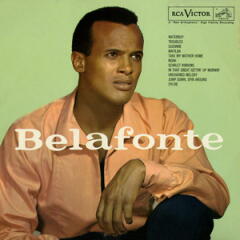
“Matilda, Matilda” was written by Harry Thomas (rumored to be a pseudonym for Harry Belafonte and his guitar player, Millard Thomas) and appears as the fourth song on side one of Harry Belafonte’s second studio album, Belafonte. The song is a calypso folk song dating back to the 1930s. Early Trinidadian calypso artist King Radio (Norman Span) released it as a Decca 78-RPM single in 1939. Belafonte released the song as a single in 1953 and supported it with an appearance on The Ed Sullivan Show in October that year. It became an audience sing-along at his live shows with the catchy chorus of:
“Matilda, she take my money and run-a to Venezuela.” It has been covered by Jimmy Soul, Allan Sherman, and The Grateful Dead. Personnel on the record were: Harry Belafonte (vocals), Millard Thomas (guitar), Tony Scott Orchestra (orchestrations) and The Norman Luboff Choir (backing vocals).
The album, Belafonte, was recorded at RCA Victor 24th Street and Manhattan Center Studio in New York City in August 1955. Produced by Henri Rene, it was released in September 1955 and went to #1 on the Billboard Top Pop Albums chart. It has been certified Gold by the Recording Industry Association of America.
Harry Belafonte (Harold George Bellanfanti Jr.) was an American singer, actor and civil rights activist who popularized calypso music worldwide in the 1950s and 1960s. He released 16 studio albums and at least 100 singles and EPs. He appeared in 16 motion pictures, 17 documentaries and 26 television shows. He won three Grammy Awards, a Grammy Lifetime Achievement Award, a Primetime Emmy Award, a Tony Award, a National Medal of Arts, a Kennedy Center Honor, and is a member of the Rock and Roll Hall of Fame. Belafonte died in New York City in April 2023 at 96.
"About the Song" -- written by Mickey McMahan , RBN Director of Musicology