The 590-Mb/d Trans Mountain Expansion (TMX) project, which is inching closer to its planned early 2024 completion, has been one of the most eagerly anticipated energy infrastructure projects in recent Canadian memory. Preliminary tolls for shipping crude on the expanded pipeline system, submitted to the Canada Energy Regulator (CER) in June, are multiples higher than the tolls currently charged on the original 300-Mb/d Trans Mountain Pipeline (TMP), possibly undermining oil producers’ economics for shipping and exporting crude on the combined 890-Mb/d system. However, the higher tolls are not the only concern. Serious logistical challenges remain in the form of restricted tanker sizes, a circuitous route for ships traveling from the open ocean to the Westridge export terminal near Burnaby, BC, and even a very tight passage under two bridges, all of which will add costs and time for each exported barrel. In today’s RBN blog, we provide more details on the complexities surrounding crude oil exports via the Trans Mountain pipeline system.

With the Canadian government-owned TMX project nearing completion, far-greater amounts of crude oil from Alberta could make their way to a loading terminal on the British Columbia (BC) coast for shipment to Asian or U.S. customers by early to mid-2024. The expansion has been about a decade in the making and has been the most closely scrutinized crude oil pipeline ever constructed in Canada, with an incredible saga of debate, regulatory burden, protest, legal challenges, changing ownership, and extraordinary cost overruns. With preliminary tolls (referred to as tariffs in the U.S.) filed in June to cover part of the construction costs of the expanded pipeline, the clock is now officially ticking down to the start of operations.
In Part 1, we provided background on the TMX saga and the expansion (dashed green line in Figure 1) that is running parallel to the existing TMP (solid green line). Spanning 715 miles (1,150 kilometers) across BC’s rugged, mountainous terrain, TMP and TMX connect with a receipt point for crude oil in Edmonton, AB, with three receipt points in BC: the 55-Mb/d Parkland-owned Burnaby refinery (blue triangle); the crude oil export docks at the Westridge terminal about 2 miles (3 km) northwest of the refinery (yellow star), which will be the focus of most of today’s blog; and a pipeline export point at Sumas, WA, where mostly light crude oil is exported to four refineries north of Seattle (red, green, orange, and purple triangles) via the Trans Mountain Puget Sound Pipeline (short hot pink line). TMP is also capable of batching refined products (gasoline and jet fuel) into the Burnaby area for wholesale or retail distribution.

About the song
“You've Got Another Thing Comin’” was written by Rob Halford, K.K. Downing and Glenn Tipton and appears as the second song on side two of Judas Priest’s eighth studio album, Screaming for Vengeance. Released as a single in August 1982, it went to #67 on the Billboard Hot 100 Singles chart, making it the only Judas Priest single to make it into the Hot 100 to date. Singer Rob Halford said the single was “a song of hope about rising above the difficulties that come your way.” Personnel on the record were: Rob Halford (vocals), Glenn Tipton (lead guitar), K.K. Downing (rhythm guitar), Ian Hill (bass), and Dave Holland (drums).
Screaming for Vengeance was recorded between January and May 1982 at Ibiza Sound Studios in Ibiza, Spain, and Beejay Studios in Orlando, FL. Produced by Tom Allom, the album was released in July 1982. It went to #17 on the Billboard 200 Albums chart and has been certified 2x Platinum by the Recording Industry Association of America. Two singles were released from the LP.
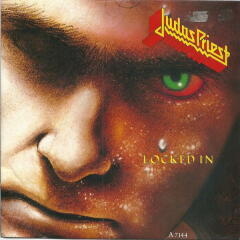
Judas Priest is an English heavy metal band formed in Birmingham in 1969. The group has sold over 50 million records worldwide and is considered an iconic heavy metal band. The synchronized guitar player moves that every hair metal band has copied over the years originated with Judas Priest. They have released 18 studio albums, six live albums, seven compilation albums, and 29 singles. They have won one Grammy Award and received an Award for Musical Excellence from the Rock and Roll Hall of Fame in 2022. Twenty members have passed through the band since its inception. The current lineup of Judas Priest — Rob Halford on vocals, Ian Hill on bass, Richie Faulkner and Andy Sneap on guitars, and Scott Travis on drums — continues to record and tour.