Western Canada’s Trans Mountain Expansion Project, better-known as TMX, has experienced more than its share of setbacks over the past 10 years: environmental protests, legal challenges, financing issues, an ownership change, and even a serious flooding event in 2021. But it seems the 590-Mb/d expansion of the now-300-Mb/d Trans Mountain Pipeline (TMP) system will finally become a reality by early 2024, enabling large-scale exports of Alberta-sourced crude oil to Asian markets. There’s a catch, though. The project’s long delays and other issues resulted in massive cost overruns that are now being reflected in the preliminary tolls for the soon-to-be-combined Trans Mountain system. The proposed toll increase is so large that it will cost a similar amount to ship heavy crude oil to tidewater on Trans Mountain as it would on the competing Enbridge system to the U.S. Gulf Coast for “re-export,” despite the latter being three times the distance. In today’s blog, we discuss the history of the Trans Mountain expansion, its cost overruns and the calculations that went into the proposed tolls — the kicker being that those tolls could end up being even higher.
It would be safe to say that no other crude oil pipeline project in Canadian history has seen as much scrutiny, analysis, legal and environmental challenges — and immense cost overruns — as TMX. Intended to nearly triple the crude oil shipping capacity of the existing TMP system, the expansion appears to be inching closer to final completion with the recent submission of preliminary tolls (referred to as tariffs in the U.S.) that would be applied to shippers on the combined TMP/TMX system once the expansion is in operation.

The Natural Gas Master Class is a one-day online event focusing on understanding flow analysis, interpreting pipeline data and forecasting future flows. This course is designed to equip you with the knowledge and skills to effectively analyze the complexities of natural gas markets, flow analysis, and pipeline modeling. Join us online
October 21 | Online
To give some context to the preliminary tolls, we need to take a brief tour of the system, as well as the tortured history of the TMX expansion saga. Spanning 715 miles (1,150 kilometers) across rugged, mountainous terrain in British Columbia (BC), the 70-year-old Trans Mountain Pipeline (solid green line in Figure 1) runs from its receipt point in Edmonton, AB, (with additional small receipts entering via Kamloops, BC) before reaching the 55-Mb/d Parkland Corp.-owned Burnaby refinery (blue triangle) in Burnaby, BC, or the export docks at Westridge (yellow star) about 2 miles (3 km) north of the refinery. TMP also transports crude oil to four refineries north of Seattle in Washington state (red, green, orange and purple triangles), through the Sumas export point, via the 69-mile (111-km) Trans Mountain Puget Sound Pipeline System (short hot-pink line).

About the song
“You've Got Another Thing Comin’” was written by Rob Halford, K.K. Downing and Glenn Tipton and appears as the second song on side two of Judas Priest’s eighth studio album, Screaming for Vengeance. Released as a single in August 1982, it went to #67 on the Billboard Hot 100 Singles chart, making it the only Judas Priest single to make it into the Hot 100 to date. Singer Rob Halford said the single was “a song of hope about rising above the difficulties that come your way.” Personnel on the record were: Rob Halford (vocals), Glenn Tipton (lead guitar), K.K. Downing (rhythm guitar), Ian Hill (bass), and Dave Holland (drums).
Screaming for Vengeance was recorded between January and May 1982 at Ibiza Sound Studios in Ibiza, Spain, and Beejay Studios in Orlando, FL. Produced by Tom Allom, the album was released in July 1982. It went to #17 on the Billboard 200 Albums chart and has been certified 2x Platinum by the Recording Industry Association of America. Two singles were released from the LP.
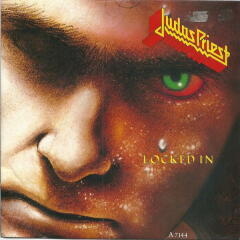
Judas Priest is an English heavy metal band formed in Birmingham in 1969. The group has sold over 50 million records worldwide and is considered an iconic heavy metal band. The synchronized guitar player moves that every hair metal band has copied over the years originated with Judas Priest. They have released 18 studio albums, six live albums, seven compilation albums, and 29 singles. They have won one Grammy Award and received an Award for Musical Excellence from the Rock and Roll Hall of Fame in 2022. Twenty members have passed through the band since its inception. The current lineup of Judas Priest — Rob Halford on vocals, Ian Hill on bass, Richie Faulkner and Andy Sneap on guitars, and Scott Travis on drums — continues to record and tour.