To succeed over the long term in the music business, professional sports, or the midstream sector, you need to learn from your successes and failures, and — most important — continue adapting and evolving. For many North American midstreamers, a key to success has been a thoughtful combination of expansion and diversification, plus an affinity for financial discipline, especially when the broader energy industry is going through tough, uncertain times. A prime example of that strategy is Canadian midstreamer Pembina Pipeline Corp., which after C$14 billion in acquisitions over the last four years is instituting a more cautious approach to new investment that’s largely based on self-funding and a new, more rigorous return criteria for new projects. Today, we preview our new Spotlight report, which focuses on the risks and rewards of Pembina’s new strategy.
Spotlight is a joint venture of RBN Energy and East Daley Capital Advisors. With the support of Oil & Gas Financial Analytics, Spotlight reports provide “deep dives” into the fundamentals that shape the outlook for midstream energy companies and are included as part of our Drill Down report series, which is available to RBN Backstage Pass members. Spotlight should not be viewed as investment advice.

Despite continued oil price weakness and a still-tumultuous macro environment, midstream financial results continued to be positive in the third quarter of 2020, with earnings largely meeting or exceeding consensus expectations. Additionally, revisions to forward EBITDA estimates for 2020 and 2021 continue to be minor compared with other energy sectors. Only two of the 34 reporting midstream companies have cut their dividend payments, while three have raised their payouts. But this stability in income and outlook contrasts starkly with the weakness in midstream equities this year, with the Alerian Midstream Energy Index down 27% since January. The response of the midstream industry has been to emphasize capital discipline and free cash flow generation that supports current generous dividends to reignite interest in the sector from a generalist investor base that has turned away from energy — a topic we covered recently in the blog, Look Into the Future.
About the song
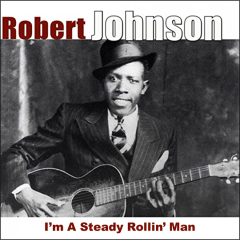
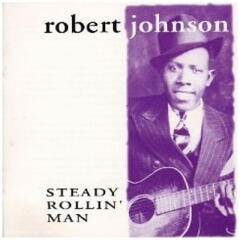
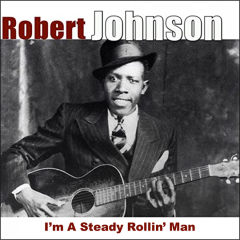
“I’m a Steady Rollin’ Man” was written and initially recorded by blues legend Robert Johnson in 1937, but was later covered by a variety of artists, including Eric Clapton, Bob Dylan, and George Thorogood and the Destroyers. In 1986, Johnson was inducted into the Rock and Roll Hall of Fame during its first induction ceremony to credit his early influence on rock and roll. In 2003, Johnson ranked fifth in Rolling Stone magazine's list of the "100 Greatest Guitarists of All Time."
Robert Johnson was born in 1911 in Hazlehurst, MS. He spent most of his adult life as a professional musician travelling the delta region, playing on street corners, in juke joints, and at weekend barn dances. He hooked up with producer Don Law and cut his first songs in 1936 in Room 414 of The Gunter Hotel, located at 205 East Houston Street, in San Antonio, TX. His second and final set of recordings with Law was done in 1937 on the third floor of the Vitagraph Building, located at 508 Park Avenue in Dallas, TX. Both of these locales still exist today. The Dallas location (where “I’m a Steady Rollin’ Man” was cut) is the scene of an excellent documentary that Eric Clapton did called "Sessions For Robert J."
Robert Johnson recorded a total of 29 songs, with 12 alternative takes during the San Antonio and Dallas sessions. They were the only recordings of his short career. He was influenced in his early career by Charlie Patton and Son House, both delta blues musicians. The rumor, which has inspired movies, songs, and urban legends, is that Johnson was struggling in his early career, and was advised to go to the crossroads of old Highway 61 & old Highway 49 outside of Clarksdale, MS, at midnight, where he met a very large man (the devil) who tuned Johnson's guitar and gave it back to him, after which Johnson had complete mastery of the instrument. There is a large highway marker/sign at this intersection memorializing this legend today.
Most of the world had not heard of Robert Johnson until Columbia released an album of his songs called King Of The Delta Blues Singers in 1961. Bob Dylan can be seen holding this album on the cover of his Bringing It All Back Home album. In addition to Dylan, other rock artists influenced by Johnson are The Rolling Stones, Delaney & Bonnie, Eric Clapton, early Fleetwood Mac, and The Allman Brothers Band. Johnson died in 1938 at the early age of 27, supposedly from drinking poisoned whiskey given to him by the jealous husband of a woman he had been flirting with.