At times in the past, exploration and production companies (E&Ps) have been viewed as the riverboat gamblers of U.S. commerce. Given the right market signals, producers have been known to go “all in,” tapping credit markets in the equivalent of pawning grandma’s jewelry to win big by filling an inside straight. And, of course, they’ve sometimes paid the bitter price when commodity markets dealt the inevitable bad hand. So, the obvious question when prices and cash flows dipped earlier this year after producers raised capital investment by an average 40% is whether this is déjà vu all over again. Is the industry once again piling on too much debt? Today, we look at the debt levels of the 43 U.S. E&Ps we’ve been tracking.
Earlier this year, we conducted an in-depth analysis of these same 43 E&Ps in our Piranha! market study. We found that E&Ps displayed a new and welcome discipline in response to the oil price plunge in late 2014 through mid-2016. As a result, they emerged from the crisis in a remarkably solid financial position. As we explained in subsequent blogs, our universe of E&Ps generated $9 billion in profits in the first quarter of 2017 after more than $160 billion in losses in 2015-2016. With prices recovering, they boosted their 2017 capital budgets by 40% after slashing spending by 70% over the previous two years. However, in early March 2017, oil prices started falling again and subsequently seesawed higher and lower until the price for benchmark West Texas Intermediate (WTI) finally hit its 2017 low of about $43/bbl in June. Profits and cash flows dipped in the second quarter, although the industry remained in the black. Despite the price volatility, producers decided to maintain their accelerated budgets, as we outlined in Rock Steady. We thought it would be a good idea to revisit the balance sheets of the 43 E&Ps to see if any of these companies have been eroding their financial positions.

Visualize the infrastructure behind U.S. NGL movement.
The U.S. NGLs Map provides a comprehensive view of the transport, processing, and export networks moving NGLs across the U.S.
We collected data from the second quarter 2016 and 2017 statements of our 43-company universe. Where appropriate, we adjusted the balance sheet data for significant acquisitions, divestitures, stock issuances or buybacks to create pro forma balance sheets with the most accurate, current view of each company’s financial position. The most significant pro forma adjustment during the second quarter of 2017 was EQT Corp.’s purchase of Rice Energy for $8.2 billion, which is expected to close in the first half of this month (November 2017).
About the song
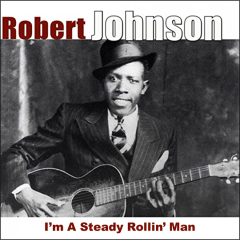
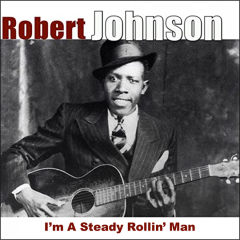
“I’m a Steady Rollin’ Man” was written and initially recorded by blues legend Robert Johnson in 1937, but was later covered by a variety of artists, including Eric Clapton, Bob Dylan, and George Thorogood and the Destroyers. In 1986, Johnson was inducted into the Rock and Roll Hall of Fame during its first induction ceremony to credit his early influence on rock and roll. In 2003, Johnson ranked fifth in Rolling Stone magazine's list of the "100 Greatest Guitarists of All Time."
Robert Johnson was born in 1911 in Hazlehurst, MS. He spent most of his adult life as a professional musician travelling the delta region, playing on street corners, in juke joints, and at weekend barn dances. He hooked up with producer Don Law and cut his first songs in 1936 in Room 414 of The Gunter Hotel, located at 205 East Houston Street, in San Antonio, TX. His second and final set of recordings with Law was done in 1937 on the third floor of the Vitagraph Building, located at 508 Park Avenue in Dallas, TX. Both of these locales still exist today. The Dallas location (where “I’m a Steady Rollin’ Man” was cut) is the scene of an excellent documentary that Eric Clapton did called "Sessions For Robert J."
Robert Johnson recorded a total of 29 songs, with 12 alternative takes during the San Antonio and Dallas sessions. They were the only recordings of his short career. He was influenced in his early career by Charlie Patton and Son House, both delta blues musicians. The rumor, which has inspired movies, songs, and urban legends, is that Johnson was struggling in his early career, and was advised to go to the crossroads of old Highway 61 & old Highway 49 outside of Clarksdale, MS, at midnight, where he met a very large man (the devil) who tuned Johnson's guitar and gave it back to him, after which Johnson had complete mastery of the instrument. There is a large highway marker/sign at this intersection memorializing this legend today.
Most of the world had not heard of Robert Johnson until Columbia released an album of his songs called King Of The Delta Blues Singers in 1961. Bob Dylan can be seen holding this album on the cover of his Bringing It All Back Home album. In addition to Dylan, other rock artists influenced by Johnson are The Rolling Stones, Delaney & Bonnie, Eric Clapton, early Fleetwood Mac, and The Allman Brothers Band. Johnson died in 1938 at the early age of 27, supposedly from drinking poisoned whiskey given to him by the jealous husband of a woman he had been flirting with.