The new 650-Mb/d Dangote refinery in Nigeria instantly became Africa’s largest and the world’s seventh-largest by capacity when it finally began processing crude into diesel and aviation fuels in January after years of delays and cost overruns. Long touted as Nigeria’s ticket to ending refined fuels imports by supplying its own markets — with plenty to spare for exports — the Dangote facility could substantially impact trade flows and global supply if it lives up to years of homegrown ballyhoo. In today’s RBN blog, we will examine Dangote’s long road to production, and why we see a slow ramp-up to full capacity through 2026.

The Future of Fuels bi-annual report by RBN's Refined Fuels Analytics provides an in-depth analysis of the U.S. and global refinery industries, focusing on crude oil and fuel market dynamics, supply and demand, alternative fuels, refinery capacities, and price forecasts to help stakeholders navigate the evolving energy landscape.
In Here I Go Again, Part 1 of this series, we examined the outlook of RBN’s downstream consulting group, Refined Fuels Analytics (RFA), for the Dos Bocas refinery under development by Mexico’s state-owned Petróleos Mexicanos (Pemex), as full-operation dates for it (and Dangote) are important factors in global refining margins and relative tightness of international refined products markets (see We Just Disagree). Both new refineries have significant potential to impact global refined products markets, with claims that they can sharply reduce or eliminate dependence on fuel imports in Mexico and Nigeria, but both also have significant startup and operational risks with uncertain prospects for long-term success.
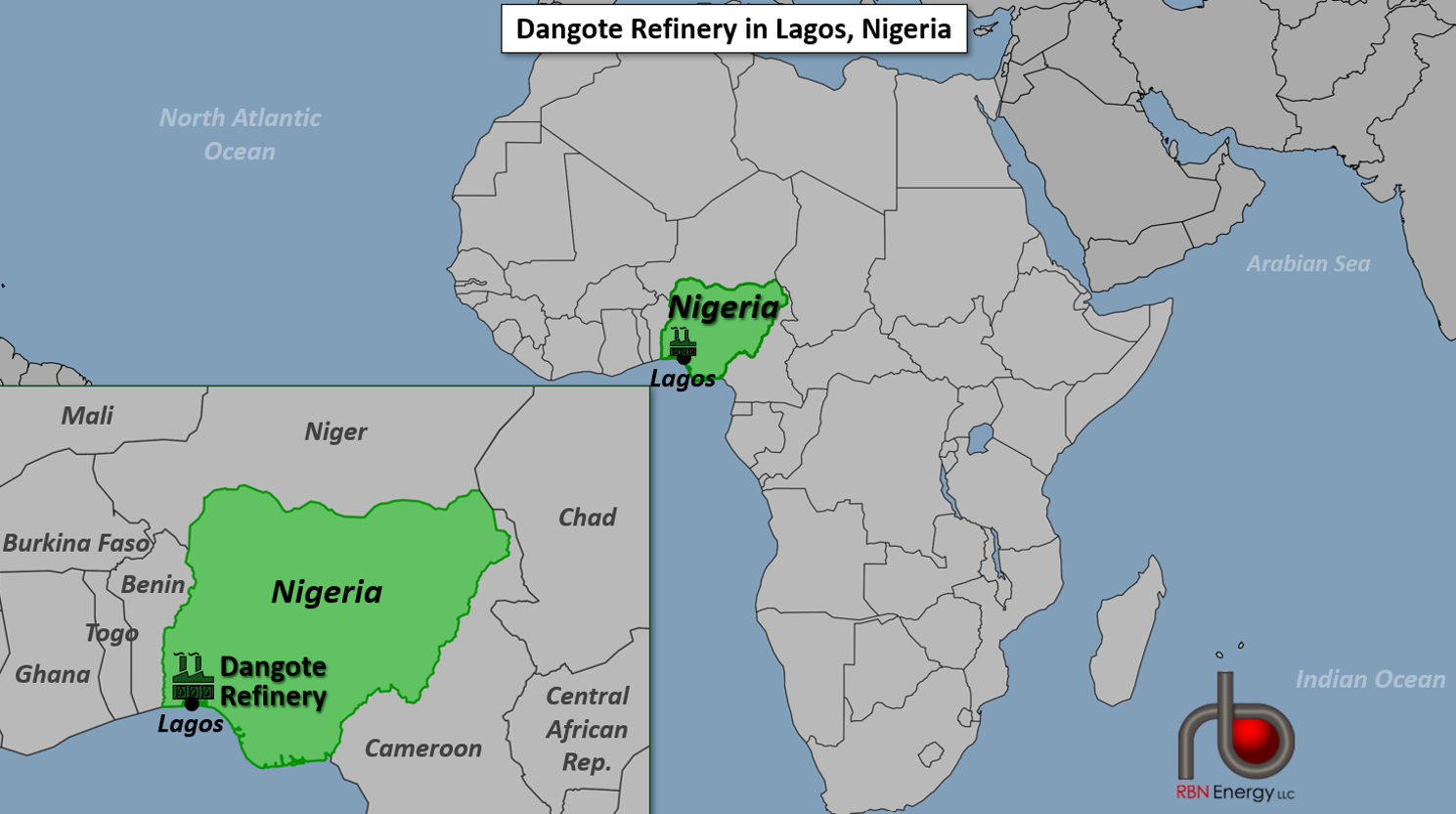
Figure 1. Dangote Refinery near Lagos, Nigeria. Source: RBN
That said, we are a bit more optimistic about Dangote’s future prospects than those of Dos Bocas, as noted in our most recent Future of Fuels report. Originally proposed in 2013, Dangote (refinery icon in Figure 1) has been touted as facilitating Nigeria’s debut as a refined-fuels-independent country and even a net fuel exporter. While Nigeria is Africa’s leading oil producer with about 1.5 MMb/d of crude and liquids production in 2023 per the Energy Information Administration (EIA), the nation — with a population of about 230 million — relies on imported refined fuels, largely from Europe and to a lesser extent the U.S., because its domestic refining capabilities cannot meet the country’s demand. Nigeria’s total nameplate refining capacity, not including Dangote, is about 445 Mb/d, which could meet most domestic demand if the four refineries operated by the Nigerian National Petroleum Corporation (NNPC), Nigeria’s state-owned oil company, ran reliably. They don’t. Those plants have largely been shut for years, and a string of oil ministers’ predictions of resuming stable operations for a decade or more haven’t come to fruition. We are skeptical of Dangote’s prospects for reaching full capacity this year. RFA expects the plant to ramp up to only an effective 20% of its nameplate capacity on average in 2024, 50% next year and the remaining 30% in 2026 given Dangote’s scale, unusual operations makeup, the country’s iffy track record when it comes to reliable refinery performance, and the operators’ lack of experience.

About the song
“Almost There” was written by Randy Newman and appears as the fourth song on The Princess and the Frog (Original Motion Picture Soundtrack). The song is performed by Anika Noni Rose in the movie and on the soundtrack album. Rose is the voice of the character Tiana in the film. The song is featured in a scene in the movie where Taina and her mother Eudora are at the New Orleans restaurant Tiana dreams of opening. “Almost There” was nominated for Best Original Song at the 82nd Academy Awards. The song has been covered by artists such as Yvonne Catterfeld, Evynne Hollens, Svetlana, and Punk Rock Factory. Personnel on the record were: Anika Noni Rose (vocals), and unnamed musicians conducted by Randy Newman.
The Princess and the Frog (Original Motion Picture Soundtrack) was recorded in Los Angeles and written, arranged, conducted and produced by Randy Newman. The score features zydeco, jazz, blues, gospel, and other idioms that represent New Orleans music. The songs are sung by various artists that performed the voices of characters in the film such as Anika Noni Rose, Dr. John, Jim Cummings and Randy Newman. Released in November 2009, the soundtrack album went to #80 on the Billboard 200 Albums chart and has been certified Platinum by the Recording Industry Association of America. One single was released from the LP.
Randy Newman is an American singer, songwriter, arranger, composer, and conductor. He has released 15 studio albums, 23 soundtrack albums, two live albums, five compilation albums, and 12 singles. He has won two Academy Awards, three Emmy Awards, and seven Grammy Awards. He is a member of the Rock and Roll Hall of Fame, Songwriters Hall of Fame, and has a Governor's Award from the Recording Academy. He is the recipient of a Max Steiner Film Music Achievement Award and has a star on the Hollywood Walk of Fame. Newman continues to write and score music for films and theater.
Anika Noni Rose is an American actress and singer. She has been featured in 26 motion pictures, 38 television shows, and 17 theater productions. She is best known for her role as Tiana in the 2009 Disney animated feature, The Princess and the Frog. She has received an Obie Award, a Tony Award, and a Disney Legend Award. She continues to act and sing.