One of the most anticipated and potentially impactful refinery startups in North America in years is the Dos Bocas project (officially the Olmeca Refinery), a 340 Mb/d plant under development by Mexico’s state-owned Petroleos Mexicanos (Pemex) in the southeastern state of Tabasco. The project was seen as the cornerstone of Pemex’s plans to reduce Mexico’s dependence on the U.S. for refined fuels. Construction began in 2019 with startup originally scheduled for 2022, but that timeline was never really feasible, and the Mexican government has issued multiple public statements since mid-2023 proclaiming that construction was complete and startup was imminent. However, almost a year has passed and there is no indication that any meaningful operations have occurred. So how close is Dos Bocas to startup and, more importantly, full (or close to full) production? In today’s RBN blog, we’ll provide our views on those vitally important questions.
RBN’s downstream consulting group, Refined Fuels Analytics (RFA), doesn’t see Dos Bocas reaching consistent levels of meaningful fuel output until at least 2026. It also expects full ramp-up no earlier than 2028 (see We Just Disagree), with throughput more likely plateauing at no more than 60% of the nameplate capacity (implying actual throughput of around 200 Mb/d of crude oil on a calendar-day basis). While that sounds quite pessimistic, we believe it to be realistic, taking into account the number of operating challenges which the project still has to overcome and the many years of performance issues Mexico’s refining sector has experienced.

The Future of Fuels bi-annual report by RBN's Refined Fuels Analytics provides an in-depth analysis of the U.S. and global refinery industries, focusing on crude oil and fuel market dynamics, supply and demand, alternative fuels, refinery capacities, and price forecasts to help stakeholders navigate the evolving energy landscape.
Before we detail the specifics of our pessimism regarding Dos Bocas, let’s revisit our overall views on global refinery capacity changes. While the world saw a decades-high addition of 2 MMb/d of net refining capacity additions in 2023, largely stemming from projects that had been delayed during COVID’s heights, it didn’t make up for the lack of capacity additions and high rate of closures during the previous four years. As noted in our most recent Future of Fuels report, while we expect another solid increase of 1.1 MMb/d of capacity this year (again due to several projects that had been delayed by COVID), project activity slows down significantly in subsequent years. In fact, after accounting for planned refinery shutdowns, we expect a net addition of 1.3 MMb/d of refining capacity globally during the four years from 2025 through 2028.
This outlook for capacity additions is the lowest the RFA team has had since they began analyzing refining projects 15 years ago. In large part this decline stems from a combination of energy transition initiatives coupled with expectations that a peak in refined product demand is looming. Those factors have siphoned investment capital for traditional refining in favor of greener projects, such as renewable diesel, biofuels or other initiatives to repurpose refinery units. In addition, notable uncertainty exists with the timing, and possible eventual success, of some key projects in the short term — including Dos Bocas — while energy transition policies will figure heavily into how companies allocate capital to infrastructure in the long term. Tough-to-predict political developments and attitudes toward how climate change crosses paths with petroleum usage will figure into such project spending decisions.
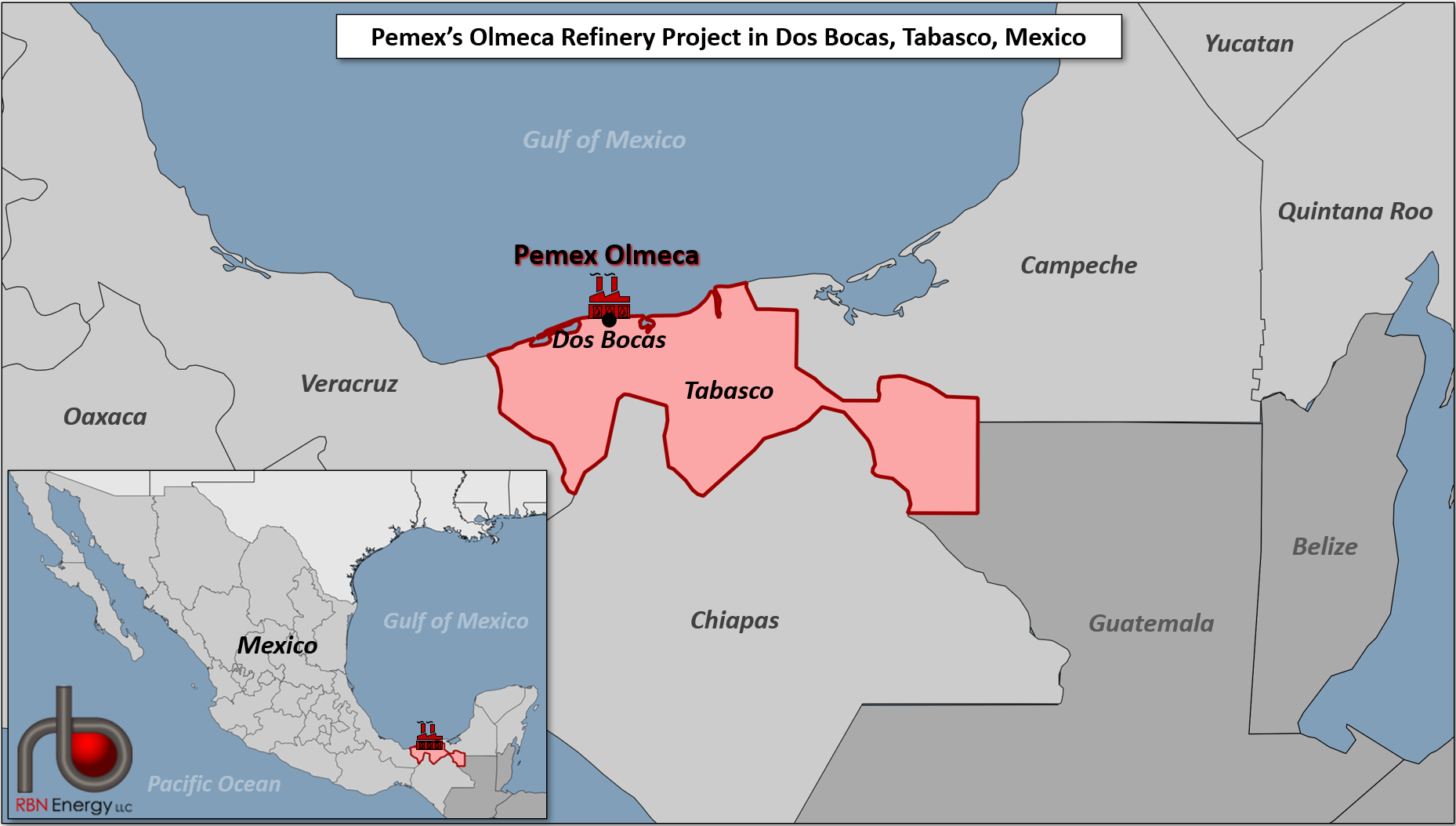
Figure. 1. The Dos Bocas Refinery in Mexico. Source: RBN

About the song
“Here I Go Again” was written by David Coverdale and Bernie Marsden and appears as the seventh track on Whitesnake’s seventh studio album, Whitesnake. The song has the modified title of “Here I Go Again ’87” as the song originally appeared in a different form with different band members except for David Coverdale on Whitesnake’s fifth studio album, Saints & Sinners, released in 1982. Released as a single in October 1987, it went to #1 on the Billboard Hot 100 Singles chart. The video for the song features the band playing “live” while the late model Tawny Kitaen writhed and frolicked across the hoods of two Jaguar XJs. Personnel on the record were: David Coverdale (vocals), Adrian Vandenberg (guitar solos), Dann Huff (guitar), Mark Andes (bass), Denny Carmassi (drums), and Tommy Funderburk (backing vocals).
The album, Whitesnake, was recorded between September 1985 to November 1986 at Little Mountain in Vancouver, Phase One in Toronto, Compass Point in Nassau, Cherokee in Hollywood, One on One in North Hollywood, and Goodnight L.A. in Los Angeles. Produced by Mike Stone and Keith Olsen, it was released in March 1987 and went to #2 on the Billboard 200 Albums chart. It has been certified 8x Platinum by the Recording Industry Association of America. Four singles were released from the LP.
Whitesnake are an English glam metal band formed in London in 1978. The band was originally put together to backup ex-Deep Purple singer David Coverdale, who is the only constant member throughout the band’s history. They have released 13 studio albums, nine live albums, 15 compilation albums, two EPs, and 44 singles. Thirty-seven members have passed through the band since its formation. The last working version of the band was: David Coverdale (vocals), Reb Beach (guitar, backing vocals), Joel Hoekstra (guitar), Dino Jelusick (keyboards, guitar, backing vocals), Michele Luppi (keyboards, backing vocals), Tanya O'Callaghan (bass, backing vocals), and Tommy Aldridge (drums). In May 2022, Whitesnake began a farewell tour but canceled in July 2022 after health issues within the band. Coverdale stated he would like to resume the tour at a future date, but it would depend on the state of his health.