Forecasting in U.S. energy markets characterized by hair-trigger price volatility, ever-improving well drilling and completion productivity, and the unraveling of old norms is a bit of a high-wire act. But just as big-tent tightrope walkers get better with practice, energy prognosticators can gain from experience––and from taking a look back at previous forecasts to see what they got right, what they may have missed, and what’s changed in the interim. Today we continue our review of a recent presentation at RBN’s School of Energy earlier this month on forecasting lessons learned.
As we said in Part 1 of this blog series, the Shale Revolution changed everything about U.S energy markets and has made forecasting the production and pricing of crude oil, natural gas and NGLs a heck of a lot harder. In the Revolution’s early days, few could have predicted how quickly output would rise, how challenging it would be for pipeline takeaway capacity to keep up with production, or how successfully crude-by-rail (CBR) would fill the gap––until falling production and incremental pipeline capacity slashed the need for CBR. And who would have guessed a few years ago that natural gas produced in Pennsylvania would soon be finding its way to Europe, Latin America and Asia (as LNG) and south of the border to Mexico (via pipelines).

Canadian crude output is rising, requiring new export routes. As traditional pathways face constraints, the U.S. Rockies—especially the Guernsey, WY hub—are emerging as key corridors for moving Canadian heavy crude to downstream markets, including the Gulf Coast.
Three and a half years ago (May 2013), Rusty Braziel gave a keynote presentation at Bentek’s annual Benposium in Houston. Despite the complicated title of his talk––“Why What We Thought We Knew About the North American Hydrocarbon Market No Longer Matters”––his basic premise was that we can learn a thing or two from looking at forecasts made a few years ago, and by comparing the forecasts with current data and the latest outlook. In our “Too Wrong for Too Long” series based on that presentation, we compared 2011 forecasts by Bentek (then partly owned by Rusty) with 2013 data and forecasts regarding Bakken crude oil production growth, Marcellus natural gas output and the need to re-plumb the gas pipeline network, the Eagle Ford’s condensate conundrum, natural gas price fluctuations, and surging NGL production and its consequences.
At RBN’s recent School of Energy, which was in session November 2-3, Rusty took another look at these same five topics, this time comparing the 2011 forecasts with 2013 RBN data and forecasts and with the latest (2016) data and forecasts. In Part 1 of this new series, we looked at past and present forecasts for crude oil production in the Bakken, and for natural gas production in the Marcellus/Utica. We showed that the 2011 Bakken forecast underestimated the potential for producers to rapidly ramp up drilling activity and improve drilling and completion techniques, and that we didn’t predict how irrationally exuberant producers and midstream companies would be in building out CBR capacity. Similarly, natural gas production in the Marcellus/Utica plays has grown far more quickly than even the most optimistic among us were predicting five-plus years ago. Northeast gas output rocketed to 22.8 Bcf/d earlier this year (from only ~4 Bcf/d in mid-2011 and ~10.5 Bcf/d in mid-2013); production has leveled off since then (in part due to pipeline takeaway constraints and a mild 2015-16 winter season that kept storage levels higher than normal), but it’s now expected to rise another 5 Bcf/d-plus by 2021, to ~28 Bcf/d––and that’s with the expectation that natural gas (and NGL) prices will remain relatively low.
About the song
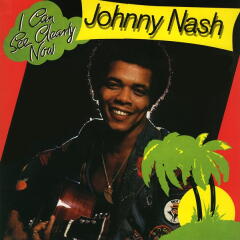
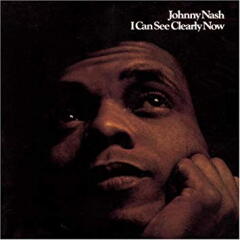
“I Can See Clearly Now” was written by Johnny Nash and appears as the first song on side two of Nash’s 12th studio album of the same name. Released as the first single from the album in June 1972, it went to #1 on the Billboard Hot 100 and Adult Contemporary Singles charts and has been certified Gold by the Recording Industry Association of America. The song has been covered by many artists, including Ray Charles, Willie Nelson, Toots & the Maytals, and Gladys Knight and the Pips. In October 1993, Jimmy Cliff released his version from the movie Cool Runnings and it went to #18 on the Billboard Hot 100 Singles chart. Personnel on the record were: Johnny Nash (lead vocals) and members of the Jamaican reggae and soca band the Fabulous Five: Freddie Campbell (bass), Cleveland Manderson (guitar), Grub Cooper (drums), Donovan Lee Palmer, Stanley Thorpe (keyboards), Harold Jr. Bailey (flute, sax), Romeo Gray (trombone), Andre Palmer (trumpet), and Andrew Cassanova (backing vocals).
The album, I Can See Clearly Now, was recorded at AIR Studios in London in 1971-72 and produced and arranged by Johnny Nash. Released in July 1972, it went to #1 on the Billboard 200 Albums chart and has been certified Gold by the RIAA. Bob Marley wrote or co-wrote four songs on the album, including the hit single, “Stir It Up.” Two singles were released from the LP.
Johnny Nash was an American reggae and pop singer, songwriter and record producer from Houston. He released his first single, “A Teenager Sings the Blues,” in 1957. He released 24 studio albums, 23 compilation albums, and 163 singles and EPs. He was the co-owner of JAD Records, which produced and released the earliest recordings of Bob Marley & the Wailing Wailers. Nash died at his home in Houston in October 2020 at the age of 80.