Africa’s largest refinery, the brand-new, 650-Mb/d Dangote plant in Nigeria, just announced plans to expand to 1.4 MMb/d, even as it continues to face significant challenges in bringing the current plant up to design capacity after years of delays and cost overruns. In Mexico, the greenfield Dos Bocas refinery has experienced even more challenges and has an even-murkier outlook, while a number of other recent refineries and major expansions across the globe have and continue to face delays and overruns. In today's RBN blog, we’ll look at the challenges in executing major refinery projects, with a focus on the experiences at Dangote and Dos Bocas and some of the other key recent expansion efforts.

The Future of Fuels bi-annual report by RBN's Refined Fuels Analytics provides an in-depth analysis of the U.S. and global refinery industries, focusing on crude oil and fuel market dynamics, supply and demand, alternative fuels, refinery capacities, and price forecasts to help stakeholders navigate the evolving energy landscape.
The Dangote refinery (see Figure 1 below) is a case study in persistent setbacks, shifting timelines and costs. Announced in 2013 at a cost of $9 billion with a 2016 completion target, the refinery didn’t break ground until 2016 on a different site. Delays piled up with construction hurdles, supply-chain chaos, the COVID-19 pandemic and surging costs. Dangote’s costs eventually ballooned to $19 billion and official commissioning came in May 2023, seven years late.

About the song
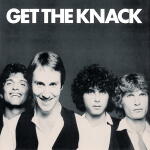
“Frustrated” was written by Doug Fieger and Burton Averre and appears as the sixth song on side two of The Knack’s debut album, Get The Knack. The song was inspired by Fieger’s girlfriend, Sharona Alperin, who was also the inspiration for the #1 hit single, “My Sharona.” It’s a classic tale of teenage angst, served up in a frothy, sweet power-pop format. It was released as the B-side to The Knack's second single, “Good Girls Don’t,” in August 1979. It went to #11 on the Billboard Hot 100 Singles chart. Personnel on the record were: Doug Fieger (lead, backing vocals, rhythm guitar), Berton Averre (lead guitar, backing vocals), Prescott Niles (bass) and Bruce Gary (drums).
Get The Knack was recorded in April 1979 at The Record Plant in New York City, with Mike Chapman producing. At the time, it was one of the most successful debut albums in history, selling over a million copies in two months. Recorded in two weeks for $18,000, it garnered people's attention in an industry rife with delays, problems and continually being over budget. Released in June 1979, it went to #1 on the Billboard 200 Albums chart and stayed in the top spot for five weeks. It has been certified 2X Platinum by the Recording Industry Association of America. Two singles were released from the LP.
The Knack was an American power pop band formed in Los Angeles in 1978 by Doug Fieger, Burton Averre, Prescott Niles and Bruce Gary. Fieger was previously in the Detroit rock band Sky, which released two albums on RCA in 1970 and 1971. He was also a member of the short-lived Los Angeles power pop band, The Sunset Bombers, which released one album on Ariola Records in 1978. Future Rubber City Rebels drummer Brendon Matheson was a member of The Sunset Bombers and was the guy responsible for turning Fieger on to The Sex Pistols’ music. Drummer Bruce Gary had played with several bands and solo artists such as Albert Collins, Dr. John, Jack Bruce, Mick Taylor, Randy California and Carla Bley before joining The Knack. Shortly after relocating to Los Angeles, Fieger began writing songs with Averre. The Knack played their first show in June 1978 and signed with Capitol Records in January 1979. Their timeline to success was really remarkable. Within two years, they were signed to a major label, made their first album in two weeks and sold over 2 million records. A backlash spurred by the band's quick meteoric rise to success and poor managerial decisions turned a lot of people off to the group. The declining sales of their next two albums led to the band disbanding for the first time in 1982. Reuniting for brief periods with more recordings released led to little success. They released seven studio albums, three live albums, five compilation albums and 16 singles. Bruce Gary died in Tarzana, CA, in August 2006 at 55. Doug Fieger died in Los Angeles in February 2010 at 57.
"About the Song" -- written by Mickey McMahan , RBN Director of Musicology