


The U.S. is facing a significant shift in regional refinery prospects and refined product trade flows due to supply, demand and regulatory trends. This is driving the development of significant new pipelines headed west, paired with continued refinery shutdowns along the West Coast and, to a lesser extent, a similar dynamic from the Midcontinent to the East Coast. At the same time, refined product exports are becoming ever more important to Gulf Coast refiners, and a variety of global developments will play a major role in their ability to grow those volumes. All these factors have the U.S. refining industry poised to move into a new era shaped by consolidation, efficiency and market power. In today’s RBN blog, we’ll discuss the major changes reshaping the U.S. refining industry.

The Future of Fuels bi-annual report by RBN's Refined Fuels Analytics provides an in-depth analysis of the U.S. and global refinery industries, focusing on crude oil and fuel market dynamics, supply and demand, alternative fuels, refinery capacities, and price forecasts to help stakeholders navigate the evolving energy landscape.
Let’s start by emphasizing that there is an upheaval happening across the U.S. — this isn’t your father’s (or even older brother’s) refining industry anymore. Key elements of refining, from the types of crude to the mix of end products to the distances they are being piped (or shipped) to market are changing, dramatically in some cases. But this is more than just logistics. New projects are redrawing the map and altering how large parts of the country — the West Coast, East Coast, and even the middle parts in between — are supplied.
Our focus in this blog is on midstream developments, but projects within the refineries themselves will also be important and discussed in more detail in a future piece. Here are the major projects taking shape in the months and years ahead, each of them discussed in detail in the newly available edition of the biannual Future of Fuels report by RBN's Refined Fuels Analytics practice.
Fresh off its acquisition of refined-products-pipeline giant Magellan Midstream Partners, ONEOK announced in September an open season for the Sun Belt Connector. The 24-inch-diameter greenfield pipeline would run from El Paso, TX, to the Phoenix area (dashed orange line in Figure 1 below) and connect to the company’s existing refined products pipeline system, allowing refined products to flow west to Arizona markets from refineries in Texas and Oklahoma. The proposed line is designed with an initial capacity of 200 Mb/d targeted for a mid-2029 startup. This would deepen Phoenix’s structural links to the Gulf Coast and Midcon supply via ONEOK’s existing refined products pipelines (blue lines).
About the song
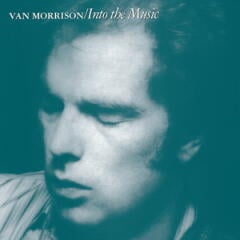
“Bright Side of the Road” was written by Van Morrison and appears as the first song on side one of Van Morrison's 11th studio album, Into the Music. It’s an up-tempo song about positivity, seemingly an answer to the song “The Dark End of the Street.” It also appears on The Best of Van Morrison and The Philosopher's Stone. The song has been covered by artists such as Shakira, Hothouse Flowers, Raul Malo, and the Jerry Garcia Band. Released as a single in September 1979, it reached No. 110 on Billboard’s Bubbling Under the Hot 100 Singles chart in the U.S., just missing the main Hot 100 list In Morrison’s homeland of Ireland, it went to #2 on the singles charts. Personnel on the record were: Van Morrison (lead vocals, guitar, harmonica), Herbie Armstrong (guitar), David Hughes (bass), Mark Jordan (piano), Peter Van Hooke (drums), Pee Wee Ellis (tenor sax), Mark Isham (trumpet), Toni Marcus (violin), Zakir Hussain (tabla), and Katie Kissoon (backing vocals).
Into the Music was recorded in early 1979 at the Record Plant in Sausalito, CA, and produced by Van Morrison and Mick Glossop. Morrison wrote most of the songs on the album while staying in the Cotswolds village of Epwell, England. He would walk through the countryside with his guitar, writing songs, and the sense of beauty and peace he found there is reflected in the songs on the LP. Released in August 1979, the album went to #43 on the Billboard 200 Albums chart. Three singles were released from the LP.
Van Morrison (Sir George Ivan “Van” Morrison) is a Northern Irish singer, songwriter, and musician. He started performing music in the late 1950s and rose to prominence in the mid-1960s as lead singer for the Belfast band, Them, with whom he wrote and recorded “Gloria,” the classic hit song and garage rock standard. His first hit single as a solo artist came in 1967 with “Brown Eyed Girl,” which became a standard of cover bands worldwide. As a solo artist, he has released 45 studio albums, seven live albums, nine compilation albums and 82 singles and has sold more than 40 million records worldwide. Morrison has won an Americana Lifetime Achievement Award, a Brit Award, two Grammy Awards and an Ivor Novello Award, and is a member of the Irish Music Hall of Fame, Rock and Roll Hall of Fame, and the Songwriters Hall of Fame. He was knighted for services to the music industry and tourism in Northern Ireland in 2016. He still records and tours, and released his latest album, Somebody Tried to Sell Me a Bridge, in January 2026. He will be doing concerts in the U.K. and the U.S. beginning in February.
"About the Song" -- written by Mickey McMahan , RBN Director of Musicology


