Refiners and the U.S. Environmental Protection Agency (EPA) have locked horns in a dispute over Renewable Identification Numbers (RINs). Now in its 10th year, the dispute stems from contradictory premises about how RINs affect the profits of the refiners and blenders who produce the ground transportation fuels sold in the U.S. To form an opinion of what ought to happen next, you need to understand the fundamentals of how RINs work in light of the RIN being a tax and a subsidy that forces renewables into fuels. In today’s RBN blog, we focus on how RINs force renewables into fuels and address the related question: Do RINs increase the price consumers pay for gasoline?

The Future of Fuels bi-annual report by RBN's Refined Fuels Analytics provides an in-depth analysis of the U.S. and global refinery industries, focusing on crude oil and fuel market dynamics, supply and demand, alternative fuels, refinery capacities, and price forecasts to help stakeholders navigate the evolving energy landscape.
So far in this blog series, we have been considering the example case of E10, which is the 10% ethanol/90% BOB (blendstock for oxygenate blending) gasoline we use to fuel our cars, SUVs and pickups. In the first blog of the series, we explained that RINs are used to monitor compliance with the federal Renewable Fuel Standard (RFS), which was created by the Energy Policy Act of 2005 and expanded and extended by the Energy Independence and Security Act of 2007. In essence, the system works like this: A refiner or importer of BOB — the non-renewable gasoline mixed with ethanol to produce E10 — is obligated to acquire and retire an annual quota of RINs to fulfill its Renewable Volume Obligation, or RVO. A 38-digit RIN is created for and “attached” to each gallon of ethanol produced to blend with BOB, “separated” from the ethanol gallon when the gallon is blended with BOB, and “retired” to fulfill the BOB refiner or importer’s RVO. Part 1 also addressed the cost to acquire RINs, which we sometimes call the “RIN tax” (dark-blue outlined rectangle in Figure 1). How that RIN tax affects a refiner’s profit is one root of the controversy — one camp, which we call Camp A, says it hurts a refiner’s profit and the other side, Camp B, says it doesn’t.
About the song
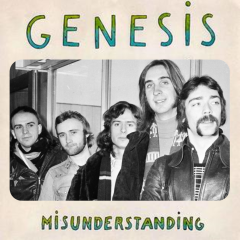
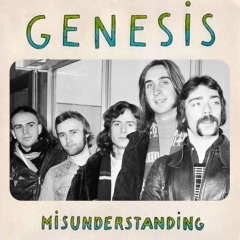
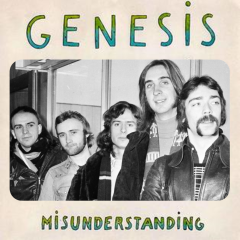
“Misunderstanding” was written by Phil Collins and appears as the fifth song on side one of Genesis’ 10th studio album, Duke. Released as a single in May 1980, the song went to #14 on the Billboard Hot 100 Singles chart. According to Collins, the song was influenced by The Beach Boys’ “Sail on Sailor,” Sly and the Family Stone’s “Hot Fun in the Summertime,” and Toto’s “Hold the Line.” Personnel on the record were: Phil Collins (lead vocals, drums, drum machine, percussion), Tony Banks (keyboards, twelve-string guitar, backing vocals), and Mike Rutherford (guitars, bass, bass pedals, backing vocals).
Duke was recorded in November and December of 1979 at Polar Studios in Stockholm, with Genesis and David Hentschel producing. Released in March 1980, the album went to #11 on the Billboard 200 Albums chart. It has been certified Platinum by the Recording Industry Association of America. Three singles were released from the LP.
Genesis is a British rock band formed in Godalming, Surrey, England, in 1967. The band was a pioneer of what was to be labeled progressive rock. Its most successful lineup consisted of Collins, Banks and Rutherford. Original lead singer Peter Gabriel left the band in 1975 to pursue a successful solo career. Genesis has released 15 studio albums, six live albums, four compilation albums, two EPs and 43 singles and have sold over 100 million records worldwide. The band was inducted into the Rock and Roll Hall of Fame in 2010. Eleven people have passed through its ranks since its inception. The band played their last concert together in March 2022, with Collins saying it would be his last Genesis tour due to health issues.