What has been the most controversial topic in the U.S. refining industry over the last 10 years? Well, it’s a matter of opinion but, judging from time spent in earnings conference calls, law offices, courtrooms, congressional committees, the White House, and other forums of business and political debate, Renewable Identification Numbers — or RINs — would have to be a top contender for that prize. In today’s RBN blog and the final episode of this series, we consider two differing viewpoints on the effects of the RIN system and specific disagreements — or are they misunderstandings? — about the financial consequences of RINs that have dominated the debates and legal cases.

The Future of Fuels bi-annual report by RBN's Refined Fuels Analytics provides an in-depth analysis of the U.S. and global refinery industries, focusing on crude oil and fuel market dynamics, supply and demand, alternative fuels, refinery capacities, and price forecasts to help stakeholders navigate the evolving energy landscape.
RINs are tradable environmental credits that serve to subsidize the use of renewable fuel components like ethanol in motor fuels to meet federal mandates on renewable fuel use. (See Part 1 of this series for background on the Renewable Fuel Standard, or RFS, which is the governing regulation.) Figure 1 is a flow diagram for the RIN system that we have used in each blog in this series to help explain how RINs work.
As you can see, the RIN system is complicated and is therefore easily misunderstood. We have subdivided it into color-shaded sections to emphasize how the RIN is a two-part tax-and-subsidize system. Simply put, the RIN is both a tax on refined fuel, paid by refiners (blue-shaded section), and a subsidy granted to blenders of renewable fuel (green-shaded section), whose purpose is to force renewables into fuels. We call this the “tax-and-subsidize interpretation.” The blue- and green-shaded sections illustrate how the tax part and the subsidy part work — these are explained in more detail in Part 1 (tax) and Part 2 (subsidy) of this series. In Part 3, we showed how the RIN system accomplishes its purpose to effectively force ethanol into gasoline, and how that affects the price of the E10 gasoline (90% gasoline, 10% ethanol) that most of us use to fuel our cars, SUVs, and pickups.
About the song
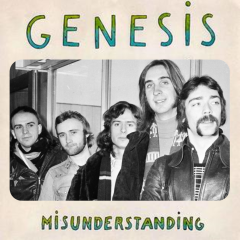
“Misunderstanding” was written by Phil Collins and appears as the fifth song on side one of Genesis’ 10th studio album, Duke. Released as a single in May 1980, the song went to #14 on the Billboard Hot 100 Singles chart. According to Collins, the song was influenced by The Beach Boys’ “Sail on Sailor,” Sly and the Family Stone’s “Hot Fun in the Summertime,” and Toto’s “Hold the Line.” Personnel on the record were: Phil Collins (lead vocals, drums, drum machine, percussion), Tony Banks (keyboards, twelve-string guitar, backing vocals), and Mike Rutherford (guitars, bass, bass pedals, backing vocals).
Duke was recorded in November and December of 1979 at Polar Studios in Stockholm, with Genesis and David Hentschel producing. Released in March 1980, the album went to #11 on the Billboard 200 Albums chart. It has been certified Platinum by the Recording Industry Association of America. Three singles were released from the LP.
Genesis is a British rock band formed in Godalming, Surrey, England, in 1967. The band was a pioneer of what was to be labeled progressive rock. Its most successful lineup consisted of Collins, Banks and Rutherford. Original lead singer Peter Gabriel left the band in 1975 to pursue a successful solo career. Genesis has released 15 studio albums, six live albums, four compilation albums, two EPs and 43 singles and have sold over 100 million records worldwide. The band was inducted into the Rock and Roll Hall of Fame in 2010. Eleven people have passed through its ranks since its inception. The band played their last concert together in March 2022, with Collins saying it would be his last Genesis tour due to health issues.