The international spot price for liquefied natural gas (LNG) has been steady-as-she-goes the past few months, within a few dimes of $5.50/MMBtu, but that stability belies the upheavals the LNG industry continues to experience. The old paradigm of long-term contracts and milk-run deliveries from supplier to buyer is breaking down. New Australian and U.S. liquefaction capacity is coming online fast and furious, exacerbating the global LNG supply glut, and Qatar — the world’s largest LNG supplier, just announced plans to increase its output by 30%. With LNG readily available and priced to sell, new LNG buyers are entering the fray, developing natural gas-fired power plants that will be fueled by imported LNG. What does all this mean for the next wave of U.S. liquefaction projects and for natural gas producers in the Marcellus/Utica and the Permian? Today we continue our look at the topsy-turvy LNG sector.
As we said in Part 1, when the first wave of U.S. liquefaction plants and LNG export facilities was in development a while back, LNG buyers and marketers were willing to enter into long-term, take-or-pay contracts for significant amounts of liquefaction capacity. These sales and purchase agreements (SPAs) provided the financial underpinning for multibillion-dollar projects like Cheniere Energy’s Sabine Pass LNG facility in southwestern Louisiana, where three liquefaction trains already are operating, a fourth is gearing up to run and a fifth is nearing completion (see Train Kept A-Rollin’). In Maryland, Dominion Energy is only months from starting up its Cove Point liquefaction and LNG export terminal (see Down by the Seaside), and in 2018 the first liquefaction trains at Elba Island (near Savannah, GA), Cameron LNG (in southwestern Louisiana) and Freeport LNG (along Texas’s Gulf Coast) will be coming online too. Plus, units 1 and 2 at Cheniere’s Corpus Christi LNG will follow in 2019. Banks and other lenders had confidence that these projects, backed by 20- or 25-year SPAs signed by creditworthy counterparties, would generate the revenue needed to pay off what their developers had borrowed.

Crude Oil Permian provides detailed analysis of the fundamental drivers impacting the Permian Basin crude oil market including weekly data, analysis and market intelligence updates of: Permian crude oil supply and demand, pipeline outflows and capacity, prices, and infrastructure updates.
In the past few years, however, the prevailing winds in the international LNG market have shifted, and developers of a prospective second wave of U.S. liquefaction/LNG export projects are taking different tacks in their efforts to line up the commitments (and the financing) required to make their projects a go. There is a lot going on, but let’s zero in on five key factors likely to affect global LNG contracts, supply and demand. Each of these will influence (pro or con) the prospects for rising LNG exports from the U.S. over the next five to 10 years:
About the song
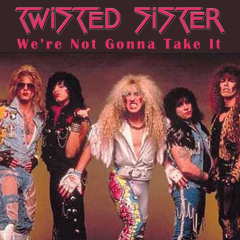
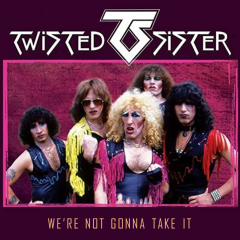
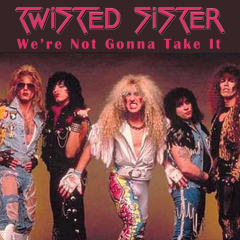
“We’re Not Gonna Take It” was written by Dee Snider and appears as the second song on side one of Twisted Sister’s third studio album, Stay Hungry. Released as the first single from the album in April 1984, the song went to #7 on the Billboard Mainstream Rock chart and #21 on the Billboard Hot 100 Singles chart. it would be Twisted Sister's only Top 40 single. The song has been certified Gold by the Recording Industry Association of America. Personnel on the record were: Dee Snider (lead vocals), Eddie “Fingers” Ojeda (lead guitar, backing vocals). Jay Jay French (rhythm guitar, backing vocals), Mark “The Animal” Mendoza (bass, backing vocals), and A.J. Pero (drums, percussion).
Stay Hungry was recorded in February and March 1984 at the Record Plant in New York City and Westlake Audio and Cherokee Studios in Los Angeles. Produced by Tom Werman, the album was released in May 1984. It went to #15 on the Billboard 200 Albums chart and has been certified 3x Platinum by the RIAA. Three singles were released from the LP.
Twisted Sister was an American heavy metal band from New York’s Long Island. Formed in 1982, the band released six studio albums, nine live albums, five compilation albums, two EPs, and 21 singles. Following the death of drummer A.J. Pero in March 2015, the band embarked on its final tour in 2016, with Mike Portnoy playing drums. They played their final show in Monterrey, Mexico, in November 2016. Dee Snider still records and tours as a solo artist, and acts and hosts a radio show. Jay Jay French was involved in personal management, and now writes a couple of music columns, a business column, and is a motivational speaker for business management conferences. Eddie “Fingers” Ojeda still plays guitar and lives in Nashville. Mark “The Animal” Mendoza currently play bass in the Long Island band, Joe Rock and the All Stars.