


In only three years, the international liquefied natural gas (LNG) market has undergone a major transformation. The old order, founded on long-term, bilateral contracts with LNG prices linked to crude oil prices, is being replaced by a more-fluid, more-competitive paradigm. That’s good news for LNG buyers, who are benefiting from a supply glut and lower LNG prices—the twin results of slower-than-expected demand growth in 2014-15 and the addition of several new liquefaction/LNG export facilities in Australia and the U.S. But the new paradigm poses a challenge for facility developers: How do they line up commitments for new liquefaction/LNG export capacity that will be needed a few years from now in a market characterized by LNG oversupply and rock-bottom prices? Today we begin a two-part series that considers the hurdles developers face and which types of projects may have the best prospects.
When the first wave of U.S. liquefaction plants and LNG export facilities was in early stages of development a while back, LNG buyers and marketers were willing to enter into long-term, take-or-pay contracts for significant amounts of liquefaction capacity. These Sales and Purchase Agreements (SPAs) provided the financial underpinning for multibillion-dollar projects like Cheniere Energy’s Sabine Pass LNG facility in southwestern Louisiana, where three liquefaction trains already are operating, a fourth is gearing up to run, and a fifth is nearing completion (see Train Kept A-Rollin’). Banks and other lenders had confidence that these projects, backed by 20- or 25-year SPAs signed by creditworthy counterparties, would generate the revenue needed to pay off what their developers had borrowed.
In the past few years, however, many of the fundamentals governing the international LNG market have shifted, and developers of a prospective second wave of U.S. liquefaction/LNG export projects will need to be creative in lining up the commitments (and the financing) required to make their projects a go. Most important, perhaps, the old order, with its bilateral deals and oil-linked prices, continues to be undone. In fact, Cheniere’s Sabine Pass LNG contributed to this undoing by offering LNG pegged to the price of U.S. natural gas: the sum of 115% of the Henry Hub gas price plus a flat liquefaction fee.
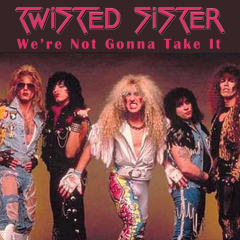
About the song
“We’re Not Gonna Take It” was written by Dee Snider and appears as the second song on side one of Twisted Sister’s third studio album, Stay Hungry. Released as the first single from the album in April 1984, the song went to #7 on the Billboard Mainstream Rock chart and #21 on the Billboard Hot 100 Singles chart. it would be Twisted Sister's only Top 40 single. The song has been certified Gold by the Recording Industry Association of America. Personnel on the record were: Dee Snider (lead vocals), Eddie “Fingers” Ojeda (lead guitar, backing vocals). Jay Jay French (rhythm guitar, backing vocals), Mark “The Animal” Mendoza (bass, backing vocals), and A.J. Pero (drums, percussion).
Stay Hungry was recorded in February and March 1984 at the Record Plant in New York City and Westlake Audio and Cherokee Studios in Los Angeles. Produced by Tom Werman, the album was released in May 1984. It went to #15 on the Billboard 200 Albums chart and has been certified 3x Platinum by the RIAA. Three singles were released from the LP.
Twisted Sister was an American heavy metal band from New York’s Long Island. Formed in 1982, the band released six studio albums, nine live albums, five compilation albums, two EPs, and 21 singles. Following the death of drummer A.J. Pero in March 2015, the band embarked on its final tour in 2016, with Mike Portnoy playing drums. They played their final show in Monterrey, Mexico, in November 2016. Dee Snider still records and tours as a solo artist, and acts and hosts a radio show. Jay Jay French was involved in personal management, and now writes a couple of music columns, a business column, and is a motivational speaker for business management conferences. Eddie “Fingers” Ojeda still plays guitar and lives in Nashville. Mark “The Animal” Mendoza currently play bass in the Long Island band, Joe Rock and the All Stars.





Comments
The spot natural gas price is irrelevent to the decision to build a LNG terminal. IF a firm begins constructing an LNG terminal tomorrow the terminal will not be exporting LNG for several years. The forward price of natural gas in the US and the forward price of natural gas the importing country starting on the first day the LNG terminal is operating and going to the last day the LNG export terminal operates are relevant not the spot price.
I would like to see a post which compared the forward price of natural gas in say the US and England or the US and Japan. If the levelized cost of liquefying natural gas, transporting the LNG by sea and gasifying the LNG are in total less than the difference between overseas natural gas prices and those in the US then a new natural gas terminal makes sense if the difference between natural gas prices is less than the levelized cost of transforming US natural gas into overseas natural gas then a new terminal makes sense.
Those firms who took up Cheniere's offer of LNG and did no hedging are losing money this month.. The difference between spot prices is much below the price they are paying to Cheniere. But since much of the cost of transforming US natural gas into overseas natural gas is in capital costs the importers would rather take and pay then simply pay.