
Russia’s unprovoked war against Ukraine has posed a dilemma regarding Russian crude oil. Russia is the world’s second-largest oil exporter after Saudi Arabia, sending out an average of more than 7 MMb/d last year, or about 7% of global demand. And the world needs more oil — demand for crude has rebounded from its COVID lows, and OPEC+ (of which Russia is part) and U.S. producers alike have been ramping up production only gradually. So the dilemma is, does the U.S. continue importing Russian crude oil to help hold down gasoline, diesel, and heating oil prices, or does the U.S. ban such imports as an additional rebuke to Russia’s actions in Ukraine? In today’s RBN blog, we look at which refiners and refineries have been importing Russian crude oil, heavy gasoil, and resid and what would happen if the U.S. said “Nyet” to Russian imports.

The Future of Fuels bi-annual report by RBN's Refined Fuels Analytics provides an in-depth analysis of the U.S. and global refinery industries, focusing on crude oil and fuel market dynamics, supply and demand, alternative fuels, refinery capacities, and price forecasts to help stakeholders navigate the evolving energy landscape.
The debate over Russian imports of crude oil and other refinery feedstocks is reaching a fever pitch. The Biden administration, which with U.S. allies has implemented sanctions against Russian banks, Putin, and his billionaire friends, has been reluctant so far to push for a ban on Russian crude oil exports, citing concern about the impact such an action would have on U.S. refined products prices. That stand may not last long. Last week, Senator Joe Manchin, the West Virginia Democrat and chairman of the Senate Energy & Natural Resources Committee, and Senator Lisa Murkowski, the Alaska Republican and ranking member on the same panel, introduced the proposed Ban Russian Energy Imports Act. The measure quickly garnered support from both sides of the aisle, including Speaker Nancy Pelosi, the California Democrat, and Senator Lindsay Graham, the South Carolina Republican, suggesting the kind of bipartisan consensus usually reserved for bills praising Thanksgiving, baseball, or international icons like Nelson Mandela and Mother Theresa.
Whether imports of Russian crude oil are banned — or individual companies decide on their own they just don’t want the stuff — we think a look at just how much the U.S. depends on Russia for crude oil and refined products merits a closer look.
For many years, Russia has been a key supplier of crude oil, unfinished intermediate products, and refined products to the world. In 2021, Russia exported a little more than 7 MMb/d of these products, with about 60% going to Europe, 20% to China, and 17% to the OECD Americas. Of that 17%, the U.S. imported 685 Mb/d of crude oil and refined products from Russia last year (multicolored bar to far right in Figure 1), including 199 Mb/d of crude oil (red segment in bar to far right) and 356 Mb/d of “other products” (light-green bar segment) such as topped crude oil, heavy vacuum gasoil (HGO), and fuel oil (see Complex Refining 101). Russia accounted for about 8% of total U.S. crude oil, intermediates (referred to as unfinished oils by the EIA), and refined product imports.
About the song
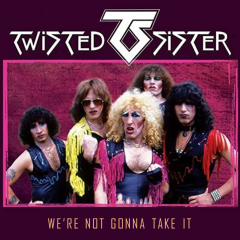
“We’re Not Gonna Take It” was written by Dee Snider and appears as the second song on side one of Twisted Sister’s third studio album, Stay Hungry. Released as the first single from the album in April 1984, the song went to #7 on the Billboard Mainstream Rock chart and #21 on the Billboard Hot 100 Singles chart. it would be Twisted Sister's only Top 40 single. The song has been certified Gold by the Recording Industry Association of America. Personnel on the record were: Dee Snider (lead vocals), Eddie “Fingers” Ojeda (lead guitar, backing vocals). Jay Jay French (rhythm guitar, backing vocals), Mark “The Animal” Mendoza (bass, backing vocals), and A.J. Pero (drums, percussion).
Stay Hungry was recorded in February and March 1984 at the Record Plant in New York City and Westlake Audio and Cherokee Studios in Los Angeles. Produced by Tom Werman, the album was released in May 1984. It went to #15 on the Billboard 200 Albums chart and has been certified 3x Platinum by the RIAA. Three singles were released from the LP.
Twisted Sister was an American heavy metal band from New York’s Long Island. Formed in 1982, the band released six studio albums, nine live albums, five compilation albums, two EPs, and 21 singles. Following the death of drummer A.J. Pero in March 2015, the band embarked on its final tour in 2016, with Mike Portnoy playing drums. They played their final show in Monterrey, Mexico, in November 2016. Dee Snider still records and tours as a solo artist, and acts and hosts a radio show. Jay Jay French was involved in personal management, and now writes a couple of music columns, a business column, and is a motivational speaker for business management conferences. Eddie “Fingers” Ojeda still plays guitar and lives in Nashville. Mark “The Animal” Mendoza currently play bass in the Long Island band, Joe Rock and the All Stars.