- Blog

Sweet Virginia - Data Center Developers Still Eager to Call Virginia Home

Author Lisa Shidler

More than 70 new data centers are under development in Virginia, which is already the world’s leading hub for the massive, high-tech facilities. But given the rapid pace of the buildout and the challenges that come with it, it’s probably no surprise that not everyone in the Old Dominion State is as enthusiastic about data centers as they once were. In today’s RBN blog, we’ll look at some of the biggest data centers in the works and discuss their path forward. 

- Blog

Virtual Insanity - As Power Needs Soar, 'Virtual' Power Plants Proliferate, But What Are They?

Author Lisa Shidler

The U.S. power sector is undergoing a major expansion to keep pace with the rising demand for electricity from data centers and other consumers, and trying to do a lot at once. Keep a lid on greenhouse gas (GHG) emissions by adding wind, solar and other renewables. Maintain grid reliability by supplementing variable renewable energy with more around-the-clock sources like natural gas-fired power plants. Oh, and keep power costs down, too. That’s a big collective ask, and to help make it possible, power grids are turning to so-called “virtual power plants” (aka VPPs) that, with an assist from computers and software, aggregate smaller power sources, batteries and flexible demand to provide power to the grid much like a traditional combined-cycle plant would. In today’s RBN blog, we’ll introduce VPPs and explain why they’re worth learning about. 

- Blog

The Bridge - Southern Spirit Aims to Bolster ERCOT Power Grid While Preserving Its Independence

Author Lisa Shidler

If all goes to plan, Texas’s isolated power grid will one day be connected to a pair of neighboring states via a massive transmission line called Southern Spirit. The project is designed to increase grid reliability, reduce blackouts and drive down energy bills, but it could be years before it becomes a reality. And while the transmission line will connect Texas with Louisiana and Mississippi, it is more akin to a drawbridge that can be raised or lowered as needed without subjecting the Electric Reliability Council of Texas (ERCOT) grid to federal oversight. In today’s RBN blog, we’ll discuss what the Southern Spirit transmission line would mean for Texas. 

- Blog

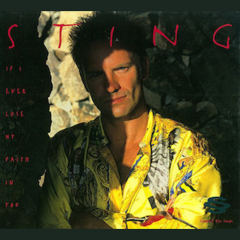
If I Ever Lose My Faith In You - Texas Turns to Performance Credit Mechanism to Boost ERCOT Reliability

Author Lynne Fowler

In Texas, rising power demand, increasing dependence on variable-output renewables, and declining availability of dispatchable fossil-fired plants to back up wind and solar have left the Electric Reliability Council of Texas (ERCOT) power grid in a pickle. As part of its response, the Public Utility Commission of Texas (PUCT) adopted a tool called the Performance Credit Mechanism (PCM) to help ensure the grid will be able to meet a yet-to-be-defined reliability standard. But while key metrics for the PCM have been identified, the details will determine which dispatchable resources will be supported with additional revenue, how much the whole approach will cost, and how effective it might be. In today’s RBN blog, we explore the debate ahead of the PUCT’s August 29 meeting — where it is expected to finalize rules around the PCM — and explore the difficulty of compensating generators annually so that they are also there for those once-in-10-year events. 

- Blog

You Light Up My Life - Long-Duration Energy Storage to Play Critical Role in Renewables Buildout, Grid Reliability

Author Lisa Shidler

The intermittent nature of renewable energy is a well-documented thorn in the side of efforts to decarbonize the power grid, especially with more wind and solar generation coming online every year. But while those sources of clean energy are not available all the time, it’s also true that they can sometimes produce more power than transmission lines or a power grid can handle during other periods, leading to curtailments. An increasingly important tool that can lessen the impact of both problems is power storage. In today’s RBN blog, we’ll address the limitations of today’s storage options and look at how long-duration energy storage (LDES) could play a critical role in the years ahead.

- Blog

I Don't Care if the Sun Don't Shine - From Texas to the Northeast, Power Grids Prep for Total Eclipse

Author Lisa Shidler

The uncertainties around solar power are well understood — when the sun doesn’t shine as much as expected, power grids that rely heavily on that generation must turn elsewhere to meet consumer demand. And while a shortfall in solar generation can be challenging to navigate, the difference between actual and forecast levels is typically only a few percentage points and power grids are usually ready and able to make up any difference. But what happens when the sun is largely obscured by the moon for several hours across a wide swath of the country? In today’s RBN blog, we’ll discuss the impact of the October 14 partial eclipse, preview the path of the April 8 total eclipse, and outline the steps being taken to ensure that power grids are ready for it. 

- Blog

Wind of Change - Reliability Efforts, Renewables Help ERCOT Tame Cold Snaps Three Years After Uri

Author Ellen Chang

Everyone in Texas remembers the infamous Winter Storm Uri of three years ago. What started out as a simple cold snap for many quickly turned into something far more serious: the biggest power outage in state history, with billions of dollars in property damage and hundreds of lives lost. Since then, the expected arrival of frigid temperatures has been met with some trepidation, but the critical failures of February 2021 have so far been avoided in subsequent storms. In today’s RBN blog, we look at the steps the state has taken in recent years to weatherize its power grid, show why January’s cold snap turned out to be no big deal, and explain why renewables are playing an increasingly important role in grid reliability during extreme weather conditions. 

- Blog

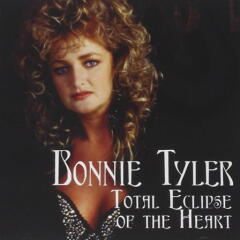
Total Eclipse of the Heart - 'Ring of Fire' Eclipse to Stress Power Grids from California to Texas

The uncertainties around solar power are well understood. When the sun doesn’t shine as much as expected, power grids that rely heavily on solar must turn elsewhere to meet consumer demand. And while a shortfall in solar generation can be tricky to navigate, the difference between actual and forecast levels is typically only a few percentage points, and power grids are usually ready and able to make up any difference. But what happens when the daytime sun is obscured for hours at a time? Much of the U.S. is about to find out. In today’s RBN blog, we’ll preview the path of the October 14 solar eclipse, detail its expected impact on the generation of electricity, and describe what steps are being taken to keep power grids performing as usual.