The intermittent nature of renewable energy is a well-documented thorn in the side of efforts to decarbonize the power grid, especially with more wind and solar generation coming online every year. But while those sources of clean energy are not available all the time, it’s also true that they can sometimes produce more power than transmission lines or a power grid can handle during other periods, leading to curtailments. An increasingly important tool that can lessen the impact of both problems is power storage. In today’s RBN blog, we’ll address the limitations of today’s storage options and look at how long-duration energy storage (LDES) could play a critical role in the years ahead.
Imperative to any energy system is a way to balance variations in supply and demand — i.e., storage. Storage infrastructure for primary energy sources like crude oil and natural gas has grown and matured over the past century and we’ve done a lot of blogs in the past covering the ins and outs. These systems are well understood and efficient and, despite the push to decarbonization, can and will continue to be the primary storage mechanism serving the market for as long as fossil fuels dominate energy production. Efficient and cost-effective power storage has been a much tougher nut to crack, so it hasn’t been developed to the same extent as the primary sources mentioned above. That said, the continued adoption of renewable power generation has catalyzed the development of electricity storage. Large-scale deployment is in its infancy but it has the potential to play a more significant role down the road, especially in states like California and Texas that already have significant amounts of renewable capacity online. With a rising emphasis on renewables, the development of new solutions has been gaining momentum and has led to a myriad of potential strategies — all with benefits and drawbacks. Some, like pumped hydro, have been around since the dawn of the 20th century but are getting renewed attention. Then there are the more creative solutions: molten salt, heat engines, gravity batteries, flywheels and, our favorite, hydrogen. We’ll talk about a couple of these in today’s blog. But we’ll start with the elephant in the room when it comes to power storage: batteries.

RBN Energy’s US CO₂ Infrastructure map brings together legacy Enhanced Oil Recovery (EOR) assets, as well as announced large-scale Carbon Capture and Sequestration (CCS) and Carbon Capture, Utilization and Sequestration (CCUS) projects, all in our signature concise, accurate, and intelligible style.
Most power storage online today is done with batteries designed to provide power for just a few hours or longer, such as Kapolei Energy Storage (KES) in Hawaii, which began operations in January 2024 after numerous delays. KES serves about 95% of Hawaii’s 1.4 million residents on the islands of Hawaii, Lanai, Maui, Molokai and Oahu. As we discussed in Can’t Help Falling in Love, KES has 185 megawatts (MW) of power capacity and 585 megawatt-hours (MWh) of energy capacity — enough to meet 17% of Oahu’s electricity demand for three hours at peakload or six hours at half the load. Designed to be charged primarily by renewable sources, it was developed to help make up for the September 2022 closure of the 180-MW Barbers Point coal plant nearby, enhance grid reliability and accelerate the integration of renewable energy.
About the song
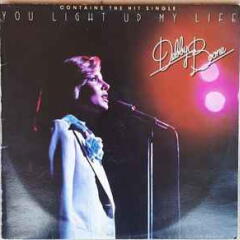
“You Light Up My Life” was written by Joseph Brooks and was originally recorded for the 1977 soundtrack album for the Brooks film of the same name. Sung by Casey Cisyk, it was released as a single in August 1977 and went to #80 on the Billboard Hot 100 Singles chart. The soundtrack album, released in October 1977, fared much better, landing at #17 on the Billboard 200 Albums chart and earning Gold status from the Recording Industry Association of America. Debby Boone released her version of the song later in August 1977 and it went to #1 on the Billboard Hot 100 Singles chart and remained there for 10 weeks. It has been certified Platinum by the RIAA. The song led to Boone winning a Grammy Award for Best New Artist in 1978. Le Ann Rimes released a single of the song 20 years later in August 1997. Other artists that have covered the song include Patti Smith, Johnny Mathis, Perry Como and Whitney Houston.
The album, You Light Up My Life, was Debby Boone’s first solo LP. Producer Joseph Brooks used the same backing tracks he used on the soundtrack album for Boone’s version. The album also included tracks previously recorded with her sister. Brooks produced the album along with Mike Curb, Michael Lloyd and Bob Gaudio. Released in August 1977 to ride the imminent success of the single, it went to #6 on the Billboard 200 Albums chart and was certified Platinum by the RIAA. One single was released from the LP.
Debby Boone is an American singer, actress and author. She is the daughter of singer and actor Pat Boone. She is best known for her hit rendition of “You Light Up My Life.” Boone later focused her music career on country and Christian music. She had a #1 hit country song in 1980 with “Are You on the Road to Lovin’ Me Again?” She has co-authored several successful children’s books with her husband, Gabriel Farrer. Over the past years, she has starred in several television programs and stage musicals.