


Gulf Coast exports of diesel and gasoline are booming. Net exports of diesel have increased over 300 percent from an average of 232 Mb/d in 2009 to 746 Mb/d in 2013. Over the same period net gasoline exports from the Gulf Coast increased five-fold from an average of 87 Mb/d in 2009 to 439 Mb/d in 2013. Today we look at the drivers behind this dramatic export growth.
This blog is the first in a two part series looking at the drivers behind increased US exports of refined products from the Gulf Coast region. In this first episode we look at whether refining margins for diesel and gasoline are correlated to the level of exports. We then look at the extent to which export volumes are related to levels of refinery throughput at the Gulf Coast. In the next episode we will look at the impact of domestic demand for refined products (or the lack of it) on export volumes and then whether export volumes seem to be sensitive to international refined product prices.
Margins and Exports
We start today by looking at the relationship between refinery margins at the Gulf Coast and the level of exports to determine whether profitability is a driver of export volumes. The two charts in Figure #1 below show gasoline (Figure #1a) and diesel (Figure #1b) respectively. Figure #1a shows the Gulf Coast gasoline crack (blue line) against the left axis and net exports of gasoline from the Gulf Coast region (green shaded area) against the right axis. [Recall that the term “crack” does not refer to something a wayward crude trader might ingest in the bathroom but rather to breaking down or “cracking” crude oil (see Behind the Margins).] The gasoline crack is simply the margin between the price of gasoline and the cost of crude – used as an indicator of refinery performance. For the Gulf Coast gasoline crack we used prices for Gulf Coast unleaded and the benchmark crude Light Louisiana Sweet (LLS). The crack tells us roughly speaking whether making gasoline at Gulf Coast refineries is profitable. Over the period from March 2012 to the end of 2013, the gasoline crack showed periods of good profitability through the fall of 2012 and during the summer of 2013 but was also negative at the end of 2012 and in the fall of 2013 (the red line on the chart indicates a zero margin). Net gasoline exports on the chart were calculated from monthly Energy Information Administration (EIA) estimates of gasoline exports minus gasoline imports at the Gulf Coast (PADD 3) region. Looking at the data, gasoline exports increased when the refining margin for gasoline was negative – during the winter of 2012-2013. Gulf Coast gasoline exports also increased in the fall and winter of 2013 when the crack spreads were less than $5/Bbl and at times negative. In other words gasoline exports increased when margins were lower. This trend is not intuitive – after all you might expect refiners to reduce output and by implication, exports when margins are poor or negative. The explanation for this anomaly becomes clearer when we look at the diesel data in Figure #1b.

About the song
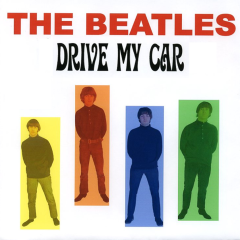
"Drive My Car" was written by Paul McCartney and John Lennon. The song was recorded at EMI Abbey Road Studios in London in October 1965, with George Martin producing. It has been suggested that the lyrics were inspired by an incident involving Beatles friend and Brian Epstein protégée Cilla Black, and her then-boyfriend, Bobby Willis. The song was the first cut on the UK version of Rubber Soul, and on the American release of Yesterday and Today. It was the first Beatles song to feature a slide guitar solo, played by Paul McCartney. Personnel on the record were: Paul McCartney (lead vocal, bass, piano, slide guitar), John Lennon (lead vocal, tambourine), George Harrison (backing vocals, lead guitar) and Ringo Starr (drums, cowbell).
Yesterday and Today was The Beatles’ 12th studio album and ninth album for Capitol Records in the U.S. It pulled together songs from the UK releases of Rubber Soul, Help, the not-yet-released Revolver, and the single of "Day Tripper"/"We Can Work It Out." The original album cover photo for the album by Robert Whitaker featured The Beatles wearing butcher smocks and draped with pieces of meat and body parts from plastic baby dolls. It has been presumed to be a reaction by The Beatles to Capitol Records in America pulling cuts culled from their UK releases, thus "butchering" the song selection and order. After a furor from U.S. retailers over the cover, Capitol pulled the album from stores and stickered over them with a new, non-offensive photo of the band. These re-stickered albums are referred to as the "butcher cover," and bring hefty prices in the collectors’ market. In 2016, an ultra-rare sealed mint stereo copy of the original cover was sold at auction for $125,000. Yesterday and Today was released in June 1966, and went to #1 on the U.S. Billboard Top 200 Albums chart. It has been certified 2x Platinum by the Recording Industry Association of America.
The Beatles were a British rock band formed in Liverpool, England, in 1960. With the line-up of John Lennon, Paul McCartney, George Harrison and Ringo Starr, The Beatles went on to change the face of rock music and pop culture during their time together. They are the best-selling music artists in history, with estimated record and digital sales of over 800 million worldwide. The band released 23 studio albums, five live albums, 53 compilation albums, 21 EPs and 63 singles. The Beatles have won one Academy Award, one Billboard Music Award, four Brit Awards, 26 Grammy Awards, 15 Ivor Novello Awards, one MTV Video Music Award and three World Music Awards. They are members of the Rock and Roll Hall of Fame, the UK Music Hall of Fame and Vocal Group Hall of Fame, and are Members of the Order of the British Empire, as appointed by Queen Elizabeth II. John Lennon died in 1980 and George Harrison in 2001. Paul McCartney and Ringo Starr continue to record and tour as solo artists.






Comments
Wasn't Deer Park Manufacturing Complex's expansion in the early 90's from investment and partnership with PEMEX to provide 50,000 BPD of reformulated gasoline to Mexico?
Sandy, great work as always.
I posted the item below proposing lifting the ban on US crude exports to the European Union to offset crude exports from Russia to the EU. This kind of sanction might persuade Russia to reduce its aggression in the Ukraine.
Thank you, Tom Morgan, Drillingfinfo, Austin, Texas
http://info.drillinginfo.com/us-crude-oil-can-save-the-ukraine-from-russian-aggression/