Efforts to increase natural gas production in the Rockies are running into a brick wall — make that several brick walls. To the east, burgeoning gas production in the Marcellus/Utica region is surging into Midwest markets, pushing back on Rockies gas supplies. To the south, Permian gas production is ramping up toward 8 Bcf/d, most of it associated gas from crude-focused wells — volumes that will be produced even if gas prices plummet. To the west, Rockies gas faces an onslaught of renewables in power generation markets, where wind and solar are increasingly replacing gas fired and coal generation, especially during non-peak periods when the sun is shining and the wind is blowing. To the north, Western Canadian producers facing a where-do-we-send-our-gas problem of their own are only days away from having expanded pipeline access to U.S. West Coast markets — access likely to displace some of the Rockies gas which has been flowing west. Today, we discuss highlights from a new report by our friends at Energy GPS that assesses these developments and explores their implications.
There was a time, many years ago, when the Rocky Mountain states (Colorado, Utah, Montana and Wyoming) represented the fastest-growing gas-producing region in the country. From 1998 to 2008, Rockies dry gas production more than doubled, increasing by 6 Bcf/d (from 5 Bcf/d to 11 Bcf/d) while the U.S. as a whole increased by only 3 Bcf/d. Thus, Rockies gas production was growing while the rest of the U.S. was in decline. The region was growing so rapidly that severe pipeline takeaway capacity constraints developed, prompting construction of Rockies Express (REX), the largest pipeline built in a decade at that time, which was completed in November 2009 to bring 1.9 Bcf/d of Rockies gas all the way to Clarington, OH. Then shale happened. But not to the Rockies. Gas producers shifted their attention to the big shale producing basins, leaving the Rockies to muddle along. Rockies production flat-lined.

Then the onslaught of shale gas production from the Marcellus/Utica kicked in, obliterating any reason to move Rockies gas to Ohio. In fact, it soon became apparent that the best thing for REX would be to turn it around and flow gas the other way — out of Ohio. The eastern part of the pipeline was made bi-directional and by late summer 2014, REX reversed into net westbound flows toward Midwest markets. Increasingly, Marcellus/Utica gas has been taking market share that Rockies producers had targeted (see It’s Been a Long Time Comin’). Similarly, gas production gains in the Permian and SCOOP/STACK have helped to close off potential markets for Rockies gas in the Midcontinent and Gulf Coast regions. California’s aggressive expansion of renewable energy (first wind, then a lot of solar) has reduced Western gas demand (see California Sunset) — another blow to Rockies gas producers — and Western Canadian producers (also struggling to find markets for their gas) have been angling to take a larger share of the dwindling U.S. West Coast gas market from (you guessed it) their counterparts in the Rockies (see On the Border).
About the song
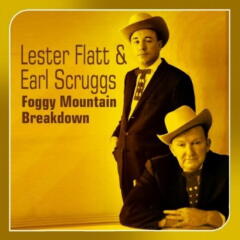
“Foggy Mountain Breakdown” is a bluegrass instrumental classic written by the legendary Earl Scruggs and first recorded in 1949 by Flatt & Scruggs and the Foggy Mountain Boys. The song was used as background music in the 1967 hit movie “Bonnie & Clyde.”
Earl Scruggs helped develop the banjo from its role as a background rhythm instrument into a featured solo status. He developed and popularized a three-finger banjo picking style, now called "Scruggs style." Scruggs's music career took off when he was 21 and was hired to play with Bill Monroe and the Bluegrass Boys. It was during his tenure in Monroe's group that Earl met guitar player Lester Flatt, and the two left Monroe to form Flatt & Scruggs and the Foggy Mountain Boys (later shortened to Flatt & Scruggs). In 1962, the duo recorded "The Ballad of Jed Clampett," with vocals by Jerry Scoggins, for the television show, "The Beverly Hillbillies." The song went to #1 on the Billboard country charts, a first for any bluegrass recording. It also reached #44 on Billboard's pop music chart. Flatt and Scruggs appeared in many episodes of the television series as friends of the Clampett family. Over their 20-year career together, they recorded more than 50 albums and 75 singles.
Earl Scruggs has received four Grammy Awards, a Grammy Lifetime Achievement Award, a National Medal of Arts Award, a National Heritage Fellowship given by the National Endowment for the Arts, and a star on the Hollywood Walk of Fame. He passed away on March 28, 2012, in Nashville, TN, at the age of 88.