Renewable and hydroelectric generation has chomped away at natural gas market share of total power generation along the West Coast this year. The latest electric generation data from the Energy Information Administration shows power sourced from renewables (not including hydro) in California, Oregon and Washington combined in April 2017 through July 2017 edged up about 1% year-on-year, while hydroelectric generation averaged 23% higher year-on-year. At the same time, natural gas-fired generation fell 16% year-on-year. The reduced gas-fired generation demand, along with reduced gas storage capacity in the West, has displaced natural gas from the region and disrupted recent gas flow patterns. These shifts provide a glimpse of what gas flows and pricing dynamics could look like as more renewable capacity is added. In today’s blog, we analyze the effects of electric generation trends on regional gas flows.
We began this series in Part 1 with a look at what’s driving generation capacity changes in the West Coast states — California, Oregon and Washington — and how those changes are affecting fuel consumption in the region. We noted the regulatory shifts behind some of the structural changes in capacity, including California’s adoption of the renewable portfolio standard (RPS) law starting in 2011, which required every utility and other electricity retailers to serve 33% of their load with renewable energy by 2020. The rule prompted a surge in solar and wind generation capacity additions within the state. Then there was the 2013 shutdown of what was the largest power generator in the region — the 2,250-MW San Onofre Nuclear Generating Station (SONGS — see California Scheming and Play Me A Songs), which only served to accelerate the solar and wind capacity projects and resulted in an increase in the renewables target to 50% (see California Sunset).
Around that same time, California also implemented a carbon cap-and-trade market, effectively aiming to tax non-renewable energy imports and in-state energy production, which incentivized higher imports of power sourced from fuels with low or no carbon emissions, such as hydroelectric generated power from the Pacific Northwest (see AARGH Matey! Cap'n Trade Sails On in California). On top of all that, throw in the record precipitation, and the resulting increase in hydroelectric generation in California this year, and it’s been a banner year for renewable energy in the West.
The NATGAS Appalachia weekly report provides the data and insights to monitor the northeast natural gas market’s twists and turns and identify the risks and opportunities along the way, including tracking supply-demand trends, outbound capacity and their impact on takeaway pipeline utilization, and regional prices.
While renewables have been getting a boost, gas-fired generation has been seeing the opposite effect in recent years. Structurally, California has been working to retire older, inefficient gas-fired generation plants in order to comply with federal standards. In the past two years, the state — which relies on inflows and storage to meet its natural gas needs — also has been dealing with lower gas storage capacity after operational problems prompted state regulators to initially halt storage activity at SoCal Gas’s Aliso Canyon and Pacific Gas & Electric’s (PG&E) McDonald Island facilities for an extended period before eventually restoring service at a lower capacity.

About the song
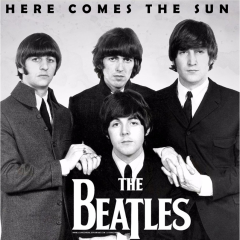
"Here Comes the Sun" was written by George Harrison and appears as the first song on side two of The Beatles' 11th studio album, Abbey Road. Harrison wrote the song at the Surrey country estate of his friend Eric Clapton in April 1969. The song was recorded in July and August 1969 at EMI (Abbey Road) studios in London. When released as a digital download single in 2019, it went to #3 on the Billboard Hot Rock Songs Singles chart. The song has been covered by many artists such as Richie Havens (whose 1971 release went to #16 on the Billboard Hot 100 Singles chart), Nina Simone and Peter Tosh. Harrison performed the song with Paul Simon on Saturday Night Live in 1976. Personnel on the record were: George Harrison (lead, backing vocals, acoustic guitar, electric guitar through Leslie speaker, harmonium, synthesizer), Paul McCartney (backing vocals, bass), Ringo Starr (drums), George Martin (orchestral score and arrangement for strings and horns).
Abbey Road was recorded between February and August 1969 at EMI (Abbey Road), Trident and Olympic studios in London, with George Martin producing. It was the last album The Beatles recorded, although its release in 1969 preceded their album, Let It Be, which was released in 1970 when the band publicly called it quits. Released in October 1969, Abbey Road went to #1 on the Billboard 200 Albums chart and has been certified 12x Platinum by the Recording Industry Association of America. One single, "Something," backed by "Come Together," was released from the LP.
The Beatles were an English rock band formed in Liverpool in 1960. With John Lennon, Paul McCartney, George Harrison and Ringo Starr, the band is considered the most successful rock band in history. They released 17 studio albums, six live albums, 54 compilation albums, 36 EPs and 63 singles, and have sold more than 600 million records worldwide. They have won an Academy Award, four Brit Awards, seven Grammy Awards, 15 Ivor Novello Awards and three World Music Awards. The Beatles are members of the Rock and Roll Hall of Fame (as a group and individually), the UK Music Hall of Fame and the Vocal Group Hall of Fame. They are members of the Grammy Hall of Fame and have a Grammy Lifetime Achievement Award. The bank members received MBEs from Queen Elizabeth in 1965. The Beatles officially broke up in 1970. All of the members went on to successful solo careers. John Lennon was killed in December 1980 and George Harrison died in November 2001. Paul McCartney and Ringo Starr still record and tour as solo artists.