


The global oil market has been especially volatile this year, mostly due to the conflict in the Middle East and the effective closure of the Strait of Hormuz since the beginning of March. The United Arab Emirates’ (UAE) April 28 announcement that it would cease its OPEC membership, effective May 1, provided the oil market with another jolt, and comes with a number of possible short- and long-term impacts. In today’s RBN blog, we dig into why the UAE chose this path, explain how OPEC and other organizations have influenced oil production and prices over the years, and examine the potential implications for the global market and U.S. producers.
According to the UAE’s Minister of Energy, Suhail Al Mazrouei, the decision to exit OPEC reflects a “policy-driven evolution aligned with long-term market fundamentals.” In this regard, and in the context of how the previous oil cartel evolved (more on that later), the UAE’s departure from OPEC is less surprising than it may at first appear and could be seen as evolutionary rather than revolutionary. The UAE (blue-shaded country in Figure 1 below) has both the desire and the capacity to increase oil production while the OPEC cartel’s raison d’etre broadly favors production restraint and price support. And nations tend to act out of permanent self-interest while alliances and adversaries are temporary.
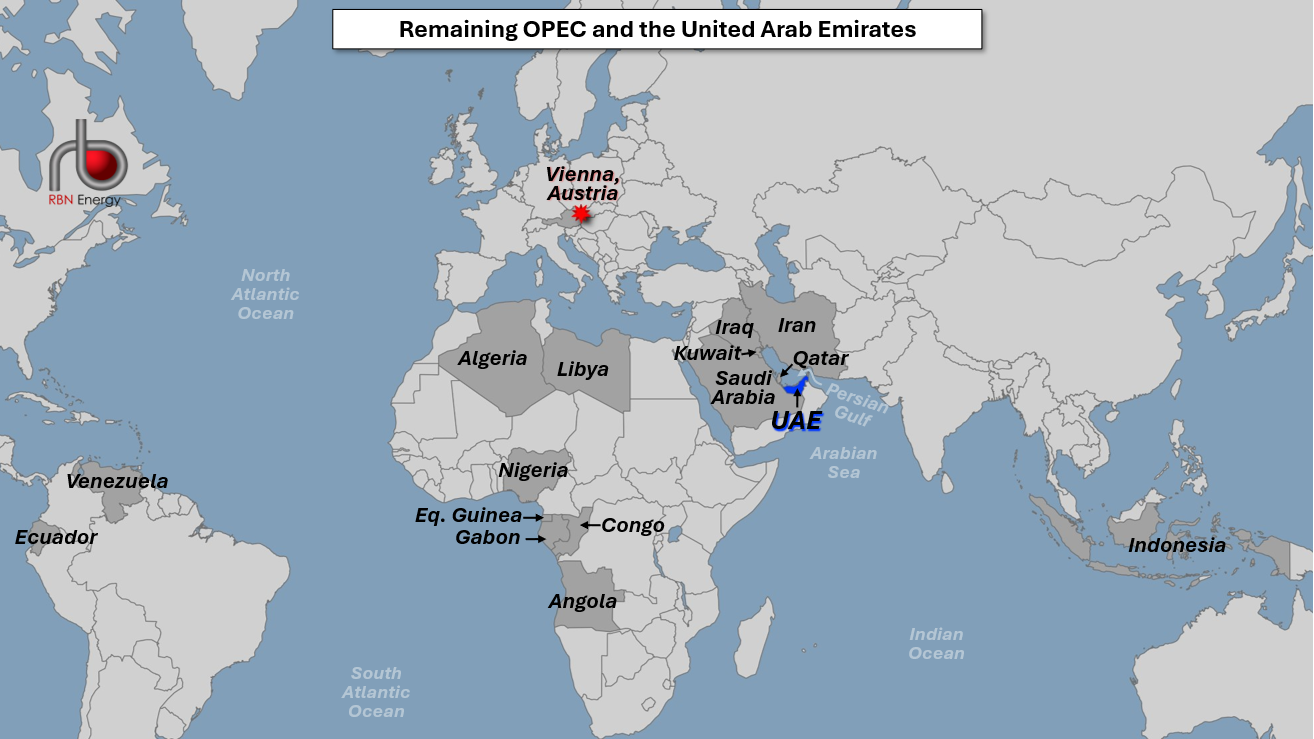
Figure 1. Remaining OPEC Members and the United Arab Emirates. Source: RBN
Pembina Sanctions 750 MMcf/d Heartland Extraction Straddle Plant
On Monday May 25 Pembina Pipeline Corporation announced it is proceeding with the Heartland Extraction Plant, an upsized and renamed evolution of the Yellowhead Extraction Plant first proposed in early 2025.
About the song
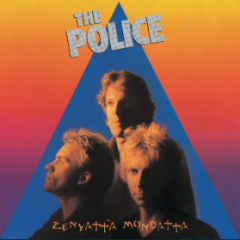
“Canary in a Coalmine” was written by Sting and appears as the fourth song on side one of The Police’s third studio album, Zenyatta Mondatta. The term “canary in a coal mine” refers to something that detects an early warning of danger. Miners in the 20th century used caged canaries to detect toxic gases in the coal mines. If the birds got sick or died, they would know that the miners needed to evacuate or steer clear of that area. The song talks about a person who is always the first to leave if they feel an imminent disaster coming. Personnel on the record were: Sting (lead, backing vocals, bass, synthesizer), Andy Summers (guitar, piano, backing vocals) and Stewart Copeland (drums, backing vocals).
Zenyatta Mondata was recorded from July to August 1980 at Wiselloord in the Netherlands and produced by Nigel Gray and The Police. Stewart Copeland stated that the band finished the recording for the album at four in the morning, went to bed for a few hours, then left for Belgium to begin their world tour. The album was released in October 1980 and went to #5 on the Billboard 200 Albums chart. It has been certified 2X Platinum by the Recording Industry Association of America. Two singles were released from the LP.
The Police were an English rock band formed in London in 1977. The core lineup of the band was Sting (Gordon Sumner) on lead vocals and bass, Andy Summers on guitar and Stewart Copeland on drums. They released their debut album, the punk/reggae-flavored Outlandos d’Amour, in November 1978. As a side note, your director of musicology's band, The Benders, opened for The Police at The Cain’s Ballroom in Tulsa on their first American tour. The Police released five studio albums, three live albums, four soundtrack albums, seven compilation albums, an EP and 26 singles. They have sold more than 75 million records worldwide. They have won two Brit Awards, five Grammy Awards, and were inducted into the Rock and Roll Hall of Fame in March 2003. The band disbanded in 1986 and reunited for a 30th anniversary world tour that went from May 2007 to August 2008 and grossed $358 million. All three band members have had successful solo careers. Sting is currently on tour in the U.S., and Stewart Copeland will begin a U.S. tour in June.
"About the Song" -- written by Mickey McMahan , RBN Director of Musicology





Comments
This is just one person's opinion, but I think that the article missed a key change - the allocation of surplus capacity.
OPEC+ was formed, again, my opinion, when Saudi Arabia found it, prospectively, too painful to absorb the burden of surplus capacity by itself. Russia, etc. joined OPEC+ in December, 2016 and immediately agreed to cut their production.
The UAE had been a reliable partner. When production cuts were required to balance the market in 2008-08, 2016-18, or 2020 to today, the UAE absorbed the economic cost of reducing production.
Without the UAE participating, there are fewer members who are willing to cut production in a downturn. In addition, the UAE will be lifting production by 1.0-1.5 mbpd over the next 5 years causing OPEC to cut their production by an equivalent amount vs. what production might have been had the UAE remained in OPEC.
The implication of the UAE leaving OPEC is that a larger than otherwise production cut will be borne by a smaller number of producers than if the UAE had remained in OPEC whenever surplus capacity exists.