


Last week (February 19, 2015) Enterprise Product Partners announced the start of line fill on their 780 Mb/d ECHO to Beaumont/Port Arthur pipeline. The new route will open access for Canadian heavy crude shippers on the recently completed Seaway Twin pipeline from Cushing to Houston to 1.5 MMb/d of refining capacity in Beaumont/Port Arthur including 0.3 MMb/d of heavy crude coker processing. These refineries were a key target of the Keystone-XL pipeline from Canada to the Gulf Coast that still awaits approval. Today we look at demand and competition for Canadian heavy crude on the Texas Gulf Coast.
In Episode 1 of this two part series we looked at the rather painful progress developing pipeline infrastructure to deliver heavy Canadian oil sands crude to Gulf Coast refineries. Midstream developers have been beset by difficulties including headline grabbing delays to the Keystone XL pipeline and less dramatic but no less damaging setbacks to expansion of the Enbridge system. Since December about 240 Mb/d of heavy Canadian crude has flowed into the Houston Enbridge ECHO terminal on the Seaway Twin pipeline where it must now duke it out with incumbent suppliers to the Gulf Coast’s 1.5 MMb/d of heavy crude “coking” capacity. The largest of the incumbents is Mexican national oil company PEMEX that has already begun discounting it’s flagship Maya crude to do battle with Canadian producers. In this episode we look at heavy crude refining capacity on the Texas Gulf Coast that Canadian barrels will be competing to supply. We also ponder how the volumes of crude flowing on Seaway Twin today will impact the incumbent suppliers.
Heavy Refining Capacity
The map in Figure #1 shows the refineries that heavy Canadian crude coming south on the Seaway Twin pipeline from Cushing will be able to reach easily. The refinery nameplate capacity is shown on the map together with the capacity of heavy crude processing units called cokers (marked with a yellow icon - see Complex Refining 101 for more on the Coking process). There are still more heavy crude refineries in Louisiana (Lake Charles and St. James area) further to the east that can be reached from Houston via the Shell Ho-Ho pipeline (see Oh-Ho-Ho It’s Magic) but that route is not direct and is constrained by the 250 Mb/d outbound Ho-Ho capacity. From the Seaway pipeline at the Jones Creek terminal (bottom right on the map) crude can be distributed to refineries clustered in three areas – in and around the Houston Ship Channel, south of Houston at Texas City and Galveston Bay and 100 miles to the east at Beaumont/Port Arthur. Distribution to these refineries from Seaway is primarily via the 850 Mb/d Jones Creek to ECHO lateral pipeline owned by Enterprise Product Partners (EPD) and Enbridge. The ECHO terminal is the central storage and distribution hub of the EPD Gulf Coast network and currently has close to 3 MMBbl of crude storage operational (see ECHO and the Blending Men). A pipeline link is being completed between ECHO and the Houston Ship Channel and EPD’s connectivity along the Channel is enhanced by their recent acquisition of Oiltanking (see Starship Enterprise) who own pipelines linking the four area refineries. Those four Ship Channel refineries have combined nameplate capacity of 0.8 MMb/d with two (Lyondell Houston Refining and Shell Deer Park) having coking units designed to process 83 Mb/d of heavy crude each.
About the song
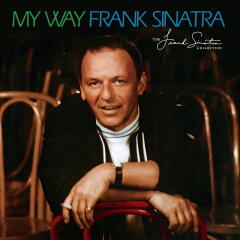
“My Way” was originally written in French as “Comme d’habitude” by Jacques Revaux, Gilles Thibaut and Claude Francois. Its English-language lyrical rewrite was composed by Paul Anka. It appears as the first song on Frank Sinatra’s eponymous 56th studio album, My Way. “Comme d’habitude” was released as a single in France in February 1968 and went to #1 on the French Singles chart. A youthful David Bowie was approached by European music publisher David Pitt to write an English-language version of the song and Bowie did a demo of his version called “Even a Fool Learns to Love.” The song was never recorded but elements of it showed up later in Bowie’s song “Life on Mars,” which appeared on his Hunky Dory studio album. Paul Anka heard “Comme d’habitude” on the radio while vacationing in the south of France. He acquired the publishing rights to it and wrote new lyrics in English for the song in four hours. In the wee small hours, he called Frank Sinatra at Caesars Palace in Las Vegas and said, “I’ve got something really special for you.” At the end of December 1968, Sinatra recorded the song featuring a 40-piece orchestra at Western Studio A in Hollywood in one take. Produced by Don Costa and Sonny Burke, it was released as a single in March 1969 and went to #2 on the Billboard Easy Listening and #27 on the Billboard Hot 100 Singles charts. It became a signature song in Sinatra’s live shows. Later, Elvis Presley and Sid Vicious recorded their versions of the song to varying degrees of success. Personnel on the record were: Frank Sinatra (vocals) and a 40-piece orchestra featuring Buddy Saltzman on drums and arranged and conducted by Don Costa.
The album, My Way, was recorded at Western Studio A in Hollywood in one day in December 1968 and three days in February 1969. Produced by Don Costa and Sonny Burke, it featured popular songs of the day, with its centerpiece being “My Way.” Released in March 1969, it went to #11 on the Billboard 200 Albums chart. One single was released from the LP.
Frank Sinatra was an American singer and actor known as the “Chairman of the Board” and “Ol’ Blue Eyes.” Sinatra started singing professionally in the swing era of the late 1930s and was influenced by the easygoing crooning style of Bing Crosby. He signed as a solo artist with Columbia Records in 1943 and quickly became an idol of the bobby sox generation. He released 59 studio albums, 33 live albums, three soundtrack albums, 169 compilation albums, 105 EPs and 297 singles. He appeared in 63 motion pictures and many television shows. He won an Academy Award, 11 Grammy Awards, four Golden Globe Awards, a Peabody Award, a Cecille B. DeMille Award, a Screen Actors Guild Lifetime Achievement Award, Kennedy Center Honors, a Presidential Medal of Freedom, is a member of the Big Band and Jazz Hall of Fame, the Gaming Hall of Fame, and has three stars on the Hollywood Walk of Fame. Each year on Sinatra’s birthday (December 12), the Empire State Building lights up with blue lights in his honor. Sinatra died in Los Angeles in May 1998 at 82.




Comments
I think Beaumont and Lake Charles are east of Houston, not west.... "There are still more heavy crude refineries in Louisiana (Lake Charles and St. James area) further to the west that can be reached from Houston via the Shell Ho-Ho pipeline" and "south of Houston at Texas City and Galveston Bay and 100 miles to the West at Beaumont/Port Arthur"
Otherwise, good analysis. Will be interesting to see how Venezuela reacts. Their refinery may be capitve to their crude but the output still has to be competitive...
In reply to directions by Edwin Ellis
Thanks - I fixed the West/East errors.
Seems that the heavy and very heavy crude oil grades go through the same fractionation and vacuum fractionation processing first. The coking units are for the heavier fractions, which of course constitute a greater percentage of the production of these two units than lighter crude oils.
In the case of some coking units the coker feedstock first goes through a hydrotreater to remove most of the sulfur. Such units operate at a hydrocracker type pressures for such heavy fractions.
This is different than upgraders such as exist in Canada and Venezuela.
Motiva's new expansion takes 325M BPD of heavy crude through its crude unit first, before further processing of the residium.
If you're referring to the country of Colombia in your post, it's spelled with an O. The name of the Spanish-speaking country Colombia comes from Colón (Spanish spelling of Christopher Columbus = Cristóbal Colón, hence the O). In English, Columbia (as in Columbia University or Columbia, SC) is spelled with a U because Cristóbal Colón is translated to Christopher Columbus.
A common mistake that many Colombians (with an O) gripe about. :)
Reference: http://www.latintimes.com/how-spell-colombia-country-colombians-tired-columbia-misspelling-167439
Aside from that, great post!!