


The Wink to Webster Pipeline, operated by ExxonMobil, stands out as the largest crude oil pipeline by capacity exiting the prolific Permian Basin in West Texas. What makes it even more of a midstream icon is the company’s hands-on management of the entire process, from the production well to the long-haul run to delivery to ExxonMobil’s refineries. In today’s RBN blog, we’ll examine Wink to Webster’s complicated ownership structure, how it connects directly to terminals run by its owners and its destination flexibility.

Canadian crude output is rising, requiring new export routes. As traditional pathways face constraints, the U.S. Rockies—especially the Guernsey, WY hub—are emerging as key corridors for moving Canadian heavy crude to downstream markets, including the Gulf Coast.
This is the latest in a series of blogs we’ve written highlighting crude oil pipelines serving the Permian. In Part 1 and Part 3 of this series, we looked at the Longhorn and BridgeTex pipelines, respectively, and what ONEOK has accomplished with these systems since it acquired Magellan Midstream in 2023 (see Tulsa Time). In Part 2 and Part 4, we discussed the EPIC Crude and Gray Oak pipelines, respectively, to the Corpus Christi area, which have both been operating at full capacity. In Part 5, we covered Enterprise Product Partners’ Midland to ECHO (M2E) pipelines. Today, we take a closer look at Wink to Webster (W2W).
As we detailed in Houston Bound, W2W (blue line in Figure 1 below) is operated by ExxonMobil and began commercial service at the end of 2020, transporting oil from Midland, TX — the heart of the Permian’s Midland Basin — to Webster, TX, just south of Houston, and from Webster to Baytown along the Houston Ship Channel. The pipeline’s ownership structure is a bit complicated, so let’s break it down. W2W is owned by Wink Webster Pipeline LLC, a joint venture (JV) initially formed by affiliates of ExxonMobil, Plains All American Pipeline and Lotus Midstream (which was purchased by Energy Transfer in 2023), with MPLX, Delek US and Rattler Midstream joining the JV in August 2019. (Delek controls a 15% stake in the pipeline system, while Diamondback Energy has a 4% interest after its 2022 acquisition of Rattler. Percentages for the other members of the JV have not been disclosed.) In addition, Enterprise announced in January 2020 that it would own a 29% undivided joint interest (UJI) in the pipeline system, represented by its Midland to ECHO 3 pipeline (M2E-3; red line). M2E-3 is often grouped with W2W for capacity and flow analysis — they use the same steel pipe — but is not part of the JV’s legal ownership.
About the song
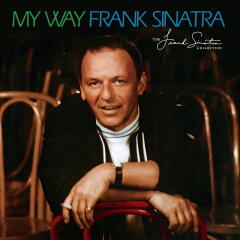
“My Way” was originally written in French as “Comme d’habitude” by Jacques Revaux, Gilles Thibaut and Claude Francois. Its English-language lyrical rewrite was composed by Paul Anka. It appears as the first song on Frank Sinatra’s eponymous 56th studio album, My Way. “Comme d’habitude” was released as a single in France in February 1968 and went to #1 on the French Singles chart. A youthful David Bowie was approached by European music publisher David Pitt to write an English-language version of the song and Bowie did a demo of his version called “Even a Fool Learns to Love.” The song was never recorded but elements of it showed up later in Bowie’s song “Life on Mars,” which appeared on his Hunky Dory studio album. Paul Anka heard “Comme d’habitude” on the radio while vacationing in the south of France. He acquired the publishing rights to it and wrote new lyrics in English for the song in four hours. In the wee small hours, he called Frank Sinatra at Caesars Palace in Las Vegas and said, “I’ve got something really special for you.” At the end of December 1968, Sinatra recorded the song featuring a 40-piece orchestra at Western Studio A in Hollywood in one take. Produced by Don Costa and Sonny Burke, it was released as a single in March 1969 and went to #2 on the Billboard Easy Listening and #27 on the Billboard Hot 100 Singles charts. It became a signature song in Sinatra’s live shows. Later, Elvis Presley and Sid Vicious recorded their versions of the song to varying degrees of success. Personnel on the record were: Frank Sinatra (vocals) and a 40-piece orchestra featuring Buddy Saltzman on drums and arranged and conducted by Don Costa.
The album, My Way, was recorded at Western Studio A in Hollywood in one day in December 1968 and three days in February 1969. Produced by Don Costa and Sonny Burke, it featured popular songs of the day, with its centerpiece being “My Way.” Released in March 1969, it went to #11 on the Billboard 200 Albums chart. One single was released from the LP.
Frank Sinatra was an American singer and actor known as the “Chairman of the Board” and “Ol’ Blue Eyes.” Sinatra started singing professionally in the swing era of the late 1930s and was influenced by the easygoing crooning style of Bing Crosby. He signed as a solo artist with Columbia Records in 1943 and quickly became an idol of the bobby sox generation. He released 59 studio albums, 33 live albums, three soundtrack albums, 169 compilation albums, 105 EPs and 297 singles. He appeared in 63 motion pictures and many television shows. He won an Academy Award, 11 Grammy Awards, four Golden Globe Awards, a Peabody Award, a Cecille B. DeMille Award, a Screen Actors Guild Lifetime Achievement Award, Kennedy Center Honors, a Presidential Medal of Freedom, is a member of the Big Band and Jazz Hall of Fame, the Gaming Hall of Fame, and has three stars on the Hollywood Walk of Fame. Each year on Sinatra’s birthday (December 12), the Empire State Building lights up with blue lights in his honor. Sinatra died in Los Angeles in May 1998 at 82.




Comments
Great blog. I suspect that there is another factor that influenced XOM's decision to own and develop the pipeline. Historically, XOM has had an aversion to take-or-pay or ship-or-pay commitments. This aversion was rooted in their finance department's view that those commitments are similar to debt and affect XOM's creditworthiness. As a result, XOM provides more information about long-term commitments than some of its competitors.
Obviously, XOM could have gotten the same business flexibility by signing up for long-term capacity on a pipe developed by a pipeline company. The decision to own the pipe may be rooted in XOM's particular unfavorable view on the types of commitments that it would have needed to make to get capacity via that route.