Since December the first significant volume of Canadian heavy crude - an average of 240 Mb/d - has flowed to the Gulf Coast on the Seaway Twin pipeline. It’s been a rocky road to the Gulf Coast for Canadian heavy crude producers – beset with delays and congestion that they probably never envisioned when they planned their oil sands projects (including the wider political battle over Keystone – currently back in the President’s hands.) And Canadian crude that does make it to Gulf Coast refineries faces stiff competition from incumbent suppliers. Today we chart the progress of the Seaway Twin and Flanagan South pipelines and look at price competition for heavy crude at the Gulf.
The opening up in December last year (2014) of the Enterprise/Enbridge joint venture 450 Mb/d Seaway Twin pipeline from Cushing to Freeport, TX in conjunction with the Enbridge 585 Mb/d Flanagan South line from Pontiac, IL to Cushing has enabled significant pipeline flows of heavy Canadian crude to reach the Texas Gulf Coast. According to our friends at Genscape, average daily flows on Flanagan South since December 19, 2014 have been 389 Mb/d and average flows on the Seaway Twin have been 240 Mb/d. As we described last year the two new pipelines are part of an extensive expansion project by Enbridge of their Western Gulf Access system, that delivers Western Canadian heavy oil sands crude as well as Canadian conventional crude and shale crude from the northern portions of the Williston Basin into the U.S. Midwest (see ”The Promised Land? Flanagan South and the Seaway Twin”).
The map in Figure #1 shows the path of the Enbridge Mainline from Edmonton and Hardisty in Alberta to the Chicago area (purple dashed bracket) – with two sections known as the Enbridge system on the Canadian side (light blue line) and the Lakehead System on the U.S. side (darker blue line). The new Flanagan South pipeline runs parallel to the existing 193 Mb/d Spearhead pipeline between Flanagan and Cushing (green dashed bracket). The final Seaway Twin segment from Cushing to Houston (orange bracket) runs parallel to the existing Seaway pipeline that was reversed in June 2012 and expanded to 400 Mb/d in 2014 (see Seaway Reversal). Until the Seaway reversal in 2012 there was no pipeline capacity from the Midwest to the Gulf Coast at that time except for the 98 Mb/d ExxonMobil Pegasus pipeline (itself closed for most of 2013 and 2014 by a rupture). Although the original Seaway pipeline expanded to 400 Mb/d in 2014 and the southern section of the TransCanada Keystone XL TX opened up 700 Mb/d of capacity between Cushing and Nederland, TX in the same year, flows of crude from Canada along those routes to the Gulf Coast were still constrained by a lack of Canadian crude flowing into Cushing. The heavy crude that did flow from Canada into the Midwest (via Spearhead and the original Keystone pipeline) was primarily destined for regional refineries – many of which – like the 400 Mb/d BP Whiting refinery in Illinois had been specifically upgraded to process heavy Canadian crude.
About the song
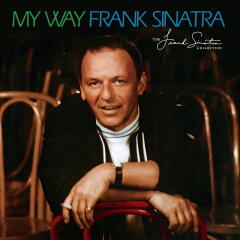
“My Way” was originally written in French as “Comme d’habitude” by Jacques Revaux, Gilles Thibaut and Claude Francois. Its English-language lyrical rewrite was composed by Paul Anka. It appears as the first song on Frank Sinatra’s eponymous 56th studio album, My Way. “Comme d’habitude” was released as a single in France in February 1968 and went to #1 on the French Singles chart. A youthful David Bowie was approached by European music publisher David Pitt to write an English-language version of the song and Bowie did a demo of his version called “Even a Fool Learns to Love.” The song was never recorded but elements of it showed up later in Bowie’s song “Life on Mars,” which appeared on his Hunky Dory studio album. Paul Anka heard “Comme d’habitude” on the radio while vacationing in the south of France. He acquired the publishing rights to it and wrote new lyrics in English for the song in four hours. In the wee small hours, he called Frank Sinatra at Caesars Palace in Las Vegas and said, “I’ve got something really special for you.” At the end of December 1968, Sinatra recorded the song featuring a 40-piece orchestra at Western Studio A in Hollywood in one take. Produced by Don Costa and Sonny Burke, it was released as a single in March 1969 and went to #2 on the Billboard Easy Listening and #27 on the Billboard Hot 100 Singles charts. It became a signature song in Sinatra’s live shows. Later, Elvis Presley and Sid Vicious recorded their versions of the song to varying degrees of success. Personnel on the record were: Frank Sinatra (vocals) and a 40-piece orchestra featuring Buddy Saltzman on drums and arranged and conducted by Don Costa.
The album, My Way, was recorded at Western Studio A in Hollywood in one day in December 1968 and three days in February 1969. Produced by Don Costa and Sonny Burke, it featured popular songs of the day, with its centerpiece being “My Way.” Released in March 1969, it went to #11 on the Billboard 200 Albums chart. One single was released from the LP.
Frank Sinatra was an American singer and actor known as the “Chairman of the Board” and “Ol’ Blue Eyes.” Sinatra started singing professionally in the swing era of the late 1930s and was influenced by the easygoing crooning style of Bing Crosby. He signed as a solo artist with Columbia Records in 1943 and quickly became an idol of the bobby sox generation. He released 59 studio albums, 33 live albums, three soundtrack albums, 169 compilation albums, 105 EPs and 297 singles. He appeared in 63 motion pictures and many television shows. He won an Academy Award, 11 Grammy Awards, four Golden Globe Awards, a Peabody Award, a Cecille B. DeMille Award, a Screen Actors Guild Lifetime Achievement Award, Kennedy Center Honors, a Presidential Medal of Freedom, is a member of the Big Band and Jazz Hall of Fame, the Gaming Hall of Fame, and has three stars on the Hollywood Walk of Fame. Each year on Sinatra’s birthday (December 12), the Empire State Building lights up with blue lights in his honor. Sinatra died in Los Angeles in May 1998 at 82.