A handful of U.S. midstreamers are striving to build an offshore export buoy in the Gulf of Mexico that would be able to fully load a Very Large Crude Carrier (VLCC). If successful, they could facilitate a new wave of crude oil export flows and dynamics. With domestic production back to record highs and global supply and demand dynamics in a constant state of flux, the market developments along the Gulf Coast are something the oil industry is eying intently. In today’s RBN blog, we look at the latest on two export projects — Phillips 66 and Trafigura's Bluewater Texas Terminal and Sentinel Midstream’s Texas GulfLink.
This is the second of a two-part series on the four major crude oil export terminals being developed in the Gulf of Mexico. In Part 1 of this series, we gave updates on two projects — Energy Transfer’s Blue Marlin Offshore Port (BMOP) and Enterprise Products Partners’ joint venture Sea Port Oil Terminal (SPOT). The outcome of the competition among these four contenders will have a major impact on the companies involved and the future of U.S. crude oil exports.

To truly understand Cushing — what it does and how it works — you need to know the hub’s assets and how they fit together. RBN’s Cushing Crude Oil Playbook provides the first one-stop, comprehensive guide to the hub’s assets.
The reason it’s such a big deal is that each of the planned terminals would be able to fully load VLCCs — which are the most economical and efficient way to export large volumes of crude oil from the Gulf Coast. VLCCs are some of the largest ships serving the oil industry, each able to carry roughly 2 MMbbl, offering tremendous cost-efficiencies on a per-barrel basis. Right now, only one domestic facility can fully load these giant ships, and that’s the Louisiana Offshore Oil Port (LOOP). Most charterers, as we have blogged before (see Working on a Dream), need to bear the extra cost of reverse lightering from smaller ships (up to four) to fill up these mammoth vessels. Even with that, on a per-barrel basis, transport costs are cheaper for VLCCs given how much they can carry — often referred to as economies of scale. Currently, many VLCCs take partial cargo loads (ranging from 1.25 MMbbl-1.6 MMbbl) at the Enbridge Ingleside Energy Center (EIEC) and South Texas Gateway (STG) terminals in Ingleside, TX. Located just across the bay from Corpus Christi, these are the only two U.S. facilities, besides LOOP, that can receive a VLCC. Once partially filled, these supertankers are then topped up to the brim in the deep waters of the Gulf using reverse lightering. The rest of the VLCCs coming to the Gulf load up exclusively from reverse lightering. Because of the cost savings, VLCCs have become a major feature of the U.S. crude export market. Just last year, the industry booked some 424 of them for their voyages abroad — that’s more than double than before the pandemic — according to RBN’s weekly Crude Voyager.
About the song
“Catch a Wave” was written by Brian Wilson and Mike Love, and appears as the second cut on the Beach Boys’ third album, Surfer Girl. The song was recorded at Western Studios in Los Angeles in July 1963, and released in September of the same year. Surfer Girl is the first album on which Beach Boy Brian Wilson was given full production credit — he maintained the producer's role for the band for a few more years, and many hit records.
An interesting side note about “Catch a Wave” is that Beach Boy friends Jan & Dean had Brian Wilson rework the song with new lyrics by Roger Christian. They released it as the Jan & Dean single “Sidewalk Surfin’,” which went to #25 on the Billboard Hot 100 chart in October 1964.
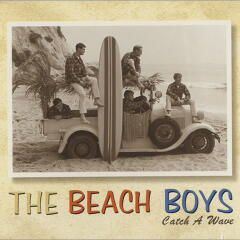
The Surfer Girl LP went to #7 on the Billboard Top 200 Albums chart. The album cover photo is an outtake from the Beach Boys’ first album, with the boys holding the same surfboard and wearing the same Pendleton shirts and wheat jeans, minus the tiki-trimmed Ford Model A pickup truck. Personnel on the record were: Brian Wilson (lead and harmony vocals, bass, piano, organ, and hand claps), Carl Wilson (lead guitar, harmony vocals, and hand claps), Dennis Wilson (drums, lead and harmony vocals, and hand claps), Mike Love (lead and harmony vocals, saxophone, and hand claps), Al Jardine (harmony vocals, bass, and hand claps), David Marks (rhythm guitar, and hand claps), and Maureen Love (harp).
The Beach Boys are an American rock band formed in Hawthorne, CA, in 1961. They have released 29 studio albums and nine archival albums. The band has sold over 100 million records worldwide to date, and has won two Grammy Awards; three of their songs are in the Grammy Hall of Fame. The Beach Boys were inducted into the Rock and Roll Hall of Fame in 1988. Brian Wilson still records and tours to this date. Mike Love fronts a touring version of the Beach Boys that is currently touring the U.S.