It seems logical that shifting over time to aviation fuel with a lower carbon footprint would represent the most practical way for the global airline industry to reduce its greenhouse gas (GHG) emissions. But for that shift to happen, there needs to be an economic rationale for producing sustainable aviation fuel and, despite a seemingly generous production credit for SAF in the Inflation Reduction Act (IRA), that rationale is a least a little shaky when compared to renewable diesel (RD) credits available today. In today’s RBN blog, we conclude our two-part series on SAF with an examination of RD and SAF economics (which are remarkably similar), the degree to which existing SAF incentives may fall short of RD, and what it all means for SAF producers and production.
As we said in Part 1, jet fuel is the planet’s third-most consumed transportation fuel (after diesel and gasoline), and its considerable volume (7 MMb/d) is a meaningful target for carbon emissions reduction. Many airlines have set targets of “net-zero-by-2050” — which may be hard to fathom given the nature of an industry reliant on transportation fuels. If they are to have any degree of success in approaching their goals, lowering Scope 2 emissions through the increased use of SAF will be critical, particularly given the recent skepticism being heaped on the airlines’ other decarbonization strategy — carbon offsets.
Like RD, SAF is the chemical twin of its petroleum-based alternative and therefore can serve as a “drop-in” replacement for it. We also explained the processes most often used to produce RD — and from it, SAF. The most mature technology for producing RD from plant oils or other recycled fats uses hydrogen to remove oxygen (primarily hydrodeoxygenation, or HDO) to produce hydroprocessed esters and fatty acids (HEFA). This same HEFA process can be used to produce SAF (which contains the same molecules as petroleum-sourced jet fuel) by adding a hydrocracking processing step. SAF molecules are shorter chains of hydrocarbons; therefore, the diesel-sized molecules in RD must be broken (or “cracked”).

The Future of Fuels bi-annual report by RBN's Refined Fuels Analytics provides an in-depth analysis of the U.S. and global refinery industries, focusing on crude oil and fuel market dynamics, supply and demand, alternative fuels, refinery capacities, and price forecasts to help stakeholders navigate the evolving energy landscape.
About the song
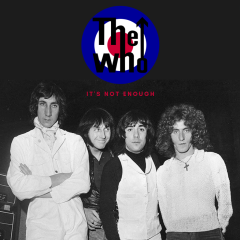
“It's Not Enough” was written by Pete Townshend and Rachel Fuller and appears as the eighth song on The Who’s 11th studio album, Endless Wire. It was released as a digital download single from the album in October 2006. Personnel on the record were: Pete Townshend (guitars, keyboards, backing vocals, drums, drum machine), Roger Daltry (lead vocals), John “Rabbit” Bundrick (organ, backing vocals), Stuart Ross (bass), Billy Nicholls (backing vocals), Peter Huntington (drums), Jolyon Dixon (acoustic guitar), and Rachel Fuller (keyboards).
Endless Wire was recorded between December 2004 and May 2006 at Pete Townshend’s home studio in London and Eel Pie Oceanic in London. Produced by Pete Townshend, Bob Priddle, and Billy Nicholls and released in October 2006, it was The Who’s first new studio album in 24 years and the first since the death of bassist and founding member John Entwistle. Townshend worked the songs from this album into a full-length rock musical, a workshop version of which was presented at Vassar College’s Powerhouse Summer Theater workshop series in July 2007. The album went to #7 on the Billboard 200 Albums chart. Five singles were released from the LP.
The Who is an English rock band formed in London in 1964 by Pete Townshend, Roger Daltry, John Entwistle, and Keith Moon. They are considered one of the most influential rock bands of all time, with over 100 million records sold worldwide. They have released 12 studio albums, 16 live albums, 27 compilation albums, four soundtrack albums, four EPs and 58 singles. The Who are members of the Rock and Roll Hall of Fame and UK Music Hall of Fame, and have a Lifetime Achievement Award from the Grammy Foundation. The band has had six members pass through its rolls since its formation. Keith Moon died in 1978 and John Entwistle died in 2002. Pete Townshend and Roger Daltry continue to record and tour as The Who and begin a European tour starting in mid-June 2023.