The development of US liquefied natural gas (LNG) export facilities is picking up steam. Four projects—Sabine Pass LNG, Cameron LNG, Cove Point LNG, and Freeport LNG—are now under construction (up from only one this past summer), and Sabine Pass is only a year or so away from liquefying and exporting its first LNG. But what about Western Canada? It’s got tremendous LNG export potential, but project proposals continue to face headwinds from cost concerns, regulatory uncertainty and the most recent hurdle – lower oil prices. Today, we consider the latest news on efforts to move Western Canadian gas to Japan and other overseas markets.
It’s been clear for some time now that Western Canada needs new markets for its natural gas, particularly if producers there want to take fuller advantage of the large reserves of shale gas waiting to be tapped in the Horn River/Liard basins in northeastern British Columbia and the Montney play in northeastern BC and Alberta (see More Than A Feeling). A few years back, that gas would have been piped to eastern Canada and the US Northeast and Midwest, but producers in gas-rich shale plays south of the Canadian-US border have largely taken over those markets and left Western Canadian gas producers out in the cold, so to speak. A logical market for BC and Alberta gas, as we said a few months ago in our Slip Sliding Away series, would be LNG export facilities along the BC coast that could ship LNG to Japan, South Korea, China and other buyers a relatively short hop across the Pacific.
However, while development of liquefaction and export terminals has been heating up in the US, projects in BC have seemingly failed to catch fire. Part of the problem has been an infrastructure deficit. While the Sabine Pass, Cameron, Cove Point and Freeport LNG projects in the US have ready access to existing pipeline infrastructure (all were initially developed as LNG import facilities), most export projects along the BC Coast would need new or expanded pipelines to connect with gas supplies. Also, environmental approvals have been slow in coming, and concerns have been raised about the potential for cost escalation at BC LNG projects, in part because most would be built in remote areas, far from concentrations of skilled craftsmen (and worker housing). Then there was the pesky matter of whether the BC government might impose onerous taxes on LNG exporters. (That’s been resolved to developers’ general satisfaction.) But the latest hurdle to the success of these projects could prove to be the thorniest yet – namely lower oil prices. That is because Canadian (and U.S.) LNG projects will compete to sell their gas into Asian markets where - as we explained in “Courtesy of The Red White and Blue” – most LNG prices are set by a monthly Index linked to oil prices known as the Japanese Crude Cocktail or JCC. So if oil prices fall then the JCC price that buyers pay is lower and the economics of long-distance LNG projects look worse.
As a result – although it’s too soon to say for sure whether Western Canadian gas producers and LNG export developers will succeed--it seems likely that no more than two or three will be built in the foreseeable future, and maybe not even that many. For example, in a mid-November 2014 presentation, Bentek predicted that only three BC projects - Douglas Channel Energy, Pacific NorthWest LNG and Prince Rupert LNG together would get off the drawing board and export the equivalent of nearly 3 Bcf/d of natural gas by the mid-2020s (at which time eight US projects could be exporting up to 12 Bcf/d; see Figure 1). But already the largest of those three – the Pacific NorthWest LNG project has been put on hold by its biggest investor, Petronas, the Malaysian state-owned oil company, citing plunging oil prices.
About the song
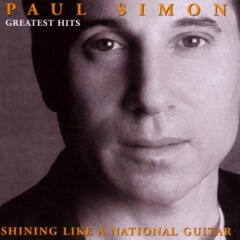
“Slip Sliding Away” was written by Paul Simon and has appeared on the compilation albums Greatest Hits, Etc. and Negotiations and Love Songs. The song was originally recorded and slated for release on Simon’s 1975 album, Still Crazy After All These Years, but at the last minute Simon decided not to include it on the album. Released as a single in October 1977, it went to #5 on the Billboard Hot 100 and #4 on the Easy Listening Singles charts. It has been certified Gold by the Recording Industry Association of America. Personnel on the record were: Paul Simon (lead vocals, acoustic guitar), Anthony Jackson (Bass), Richard Tee (Fender Rhodes electric piano), Steve Gadd (drums), Ralph McDonald (percussion), and The Oak Ridge Boys (backing vocals).
Simon was half of the popular duo Simon & Garfunkel, which was officially formed in 1964 and sold millions of records until their breakup in 1970. A little-known fact is that Paul Simon and Art Garfunkel had been a team since they were teenagers. Under the name Tom & Jerry, the duo got a record deal in 1957 with the independent New York record label, Big Records. They had a minor hit with the Simon-penned “Hey Schoolgirl,” which went to #49 on the Billboard Hot 100 Singles chart and led to an appearance on American Bandstand with Jerry Lee Lewis, who was promoting “Great Balls of Fire” at the time. Between 1957 and 1964, Simon wrote, recorded, and released more than 30 records.
As a solo artist. Paul Simon has released 15 studio albums, three live albums, 11 compilation albums and 15 singles. He has won 16 Grammy Awards and a Grammy Lifetime Achievement Award, and has been inducted into the Rock and Roll Hall of Fame twice: as a member of Simon & Garfunkel in 1990 and as a solo artist in 2001. He continues to write and record, and to make occasional public appearances. He released his 15th solo studio album, Seven Psalms, in May 2023. It went to #25 on the Billboard Top Rock Albums chart and #153 on the Billboard 200 Albums chart.