


Russia’s invasion of Ukraine in February 2022 set off a wave of repercussions in energy markets and economies the world over. The hope of the U.S. and its allies has been that international pressure and mounting sanctions would cause Russia to swiftly end the war — or at least make it very difficult to finance. But while the war rages on and Russia seems to be coping with the short-term impacts reasonably well, the long-term effects on its energy sector could be much more significant. In today’s RBN blog, we look at how Russia’s twin challenges — finding buyers for its crude oil and its refined products — are more different than they might seem and why Russia’s oil-and-refining sector is in the early stages of a sustained slowdown.
The U.S. was among the first to respond to the invasion with sanctions, announcing just days after the war began that it would prohibit imports of Russian oil and certain refined products (along with LNG and coal) and ban U.S. investment in Russia’s energy sector. Similar measures were soon adopted by Australia, Canada, Japan and the UK, and Russian banks were banned from the SWIFT system, which enables financial transactions and plays a key role in the global oil trade. In addition, integrated oil companies such as BP, Equinor and Shell announced their intention to exit upstream oil and gas projects in Russia. The U.S. and the UK also rolled out foreign investment restrictions on several Russian companies and key figures in Russia’s energy industry were targeted for individual sanctions, including Igor Sechin (Rosneft), Nikolai Tokarev (Transneft) and Vagit Alekperov (Lukoil). We’ve written extensively about Europe’s move away from Russian natural gas and the resulting impact on global LNG trade, but sanctions have also targeted several other sectors (more on those in a bit).

In terms of a global reaction, the most expansive measures target Russia’s crude oil and refined product exports and are intended to diminish Russia’s ability to execute its war in Ukraine. The efforts targeting Russia’s crude exports may have gotten the majority of the headlines since last year, but it’s the sanctions on refined product exports and other measures that have Russia set up for significant long-term challenges. Let’s look at both of those efforts and see why their impact on Russia might be so different. (For more on the refined product market, check out The Future’s So Bright and the new Future of Fuels report from RBN’s Refined Fuels Analytics practice.)
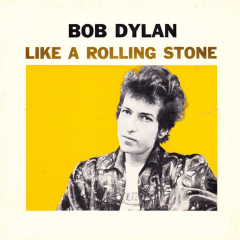
About the song
“Like a Rolling Stone” was written by Bob Dylan and appears as the first song on side one of his sixth studio album, Highway 61 Revisited. Dylan wrote the confrontational lyrics as an extended verse after he returned to the U.S. after a grueling tour of the UK in June 1965. Honed down to four verses and a chorus, the song was recorded in two days at Columbia Studio A with Tom Wilson producing as part of the sessions for Dylan’s upcoming album. An interesting side note to the song is Al Kooper, who was known as a guitar player at the time, was hanging out at the studio as a guest of Tom Wilson. He convinced Wilson that he had a great organ part for the song, and they let him play the Hammond B3 organ for the song. If you listen carefully you can hear some of the organ parts come in a millisecond behind the beat because Kooper was following the fretting hands of Dylan and guitarist Mike Bloomfield to know what chords were being played. Hence, the signature organ part in the song was born. Columbia Records had hesitancy about the song because of its over six-minute length and its heavy electric sound, not realizing that it would change the course of popular music after its release. Released as a single in July 1965, it went to #2 on the Billboard Hot 100 Singles chart. Jimi Hendrix would later redefine “Like a Rolling Stone” at his debut performance at the Monterey Pop Festival in 1967. Personnel on the record were: Bob Dylan (lead vocal, electric guitar, harmonica), Mike Bloomfield (lead electric guitar), Al Kooper (Hammond B3 organ), Bruce Langhorne (tambourine), Frank Owens (tack piano), Joe Macho Jr. (bass), and Bobby Gregg (drums).
Highway 61 Revisited was recorded during June-August 1965 at Columbia Studio A in New York City with Bob Johnston producing and Tom Wilson producing “Like a Rolling Stone.” The album was released in August 1965 and went to #3 on the Billboard 200 Albums chart. It has been certified Platinum by the Recording Industry Association of America. The album was the first for Dylan to use rock musicians to back him. Four singles were released from the LP.
Bob Dylan is an American singer, songwriter, musician, actor, author, poet, painter, and illustrator. He has been a popular culture icon in a career that has spanned more than six decades. He is considered by many to be the greatest songwriter of all time. He has released 39 studio albums, 15 live albums, 29 compilation albums, 18 EPs, seven soundtrack albums and 95 singles, and has sold more than 125 million records worldwide. He has earned 10 Grammy Awards, one Golden Globe, one Academy Award, and has a Presidential Medal of Freedom, a Pulitzer Prize special citation, and a Nobel prize in Literature. He is a member of the Rock and Roll Hall of Fame, Songwriters Hall of Fame, and Nashville Songwriters Hall of Fame. Dylan’s archives are housed at the Bob Dylan Center which opened in Tulsa, OK, in May 2022. Dylan continues to record and tour and will be touring Japan in April 2023. His latest book of essays, The Philosophy of Modern Song, was published in September 2022.






Comments
Thanks for this and the previous detailed information on the changing situation with Russian exports. Previous blogs by Robert Auers and Amy Kalt gave information on how the cutoff of Russian intermediates would affect U.S refineries. A suggested topic for a future blog: do a look-back, after 1 year, at what U.S refineries have done to adapt to, especially, the lack of Russian VGO and resid, and what the impact has been on refining profitability and/or fuels production. This topic has been discussed in earnings conference calls in the last year but those discussions don't go any deeper than superficial hand-waving answers. To provide some quantitative detail on $ impact on profits and prices would add a lot to the understanding of this popular topic.