Economic sanctions can be a powerful tool to punish a country or group, especially if they involve an essential commodity like crude oil. Imposed for a variety of reasons (military, political, social), sanctions can cause serious harm to the targeted entity. But levying them effectively is not as simple as it may seem, and even the most well-intentioned plans can fall short or have unintended consequences or backfire altogether. In today’s RBN blog we look at a plan by the U.S. and its allies to limit the price of Russian crude oil and the significant challenges in designing a cap that is effective and enforceable.
Russia’s catastrophic invasion of Ukraine sent a jolt through the international community and tensions shot higher Wednesday after Russian President Vladimir Putin announced a massive call-up of military reservists and made other thinly veiled threats about Russia’s military capabilities. Apart from the humanitarian tragedy unfolding, the subsequent increase in energy prices and their effect on inflation has been by far the most significant concern for energy this year. Much like with the 1973 oil embargo, as we discussed in Part 1 of this blog series, the U.S. has explored and in some cases implemented a host of options to bring energy prices under control, from the record Strategic Petroleum Reserve (SPR) withdrawals that ramped up this spring and summer and a waiver of summer ethanol blending limits to proposals such as a ban on U.S. crude exports, a windfall profits tax on energy producers and suspension of the federal gasoline tax.

The most recent idea to gain traction with politicians is a cap on the price of Russian crude, with G-7 finance ministers pledging September 2 to implement such a plan, something the Biden administration has been working on for months. The G-7 (Canada, France, Germany, Italy, Japan, the UK and the U.S.), along with other allies and partners, would attempt to prohibit the seaborne transportation of Russian crude oil unless purchased at or below a yet-to-be-determined price cap. This comes after the EU, on June 3, adopted a partial embargo against Russian oil that will ban seaborne imports as of December 5 and ban refined product imports as of February 2023. (Pipeline imports of crude oil and refined products will remain exempt, as some EU members depend on Russian imports via the Druzhba pipeline.) There is serious concern that the EU’s new sanctions, in addition to the major disruptions going on in the gas market (more on that in a moment), could send energy prices higher and tip the global economy into a recession, a risk that U.S. Treasury Secretary Janet Yellen said the cap is intended to mitigate. (Yellen said the price cap would keep Russian barrels flowing to Europe; without it, Russia could end up shutting in production, causing global prices to spike.) Russia, which has close ties to EU member Hungary and supplies about half of its crude oil, has long shown a willingness to use its energy supplies as a weapon and has been using its crude oil and refined products as a wedge against EU unity and as a tool to limit the impact of sanctions.
About the song
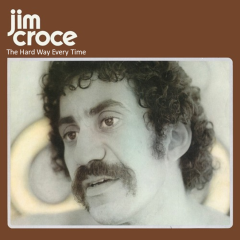
“The Hard Way Every Time” was written by Jim Croce and appears as the 11th song on Jim Croce’s fifth and final studio album, I Got a Name. Personnel on the record were: Jim Croce (lead, backing vocals, rhythm acoustic guitar), Maury Muehleisen (lead acoustic guitar, backing vocals), Michael Kamen (ARP Synthesizer, oboe), Terence P. Minogue (strings, backing vocals), Tommy West (bass, piano, backing vocals), and Steve Gadd (drums).
I Got a Name was recorded at The Hit Factory in New York City in 1973 and produced by Terry Cashman and Tommy West. The album was released posthumously in December 1973, as Croce and his guitarist, Maury Muehleisen, tragically died in a plane crash in September 1973 after leaving their concert in Natchitoches, LA. The album went to #2 on the Billboard 200 Albums chart and has been certified Gold by the Recording Industry Association of America. Three singles were released from the LP, including the title song, “I Got a Name,” which was released the day after the plane crash. The song was first heard in the motion picture The Last American Hero, released in July 1973. It has been covered by many artists, including Jerry Reed, Helen Reddy, Lena Horne, and Sammy Kershaw.
Jim Croce was an American folk-rock singer, songwriter and musician. Croce grew up in the Philadelphia area and started playing in bands there in his teens. He released his first album, Facets, on his own independent label in 1966, selling all 500 albums pressed. He met his future wife, Ingrid, around this time. The two played together as a folk duo for a time in the late sixties until the early seventies. In 1969, Capitol Records released an album of theirs entitled Jim & Ingrid Croce. After focusing more on his songwriting skills and writing songs about the common working man, Croce secured a record deal with ABC Records in 1972. He released five studio albums, three live albums, 21 compilation albums and 12 singles. His wife Ingrid continued to record and perform after his death until vocal cord problems forced her to retire from the music business in 1984. Their son, A.J. Croce, still records and performs.