Phillips 66’s Sweeny Complex includes refining, midstream and petrochemical facilities, all located in and around Sweeny, TX, about 65 miles south of Houston. It serves as a model for how a well-designed facility can deliver operating and financial efficiencies. In today’s RBN blog, we’ll review the complex’s capabilities, examine how this important and interconnected asset performs within the Phillips 66 system, and consider how the organization’s refining expertise and the stellar performance of its four fractionators effectively negates the need for a fifth unit, the “Ghost Train” referenced in today’s headline.
We should note up front that while in European and Asian countries it’s common for refineries and petrochemical plants to be located within a single, interconnected complex — mostly due to their steam crackers‘ traditionally heavy dependence on refinery-sourced naphtha as a feedstock — that approach is far less typical in the U.S., in part because crackers in the Lower 48 more commonly use lower-cost ethane, propane and other NGLs (not naphtha) as their primary feedstocks. Therefore, the connectivity of Sweeny’s midstream assets (fractionators) is a notable competitive advantage.

The Future of Fuels bi-annual report by RBN's Refined Fuels Analytics provides an in-depth analysis of the U.S. and global refinery industries, focusing on crude oil and fuel market dynamics, supply and demand, alternative fuels, refinery capacities, and price forecasts to help stakeholders navigate the evolving energy landscape.
Now, on to the Sweeny Complex. Its focal asset is the 265-Mb/d refining unit producing traditional transportation fuels from a slate of sweet and sour crudes. It also has four fractionators with a combined capacity of 550 Mb/d. (More on these later.) The associated and co-located chemical units — owned by Chevron Phillips Chemical (CPChem), a 50/50 joint venture with Chevron — produce ethylene, propylene, 1-hexene and polyethylene. There are also multiple inbound and outbound pipelines, aboveground tanks and subterranean storage, all of which support the site’s refining, fractionation and chemical activities.
Sweeny’s operational and logistical advantages arise in part from the combination of integrated refining, midstream and chemical facilities, pipelines and processing systems, all intersecting on the Texas Gulf Coast. We’ve touched on the refining, chemical and NGL aspects of this facility separately in other blogs, including Let’s Work Together.
Building a highly integrated hydrocarbon processing system does not happen by accident or overnight. It evolves strategically over time and in Sweeny’s case resides a unique origin story. As shown in Figure 1 below, the initial Sweeny refining unit was established by the U.S. government in 1942 as part of the war effort. The facility was located well inland (about 20 miles from the Gulf) to protect it from the risk of direct naval attack. The unit was operated by the government through the conclusion of World War II. Following the war, the unit was idled for a couple of years then acquired by a Philips 66 predecessor in 1947.
About the song
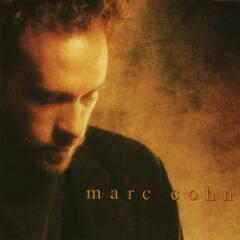
“Ghost Train” was written by Marc Cohn and appears as the second song on his eponymous debut album. It is an autobiographical song about Cohn losing his mother at the tender age of two. “New baby’s got that bottle, filled up with lightening and rain. He keeps calling out for someone, but she’s rolling on the ghost train.” Like songwriters Guy Clark and John Prine, Cohn’s songs offer a poetic glimpse into his life experiences. A ghost train symbolizes remembrance, tragic past events and death. Personnel on the record were: Marc Cohn (vocals, electric piano), John Levanthal (guitar, bass, six-string bass, drum programming, percussion), Dennis McDermott (drums), Kenny White (backing vocals), and Bashir Johnson (percussion).
The album, Marc Cohn, was recorded at Quad Recording in New York City in 1990 and produced by Marc Cohn and Ben Wisch. Released in February 1991, it went to #38 on the Billboard 200 Albums chart and has been certified Platinum by the Recording Industry Association of America. The first single from the album, “Walking in Memphis,” went to #13 on the Billboard Hot 100 Singles chart and has been covered by a few artists. Following the release of the album, Cohn won a Grammy Award for Best New Artist in 1992. Three singles were released from the LP.
Marc Cohn is an American singer-songwriter from Cleveland. His autobiographical songs draw from folk, blues, soul and gospel music. He started playing in Los Angeles coffeehouses after relocating there in 1986 and signed a record deal with Atlantic Records in 1990. He has released five studio albums, two live albums, two compilation albums, two live EPs, and 11 singles. In January 2025, he announced that he had been diagnosed with Parkinson’s disease five years earlier. He still plays occasional concerts at selected venues.
"About the Song" -- written by Mickey McMahan , RBN Director of Musicology