Regularly scheduled turnarounds, which are undertaken to perform maintenance, inspections and upgrades that cannot be done while a refinery is running, are one of the most important (and expensive) activities of any refiner. Unlike unplanned outages, turnarounds and more significant work on key units within a refinery are necessary activities that are thoroughly planned in advance to maintain and improve asset performance. In today’s RBN blog, we look at what happens during a typical turnaround, the ways refiners seek to manage their risk, and the biggest potential payoffs that come with a well-executed project.
Successful turnarounds are essential to a refinery’s performance and profitability, but also enhance their ability to operate safely, meet environmental regulations, and prevent major failures or unplanned shutdowns. In addition, they create a window for debottlenecking and capital upgrades that can improve a refinery’s throughput, energy efficiency and competitiveness. But an expensive turnaround project, especially when combined with deteriorating regulatory and/or market conditions, may also set the stage for a permanent shutdown, as was the case with Valero’s plans to shutter its Benecia refinery in California by April (see Us and Them) and some other recent closures. In fact, with more shutdowns of refining capacity likely to come over the next couple of decades due to declining domestic demand (as detailed in the next edition of our biannual Future of Fuels report, to be published at the end of January), the impending need for a high-cost turnaround could very well be the deciding factor that sets the timing for future closures.

The Future of Fuels bi-annual report by RBN's Refined Fuels Analytics provides an in-depth analysis of the U.S. and global refinery industries, focusing on crude oil and fuel market dynamics, supply and demand, alternative fuels, refinery capacities, and price forecasts to help stakeholders navigate the evolving energy landscape.
Managing the process requires a refiner to delicately balance a number of factors when deciding when to schedule a turnaround, how much work will be done, and how long it will last. How turnarounds are handled can vary considerably from refinery to refinery. Some refiners bring down nearly the entire plant at the same time (generally only considered by single-train facilities), while others bring down a few units at a time. It depends on which strategy works best for that particular plant. In recent years, refiners have been shifting toward partial plant turnarounds, where portions of the plant, rather than the whole thing, are brought down at different times.
Most U.S. refineries have been around for decades, many with units that have been operating since the 1970s or longer. And while a refinery unit — such as a crude distillation unit (CDU), fluid catalytic cracker (FCC) or catalytic reformer — needs to undergo periodic maintenance to sustain desired performance levels, there are no hard-and-fast rules about what needs to be done when. (Our Future of Fuels report includes a Probable List and a Watch List of global refinery projects. The Probable List includes projects we expect to start up in the next five years, along with important details for each, including startup timing, crude capacity, type of crude expected to be processed, product yields by type, downstream unit capacities, project cost and other relevant attributes. The much larger Watch List identifies projects that have been proposed and, in some cases, are even in advanced development, but which we don’t expect to come online within our five-year forecast timeframe.)
About the song
“Turn Around” was written by Billy Joel and appears as the first song on side two of his debut studio album, Cold Spring Harbor. The song is a piano ballad reminiscing about a lover from the past. It was rumored to be about Elizabeth Weber, whom Joel would marry in 1973. It was never released as a single. Personnel on the record were: Billy Joel (vocals, acoustic piano), Al Campbell (organ), L.D. Dixon (Fender Rhodes electric piano), Don Evans (guitar), Joe Osborn (bass) and Mike McGee (drums).
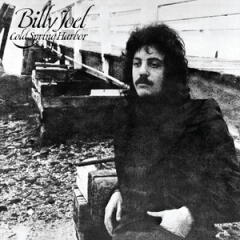
Cold Spring Harbor was named after the hamlet in the town of Huntington, NY, near Joel’s residence. The album’s front cover is a picture of Joel on Harbor Road in Cold Spring Harbor. The album was recorded in July 1971 at Record Plant in Los Angeles and Ultrasonic Recording in Hempstead, NY. Produced by Artie Ripp, it was released in November 1971 and went to #158 on the Billboard 200 Albums chart. One single, “She’s Got a Way,” was released from the LP and went to #23 on the Billboard Hot 100 Singles chart.
Billy Joel is an American singer, songwriter and pianist. After high school, he played keyboards and sang in The Hassles, a band that released two studio albums in the late 1960s, and Attila, a hard-rock duo that released one album in 1970. After signing with Columbia Records, he released his first album with the label, Piano Man, in 1973. “Piano Man” became Joel’s signature song. He has released 13 studio albums, seven live albums, 19 compilation albums and 82 singles and has sold more than 150 million records worldwide. He has won six Grammy Awards and a Tony Award; is a member of the Rock and Roll Hall of Fame; has received Kennedy Center Honors; and has a star on the Hollywood Walk of Fame. Joel still records and does occasional live appearances. His last release was the single “Turn the Lights Back On,” released in February 2024. The documentary, Billy Joel: And So It Goes, aired on HBO in summer 2025.
"About the Song" -- written by Mickey McMahan , RBN Director of Musicology