Permian producers continue to walk a tightrope, almost perfectly balanced between still-rising production of natural gas and the availability of gas pipeline takeaway capacity to transport that gas to market. Don’t get us wrong. There are gas takeaway constraints out of the Permian, as evidenced by a Waha cash basis that averaged more than 50 cents/MMBtu last week. But a combination of factors — including increased flows to Mexico and a couple of small, under-the-radar expansions of existing takeaway pipes — has prevented the Waha basis from tumbling to $1 or even $2/MMBtu. But that big fall may still happen — in fact, you could say that odds are that severe takeaway constraints and differential blowouts will occur within the next few months. If and when that happens, what can producers do to quickly regain their balance? Today, we discuss recent developments in Permian gas markets and the options that producers, gas processors and midstream companies may need to consider if things get really tight.
Philippe Petit, the French high-wire artist who in 1974 famously walked (eight times!) between the twin, 110-story towers of the original World Trade Center in New York City, once said, “When I see three oranges, I juggle; when I see two towers, I walk.” Well, when oil and gas producers see a hydrocarbon resource as gargantuan and as promising as the Permian, they jump in with both feet, even if it requires multibillion-dollar investments in infrastructure and poses the risk of huge, profit-squeezing price spreads if production growth outpaces the ability of pipelines to transport crude oil and natural gas to end-users.

The Natural Gas Master Class is a one-day online event focusing on understanding flow analysis, interpreting pipeline data and forecasting future flows. This course is designed to equip you with the knowledge and skills to effectively analyze the complexities of natural gas markets, flow analysis, and pipeline modeling. Join us online
October 21 | Online
This blog is the second part of our series on Permian gas takeaway constraints, or more specifically on the limited options that producers, processors and midstreamers have for slashing their gas-takeaway needs if that becomes an absolute necessity. Of course, we are not implying that all players in the Permian have to deal with this takeaway capacity crunch. Many had the foresight to sign up for firm pipeline takeaway capacity or other commercial deals that provide essentially the same locked-in outbound transportation rates and surety of flow well before things got tight. But just as many players did not, and now are stuck with the highly discounted local Permian prices we’ve seen for most of this year.
As we said a few weeks back in Part 1, Permian gas production rose quickly through the winter of 2017-18 — from about 7.1 Bcf/d to 7.8 Bcf/d — but the pace of production growth slowed considerably this past spring as takeaway constraints really kicked in, as evidenced by the larger (and more volatile) gap between Waha and Henry Hub gas prices (blue line in Figure 1). According to RBN’s NATGAS Permian Report, Permian gas production didn’t break the 8-Bcf/d mark on a daily basis until mid-June (June 16) and didn’t average above 8 Bcf/d on a weekly basis until the week ended July 9 (when it averaged 8.1 Bcf/d). For the week ended July 16, Permian gas production backed off again, averaging just a hair over 8 Bcf/d (8.01 Bcf/d, to be exact).
About the song
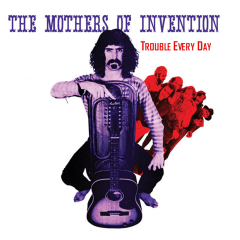
“Trouble Every Day” was a single off of The Mothers of Invention’s 1966 debut album, Freak Out. The song was written by band member Frank Zappa while he was living in Echo Park, a suburb of Los Angeles, and watching coverage of the 1965 L.A. riots on television. Long before there was a music genre known as rap, Zappa recorded this song, a talking rap against oppression, set to a blues background provided by The Mothers of Invention.
Considered ahead of his time, Zappa's music always provoked, both lyrically and musically. When MGM/Verve producer Tom Wilson signed The Mothers of Invention to his label, it was "Trouble Every Day" that grabbed his attention, leading him to believe he had signed a white blues band. Freak Out –– the first double rock album ever released (a few days before Bob Dylan’s Blonde on Blonde dropped) –– was recorded at the Sunset-Highland studios of T.T.G. in Hollywood in March 1966. The personnel on the “Trouble Every Day” track were: Frank Zappa (lead guitar and vocals), Ray Collins (lead vocals and tambourine), Roy Estrada (bass and vocals), Jimmy Carl Black (drums and vocals) and Elliot Ingber (guitar). The Freak Out double LP reached #130 on the Billboard Top 200 album charts. It received a Grammy Hall of Fame Award in 1999, and in 2003 Rolling Stone Magazine listed it in its "500 Greatest Albums of All Time."
Frank Zappa was an American musician, composer, activist and filmmaker. He passed away in 1993.