Gas producers in the Permian are facing the prospect of severe transportation constraints over the next year or so before additional gas takeaway capacity comes online. Left unchecked, continued production growth could send gas at Waha spiraling to devastatingly low prices for producers. However, there are a number of ways producers and other industry stakeholders could mitigate the growing supply congestion in West Texas, at least in part, and possibly dodge the proverbial bullet. The longer-term solution will come in the form of new pipeline capacity, which will shift vast amounts of Permian gas east to the Gulf Coast and potentially create a new problem — supply congestion and price weakness along the Gulf Coast, at least until sufficient export capacity is built there to absorb the excess gas. Today, we wrap up our Permian gas blog series, with our analysis of how these events will unfold, including an outlook for Waha basis.
In Part 1 of this series, we discussed the meteoric rise of Permian gas production as a byproduct of the crude-focused drilling boom in the basin. The supply growth has happened much faster than many market participants expected and both crude oil and gas production growth is now facing prolonged periods of takeaway constraints and constraint-driven supply price discounts unless either producers slow down or more takeaway capacity is built (see All Dressed Up With Nowhere to Go for more on the crude takeaway).

The Natural Gas Master Class is a one-day online event focusing on understanding flow analysis, interpreting pipeline data and forecasting future flows. This course is designed to equip you with the knowledge and skills to effectively analyze the complexities of natural gas markets, flow analysis, and pipeline modeling. Join us online
October 21 | Online
In Part 2, we took a closer look at the effects of rising production on outbound gas flows, pipeline utilization and prices. Gas flow data indicates that Permian outflows have increased in just about every direction, and pipeline utilization rates are at or near capacity (also see Omaha for more on changing flow patterns). As the pipes approached capacity limits in recent months, Permian gas prices took a hit, falling well below Henry Hub and other downstream pricing hubs. That pressure has eased in recent weeks as power demand kicked in for summer and exports to Mexico ticked up slightly. But that reprieve is likely to be temporary as long as Permian gas production continues growing and exhausting takeaway options.
To address the impending takeaway capacity shortage, midstreamers are scrambling to build new pipeline capacity from the Permian. As we detailed in Part 3, there are six publicly announced pipeline projects vying to relieve Permian constraints, all with routes that move gas east to where the demand is growing the most — at the Gulf Coast. Announcements for two of these — Enterprise and Energy Transfer Partners’ (ETP) recommissioning of their Old Ocean Pipeline (in conjunction with the expansion of their North Texas Pipeline, or NTP), and Williams’ Bluebonnet Express happened in just the past few weeks. Additionally, Tellurian has said that, based on supplier response, it’s moved up the target completion date for its Permian Global Access Pipeline (PGAP) to late 2021/early 2022, potentially a full year from its original target of late 2022. There also are at least another three “stealth” projects that we know of. So that makes at least nine projects that we’re aware of that, if they were all built, would add 16 Bcf/d of new capacity between late 2018 and 2021.
About the song
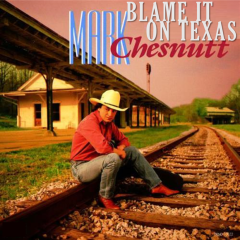
"Blame it on Texas," written by Ronnie Rogers and Mark Wright, was the third single released from Mark Chesnutt's second album, Too Cold at Home, produced by Mark Wright and released in September 1990. The single went to # 5 on the U.S. Country Music charts. Too Cold at Home produced five Top Ten singles and sold over a million copies, reaching #12 on Billboard's Top Country Albums chart and #132 on Billboard's Top 200 Albums chart.
Mark Chesnutt is known as a neo-traditionalist country artist who brings old-school honky-tonk stylings to his music. Originally from Beaumont, TX, Chesnutt has had 20 Top Ten hits on the Billboard Hot Country Songs charts over the course of his career. He has released 15 studio albums to this date, and still tours and plays many live concerts yearly.